- RIYADH: Etihad Etisalat Co., better known as Mobily, achieved many successful goals across the ever-expanding Saudi telecom market, especially in the past six years.
Financially, Mobily’s revenues in the first-quarter were 40 percent higher than in the same quarter of last year, beating most analysts’ forecasts.
Mobily’s network has the share of more than 70 percent market of all mobile broadband subscriptions and 36 percent of all broadband connections in the Kingdom.
The company also announced that after last year’s successful trials of LTE (Long Term Evolution) technology, it would be launching LTE in the next few months, also known as the 4G.
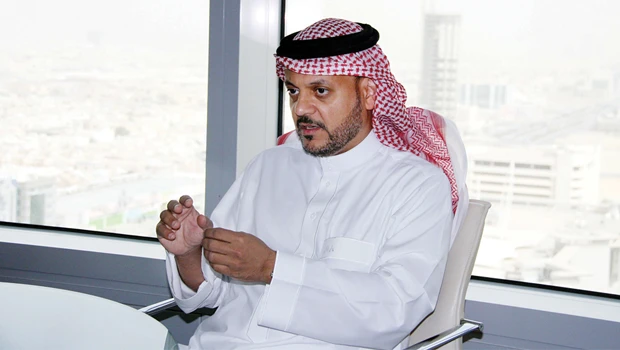
“Once implemented, the fourth generation (4G) network will provide data speeds up to 100mbps instead of the 20-40mbps the 3G is providing,” says Mobily Chief Business Officer Marwan Al-Ahmadi.
He explains that this will enable individuals and businesses alike to use high-speed data services with mobility. And mobility combined with communication provides unprecedented services such as navigation, vehicle tracking of operating fleet vehicles, etc.
Thus, Al-Ahmadi points out, Mobily’s 4G delivery of a combination of mobility and high performance data services will enable various applications and operational models in a unique way.
Since entering the Saudi market in 2004, Mobily adopted a solid expansion strategy, based on direct and indirect sales channels.
This strategy allowed Mobily to quickly expand and establish the brand throughout Saudi Arabia, and as a result, achieved its set target for 2006, both in terms of market share and revenue targets.
Al-Ahmadi said growth, efficiency and differentiation (GED) strategy’s results were being delivered by focusing on excelling services to various market segments of which the business segment is being served by a dedicated business unit in Mobily.
Though Mobily is growing in all segments, a great deal of the GED growth is expected to come from the business segment in the next few years, he said.
Moreover, he indicates, the business segment is rapidly expanding due to two main factors; the growing Saudi economy and the very high growth rate of data traffic in the Kingdom, which is one of the highest in the world as recent market studies have shown.
“I believe that Mobily is uniquely positioned to leverage this mega trend locally, for it has immensely invested in information and communications technology (ICT) infrastructure and services ranging from plain simple voice and data connectivity and Internet access to more advanced data center services and managed services.”
Therefore, Al-Ahmadi stresses, Mobily views the business segment as a vital value driver that boosts the organizations’ growth. This helps Mobily focus on its business segment, the cornerstone of its GED strategy.
“In the business unit, our focus is to help our customers reach a high level of productivity while reducing their cost through offering advanced reliable ICT services targeting both goals.”
Today, a major competitive advantage to both individuals and organizations is in continuous improvement of productivity. Therefore, he adds, improving productivity can be achieved either through better employee training and providing the staff with essential tools to perform better.
“For example, we currently offer services that aim at eliminating ICT capital expenditures by turning them into operational expenses, where you pay only for the services that you only use,” says Al-Ahmadi.
According to the CBO, providing reliable solutions with a superior experience for the private and government sectors, especially in regards to infrastructure and services associated with it such as communication, enables those sectors to improve their performance with less upfront capital expenses.
Mobily’s business unit, in association with its strategic local, regional, and international partners, focuses on various segments of businesses, such as small to medium enterprises, large enterprises, public and private sectors, etc.
It is also teaming with real estate developers to invest in intelligent buildings and cities, another emerging trend where Mobily is increasingly gaining traction.
“We are a profitable organization and the profit margin of investing in this field is reasonable, but our aim is to be a part of this sensitive and important field,” says Al-Ahmadi.
In addition to the major real estate projects in the country, the 500,000 units the government is building as per the directives of Custodian of The Two Holly Mosques King Abdullah, will need communication and information technology solutions like their requirement in other utilities.
“The injection of capital into the economy coming from the increased government spending on projects and social programs, and improving the employment level will definitely lead to more spending on ICT services by both individuals (larger smart phone penetration) and businesses,” Al-Ahmadi said, adding that that those services are in the course of becoming essentials for both individuals and businesses.
In light of the changes in the economy in the Kingdom, the market demand for specialized companies in ICT solutions continues to increase.
“The Kingdom needs industry-specific solution providers to leverage ICT services to offer tailored products and services for various verticals such as health and education,” says Al-Ahmadi.
For example, round-the-clock mobile health services could have a great impact on the quality of health awareness among the people, he said.
“Instead of targeting an already saturated business areas, there is a better chance for success if companies focus on less explored areas that are considered less crowded niches made possible by the ubiquitous availability of ICT services,” Al-Ahmadi added.