- RAS LANUF, Libya: Libya’s battered oil towns are struggling to get back to work after months of back-and-forth clashes between rebels and forces loyal to Muammar Qaddafi along the Mediterranean coast.
The rebels’ ruling council faces shortages of basic supplies including fuel in many areas as its soldiers battle die-hard remnants of Qaddafi’s forces.
Rebel authorities have called on oil workers to return to their jobs to get the country’s economic lifeline flowing again but there are few signs of an imminent return to production, and many workers remain too afraid to come back.
The oil town of Ras Lanuf was until just a few days ago under the control of Qaddafi’s forces and the front line is only about 25 km to the west.
Rebel soldiers are based at the main entrance to the town’s residential neighborhood of small concrete houses on a network of streets. Rebel commanders have taken over an oil company’s office block as their headquarters and pick-up trucks mounted with machine guns are parked outside.
Rebels have also moved in to the town’s hotel, perched on a bluff overlooking the sea, while ambulances bring wounded fighters to a nearby hospital. Rebels man checkpoints on the main road, waving through military vehicles loaded with fighters and weapons headed to the front.
Among the few oil workers who have returned to Ras Lanuf is chemical engineer Juma Abdulmajed, who was optimistic the town’s refinery could be restarted quickly.
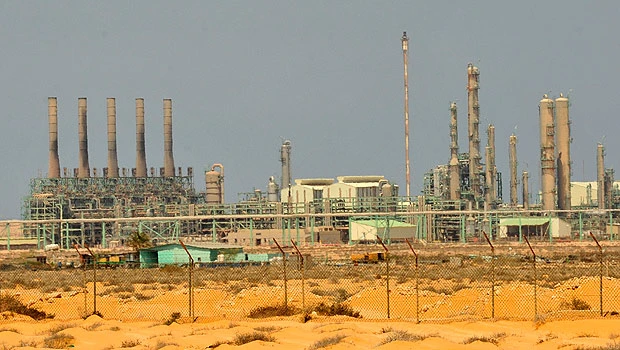
The Ras Lanuf refinery is the country’s largest at 220,000 barrels per day of capacity, and the town is also home to a 195,000 barrels per day oil export terminal.
“Maybe two weeks,” Abdulmajed said as he pulled a sofa out from against a wall where it had been stored, to make room to sit down. The air in his house, which has been locked up since he fled with his family in March, is musty but the building is largely undamaged.
Two kerosene storage tanks were damaged in the fighting but the rest of the complex is unscathed, he said.
“The refinery just needs maintenance, there’s no damage to the machinery. It’s just that it’s been stopped for a long time,” he said, adding the export terminal equipment also appeared to be undamaged.
A maintenance team was due to travel from Benghazi in the next day or two to start getting the refinery up and running.
OPEC member Libya is the third-largest oil producer in Africa and holds the continent’s largest crude oil reserves. It produced 1.6 million barrels of oil a day before an uprising against Qaddafi’s 42-year-rule erupted in February.
The rebels stopped pumping oil to Mediterranean Sea export terminals after pro-Qaddafi raiding parties attacked oil facilities in the desert.
The oil town of Brega, about 150 km to the east of Ras Lanuf, took more of a beating in the fighting. The town changed hands several times over the months.
Rebel leaders say damage to the oil terminal is minimal but Qaddafi’s forces blasted a couple of storage tanks shortly before they pulled out this month.
Oily black smoke which can be seen for kilometers billows from one burning tank, casting a shadow across the desert as it drifts south.
Mohammad Rajab, an oil company accountant from Brega, said almost all of his company’s equipment had been destroyed or looted.
“They’re trying to stop the fire but they don’t have fire-fighting equipment. The company has nothing now, everything has been destroyed,” Rajab said, adding clean-up crews were just starting work.
Brega’s residential neighborhood, like Ras Lanuf’s, a specially built district of small concrete houses, is largely deserted. Walls are marked with pro-Qaddafi graffiti and bullet holes and rubbish is strewn about.
Qaddafi soldiers occupied many of the homes and many have been ransacked, including Rajab’s.
“I can’t stay there. Everything is destroyed, nothing is left,” said Rajab, who is staying with his family with a friend in the town of Ajdabiya, to the west.
“I don’t know why they did this. Everyone feels bad but we’re strong and will start again.”
Rajab said he was confident Qaddafi’s soldiers would not be back and the rebels seem sure they have finally secured Libya’s most productive money-spinner.
“This was Qaddafi’s shop before,” rebel fighter Salah Jatlawi said in Ras Lanuf, nodding toward the refinery’s small forest of chimneys and towers.
“Now it’s ours.”