
- DETROIT: Major automakers posted double-digit US sales gains for August, a steady result for a month that began with a plunge on Wall Street and ended with a hurricane shutting down the East Coast.
General Motors reported a sales gain of 18 percent from year-earlier levels. Ford Motor Co. sales were up 11 percent.
Chrysler had its best August sales in four years with a 31 percent sales increase.
Auto industry executives said the sales gains pointed to an encouraging stability in demand for big-ticket purchases.
Major automakers said they expected to see stronger sales over the remainder of the year helped by stable gasoline prices and demand from consumers who deferred purchases during the industry’s slump and slow recovery since 2008.
“In our view, consumers are being cautious, yes, and rightly so, but they are not retrenching,” said GM’s head of US sales, Don Johnson.
“You have to remember that the sales we’re seeing are very low by historical standards.”
Sales for Nissan rose 19 percent. Sales for Volkswagen AG were up 10 percent.
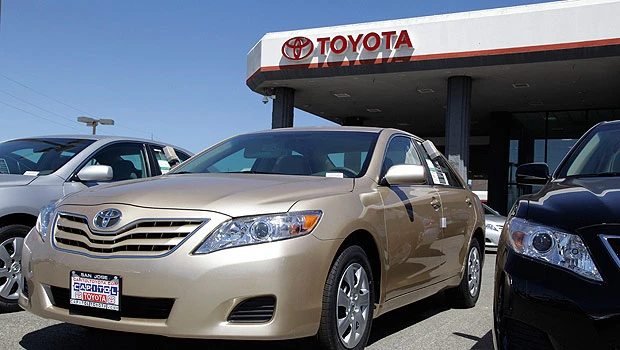
Toyota and Honda, still reeling from the effects of the March earthquake in Japan, were the biggest losers.
Toyota sales fell 13 percent and Honda tumbled 24 percent. Both Japanese automakers suffered from a lack of inventory of key models.
GM’s sales result for August was below the most optimistic analyst projections although industry tracking firm J.D. Power had cautioned that demand weakened in dealerships across the industry as the month wore on.
US consumer confidence sank in August as more Americans became worried about the threat of a renewed recession.
The month began amid wrangling over the government debt ceiling and a sharp decline in the stock market. Executives said it was positive that demand for cars and trucks had not fallen off in the face of so much bad news in August.
But one analyst said investors could be growing concerned that GM had not throttled back on production in the face of the risks to the US economy.
“The market may be concerned that GM is ‘playing chicken’ with the macro environment and could get caught out with large production cuts and/or price discounting should the underlying market not recover as GM appears to have anticipated,” Morgan Stanley analyst Adam Jonas said in a note.
At the end of the month, typically a crucial time for auto sales, Hurricane Irene hit the East Coast. Industry tracking firm Edmunds.com estimated that the storm cut overall sales by about 10,000 vehicles.
GM estimated that it had lost about 1,000 sales during the month.
Nissan estimated that the storm had cost it about 3,300 sales for its mainstream and Infiniti brands because of its relatively heavy exposure to sales in the Northeast.
“The economic news never impacted me during the month. What did impact me was losing the last weekend on the Eastern Seaboard,” said Al Castignetti, who heads Nissan brand sales in the United States.
Volkswagen AG, which expects to get a boost from the roll-out of a redesigned Passat sedan in coming months, said the industry could benefit from the introduction of other models and a recovery in inventories for Japanese automakers led by Toyota.
Industrywide spending on sales incentives was almost flat in August from a month earlier, analysts said.
Toyota, Honda and Nissan lost sales in the US market starting this spring after the March earthquake in Japan shut down production and caused parts shortages.
But the Japanese auto industry has bounced back and analysts expect their higher inventory levels to coincide with a round of more aggressive discounting.
Toyota is introducing an all-new version of its top-selling Camry sedan starting in October.
Toyota has cut prices on the 2012 Camry and it is offering zero-percent financing and cash incentives on the older model.
Honda said it had returned to full planned production at all of its US factories by late August.