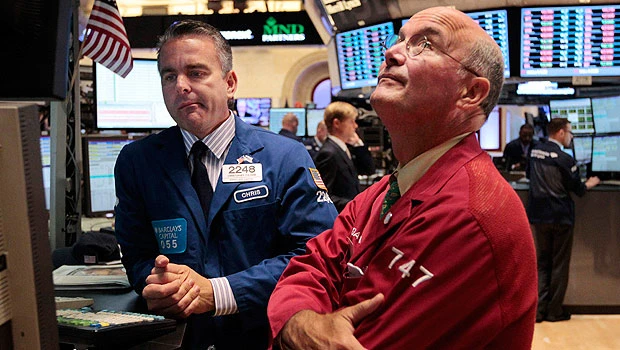
- JEDDAH: Fears of a Greek default that could spread widely through global markets dragged down world and Gulf stocks on Monday, knocking European equities to two-year lows, and sent the euro to a seven-month low against the dollar.
- The euro also hit a 10-year low against the Japanese yen, falling as low as 103.88 yen.
World shares tumbled nearly 2 percent on Monday with European equities at 26-month lows, down more than 20 percent this year. Brent crude oil fell as much as $2.35 per barrel to a low of $110.42 but then recovered some ground to trade around $111.40 by 1000 GMT, Reuters reported.Saudi Arabia's Tadawul All-Share Index (TASI) slumped 1.7 percent to its lowest close since Aug. 24 and extended its 2011 losses to 8.8 percent."The fall in global markets, which pulled down the TASI, was primarily the result of developments in the euro zone. Comments from members of the German government that a Greek default was likely and disappointment over the failure of the G7 meeting to deliver any new initiatives hit investor sentiment," Paul Gamble, head of research at Jadwa Investment, said.He added Monday was also the first day Asian and European markets had to react to the resignation of the European Central Bank's chief economist, who was the second prominent German to leave the institution in recent months, exacerbating market concerns about Germany's willingness to take more steps to support troubled euro zone countries. Bank shares were the main fallers, with shares of French banks suffering particularly, as they are the largest holders of Greek debt.With the problems in the euro zone seeming more intractable, it is inevitable that there will be further volatility in global markets. Over the last few years there have been a series of measures that have temporarily taken the pressure of the euro zone, but not resolved the fundamental problems. Complicating the situation is the backdrop of a slowing global economy, Gamble said."While a Greek default would not have a direct impact on the Kingdom, the fall in the TASI was not surprising. In part this is psychological. In addition, oil prices fell, which hit the competitiveness of the petrochemicals sector," he said, adding that given that banks bore the brunt of the declines, the fall in local bank share prices was understandable, even though the Kingdom's banks are likely to have virtually no exposure to Greek sovereign debt. Recent declines put the TASI at an attractive valuation and will not affect the government spending that is driving the economy. Nonetheless, the close relationship between the TASI and global markets means local investors should be cautious.However, Jarmo T. Kotilaine, chief economist at the National Commercial Bank (NCB), said: "The jittery market behavior predictably enough reflects the heightened, indeed extreme market uncertainty as the 'Greek drama' once again comes back to haunt us. The European situation is marked by a paradox where, even the technical outlines of a manageable solution have emerged with the ECB bond purchases and the Financial Stabilization Facility, politics is repeatedly — and once again — rearing its ugly head."On Tadawul's sharp drop, Kotilaine said: "Bank and petrochemicals shares have borne the brunt of investor anxiety in Saudi Arabia because of oil price/demand worries and risks of disruptions in the financial sector. Saudi Arabia is in the paradoxical situation of looking at YTD losses on Tadawul even as the economy is on track to record one of its best growth figures in years. The global developments promise more uncertainty in the weeks and months ahead and highlight the challenges facing even markets underpinned by the most solid of fundamentals in the face of exceptional global economic risks."In Dubai, shares slumped to a three-week low and top traded stocks, the main targets for retail investors who try to profit in short-term trading, headed losers. The index fell 0.9 percent to 1,460 points.Doha's bourse slipped 1 percent to 8,295 points, taking its year-to-date losses to 3.6 percent, the top performing Gulf Arab benchmark.Qatar's stocks have proved more resilient because of the country's robust economy, which is forecast to grow 16.7 percent in 2011. The benchmark slipped 1 percent to 8,295 points.The Kuwaiti stock index eased 0.05 percent to 5,977 points.According to Reuters, the euro fell as low as $1.34949, its lowest since February, and then pared losses to see-saw near break-even. It was up 0.2 percent at $1.3597. The US Dollar Index rose 0.31 percent at 77.432. Brent crude oil fell 5 cents per barrel to $112.72. US crude rose 69 cents to $87.93.Spot gold prices fell $46.67 to $1,810.60 an ounce.The pan-European FTSEurofirst 300 index of top shares fell 2.7 percent, after earlier slumping to 883.04, its lowest since July 2009. MSCI's all-country world equity index fell 2.0 percent.On Wall Street, the Dow Jones Industrial Average was down 115.11 points, or 1.05 percent, at 10,877.02. The Standard & Poor's 500 Index was down 10.56 points, or 0.91 percent, at 1,143.67. The Nasdaq Composite Index was down 8.85 points, or 0.36 percent, at 2,459.14.In Hong Kong, meanwhile, the benchmark Hang Seng index shed 4.2 percent to 19,030.54 while Australia's S&P/ASX 200 plunged 3.7 percent to 4,038.50.The Nikkei 225 stock average in Tokyo closed 2.3 percent lower at 8,535.67 — its lowest closing level since April 2009.