
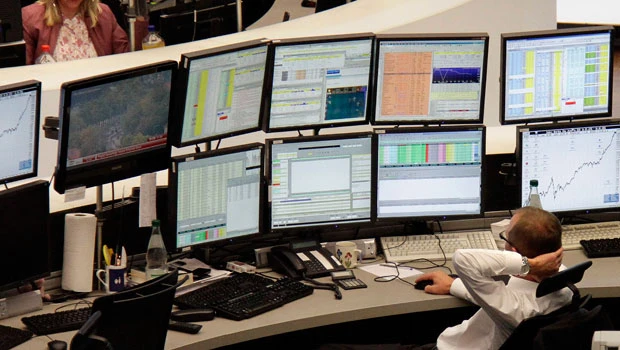
- AMMAN: Arab stock markets closed mixed last week as investors adopted wait-and-see approaches, pending solutions for the European debt crisis and steps by the US Federal Reserve to shore up the world’s largest economy and avert a double-dip recession, financial analysts said Friday.
They pointed out that Arab stock exchanges would also keep an eye on the third quarter earnings, but the ambiguity of the global scene would continue to mar the performance of regional markets.
”I believe the grim predictions of the US Federal Reserve and the persistent failure of policymakers to deal with the euro sovereign debt ordeal would continue to reflect on Middle East markets,” Nizar Taher, head of brokerage at the Jordan Ahli Bank, said.
”The brunt of the negative fallout from global markets will be borne by stock markets of the Gulf region, which maintain close links with Western banking and financial institutions,” he said.
Nevertheless, Taher and other analysts expected regional investors to turn their attention in the coming weeks to the third quarter results, which are expected to start coming out in the first week of October.
Saudi shares recovered last week after the previous week’s drop, led by the petrochemical and construction sectors. The Tadawul All-Share Index (TASI) gained 1.2 percent on weekly basis, closing at 6,142.26 points.
Saudi analyst Mohammad Anqari believed the country’s stock exchange would remain under pressure from the world economy woes until the adoption of solutions by policymakers, particularly in the United States and the European Union.
”I think investors prefer to remain in this Tadawul area, which thy believe to be risk-free, until the situation becomes clear in the world’s major economies,” he said.
”If the Europeans adopt a successful rescue plan for Greece’s debt, then this will reflect positively on the markets of Saudi Arabia and other countries in the region,” he added.
He believed that the petrochemical sector would lead the movement in both the upper or lower directions in the coming weeks.
Kuwaiti shares extended losses last week, mainly due to fallout from pro-reform public moves, analysts said.
Kuwait’s KSE all-share index lost 1.84 percent on weekly basis, to close at 5,916 points.
The benchmarks of the UAE stock exchanges of Dubai and Abu Dhabi shed 0.5 percent and 0.7 percent, to close week respectively at 1,460 points and 2,557 points.
Qatar’s all-share index gained 1.2 percent last week, closing at 8,446 points, while Bahrain’s benchmark closed 1.6 percent in the red at 1,245 points.
The all-share index of the Amman Stock Exchange (ASE) edged lower, closing at 2,033 points, compared with last week’s close at 2,035 points.
Taher expected Jordanian shares to be negatively affected by last week’s forced resignation of the Central Bank of Jordan’s governor Sharif Fares Sharaf.
Egypt’s AGX 30 index, which measures the performance of the market’s 30 most active stocks, fell 0.7 percent last week, closing at 4,335 points.
The prison and fine verdicts passed recently against the steel magnate Ahmed Ezz continued to reflect on Egyptian shares last weeks after their nosedive of 8.2 percent in the previous week.
The Egyptian market trimmed losses after the appointment of Mohammad Emran as new chief of the stock exchange.
Emran pledged that he would give priority to restoring confidence and liquidity to the Egyptian market.