
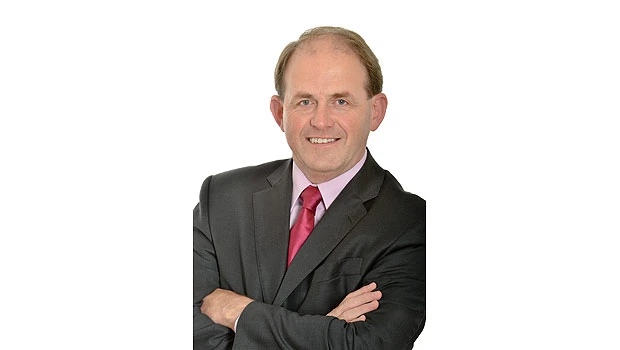
- Four major new contracts with Saudi companies are due to be announced during this week’s Irish trade mission to the Kingdom.
- The deals, in food technology and construction services, represent the latest step in the rebuilding of Saudi-Irish trade relations to the level they were some 25 years ago.
During the Irish economy’s boom years before the 2008 global crash, Ireland took its eye off the international ball. This is something freely admitted by Frank Ryan, chief executive of Enterprise Ireland, who is accompanying Minister for Trade and Development Jan O’Sullivan on their country’s latest trade mission to Saudi Arabia.
“What happened was that we got fascinated by the low-hanging fruit in Ireland” says Ryan in an exclusive interview with Arab News, “and we let our international contacts network lapse in the Middle East. We largely dropped the ball. It is only in the last four or five years that we have been working hard to rebuild our relationship. This is my fifth visit to Saudi in the last four years, which is perhaps an indication of how seriously we regard the Kingdom.” Irish exports to Saudi Arabia have been growing steadily, rising from 400 million euros (SR2.07 billion) in 2009 to 500 million euros (SR2.59 billion) last year. There are now over 70 Irish companies active in the Kingdom, 30 of whom have a full time presence in the market.
Ireland is a small country and therefore, says Ryan, cannot have deep relationships with every state in the world. It has to be selective. The revival of its Saudi connections dates from the 2007 visit to the Kingdom by the then Irish Prime Minister Bertie Ahern. In 2009, a Saudi ambassador was appointed to the Irish capital Dublin, and he is shortly to be joined by a cultural attaché.
The present Irish trade mission brings 45 companies to the Kingdom, a relatively small contingent with a tight focus on a core of niche business opportunities.
Ireland has some surprising strengths. It is for instance says Ryan, the second largest software exporter in the world after India. Irish-made software runs the equipment that scans biometric data such as fingerprints and irises at a growing number of airports around the world. Irish software and controls are behind the water supply network in Hong Kong. An Irish company is a world leader in e-learning software. The country is also a key provider of finance services software.
This last says Ryan, ought not to be surprising in the light of Dublin’s role as an international financial center. “We have a very substantial financial services center in Dublin that employs approximately 50,000 people. Half of the world’s banks and financial institutions have operations there.
Some 1.9 trillion euros of international funds is administered out of Dublin. Half of all the aircraft in the world are leased through Dublin.” A significant development to Irish international financial services will be the launching of Islamic banking products, when legislation currently under discussion, is passed.
Ryan believes the imminent arrival in Dublin of a Saudi cultural attaché is of particular importance because of the 1,000 Saudi students, able to study in Ireland, thanks to the King Abdullah Scholarship program.
“They are primarily taking courses in engineering, business and commerce and other related areas.” Ireland is also closely involved with the Technical & Vocational Training Corporation (TVTC) here in the Kingdom, helping to train the trainers.
Ryan adds that the country is extremely proud of its connection with the Princess Nora Bint Abdurrahman University (PNU), now rising beside Riyadh airport. Former Irish President Mary Robinson serves on the board of the university, which will eventually have up to 40,000 exclusively female students on what is thought to be the world’s largest university campus.
The steady flow of Saudi students to Ireland is undoubtedly helped by the fact that the Irish speak English, which also eases business contacts. In addition, says Ryan: “The Irish and the Arabs get on very well, primarily I think because both nations are very much into personal relationships.” It is strong relationships that Ryan sees as lying at the heart of business success. “It takes 18 months to two years to develop a working relationship, where both sides have trust in each other in relation to delivery on projects.” Trade missions help in this process.
“Irish companies are small at home and we are tiny on the international stage” says Ryan, “Therefore it is important that Saudi businesses see that the Irish government stands behind its own firms, has vetted them both technically and financially and that it is safe for local companies to do business with them.” This examination, he says, has to be rigorous. “We look at the number of Irish companies that have established a presence in a country, and we do an annual assessment of our exports to each country. We also look at the number of Irish companies that have been asked to tender for opportunities.” In the end however argues Ryan, high level diplomatic contacts cannot replace the all-important business to business contacts.
“We tend to evaluate opportunities at the level of the companies. If it is happening at that level, then it is really happening. You can have all the trade agreements you want, but it is what is going on at the company level that really matters.
“We have had a very strong welcome from the Saudi authorities, but always on the basis of commercially viable projects that make sense, so that both sides will make money out of this.” Twenty five years ago, when Saudi-Irish trade was as its height, the key sectors were agriculture and food. Indeed Almarai, now one of the biggest food producers in the Middle East, began life as a Saudi-Irish joint venture. Food will remain a key area, says Ryan, especially in light of the need for food security in the Middle East. Irish companies specializing in food processing can provide complete traceability, from farm to fork.
Nevertheless there is now a broadening of Irish business commitment to the Kingdom to include construction services, pharmaceuticals, life sciences and Information and Communications Technology (ICT). While the primary focus of this latest trade mission is trade, there will also be discussions on inward investments into Ireland.
“We are a small island of 4.6 million people” says Ryan, “which does not offer the same level of opportunities to investors as say Germany or France. But what we do have are opportunities to invest in high technology companies that have products and services that would be needed in the Kingdom of Saudi Arabia.” Once he returns to his desk in Dublin, Ryan will start planning for Ireland’s next trade mission to the Kingdom, in just nine months time.