- The fifth International Desert Festival started on Jan.
- 15 and lasted for two weeks.
As soon as the festival was launched, I drove the 980 kilometers from Jeddah to Hail. Upon arrival I learned that nearly all hotels and furnished apartments were fully occupied. Luckily I managed to find a hotel room at a rate comparable to that of tourist accommodations in Jeddah.
On the first day, I went on an exploratory walk in the city, visiting some shopping malls and recreational areas. I noticed the artistic constructions at the city squares, reflecting the nature of the city and its hospitable inhabitants.
The next day, I met a couple of young men from Hail, whom I had gotten to know through our interactions on Twitter. Hatem Khalid Al-Shamari insisted on being my tour guide for the day, along with his friend Khalaf Alifnan. Our first stop was the Al-Mughwaah recreational area, a tourist attraction where the Desert Festival was held. There I met Hamaad Al-Tamimi, the media PR coordinator of the festival. We went to the tents that housed low-income families of Hail, who sold handmade goods, embroideries, carpets and traditional foods. Other areas were also used to showcase handmade artifacts, traditional Saudi menswear, pottery and handwoven carpets. Visitors could see a demonstration on how mud houses were designed and built in the past. In addition there were stands representing government offices, such as the Geological Authority, the Ministry of Agriculture and a few representatives of local charities.
We finished that day with a climb to the resort on top of Al-Mughwaah Mountain, longtime host to official and social festivities, according to the locals.
In the course of the following day, a group of officials visited the festival area, including Abduallah Al-Murshid, the director general of the department for the management and development of activities, recreational programs and tourism products, at the General Authority for Tourism and Antiquities in the Kingdom. Al-Murshid was impressed with the festival and all it had on offer for visitors, and said that there was a study in progress, for the further development of the Desert Festival in light of its great success and the area’s suitable environment for tourism. He said that this was a very important and prestigious national event in the Kingdom, this year even more so than in previous years. The events showcased local Bedouin culture, heritage and lifestyle in the deserts of Hail. These were a great attraction to visitors from various nationalities. The camelback rides were also popular. In the future these will include an overnight stay in Bedouin dwellings in the surrounding desert.
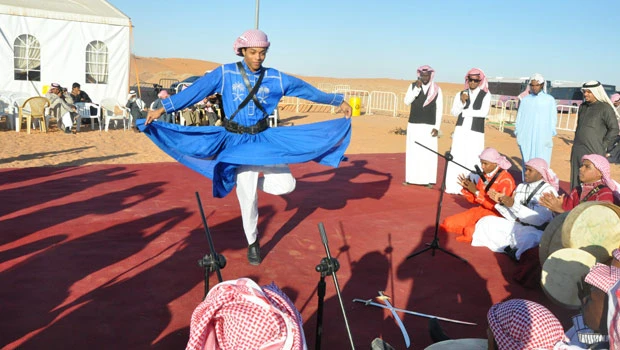
Youth played a big role in the festival, as they presented a variety of entertaining folklore. The Onaizah Folkloric Group performed the Samiri Dance and was received well by the crowds. This encouraged the idea to host other folklore groups from neighboring countries as well in the following year, to enrich the entertainment.
Children had the opportunity to experience local heritage and Bedouin life style, they could visit the children’s theater and Captain Kroom, who held games and competitions. Adding to the amusement of the delighted youngsters and their parents, there were clowns who got rewarded with plenty of shrieking laughter for their comedic antics.
The elderly were taken care of with free treats from the food stalls and small souvenirs to take home with them.