- William Irwin Thompson believed a world is not an ideology or a scientific institution, nor is it even a system of ideologies.
- Rather, it is a structure of unconscious relations and symbiotic processes.
Zuma is known worldwide for its fine dining cuisine. Stars, celebrities and even the royal family in the UAE (their latest in the Middle East) have earned international acclaim from the media. Recently, they were named Best Restaurant at the BBC Good Food Awards Middle East 2011.
The concept of Zuma was born as a result of one chef’s obsessive passion with Japanese cuisine and an entrepreneur with sincere vision. Rainer Becker and Arjun Waney started a restaurant in London and the partnership lucratively shaped and transformed Zuma as a model worldwide.
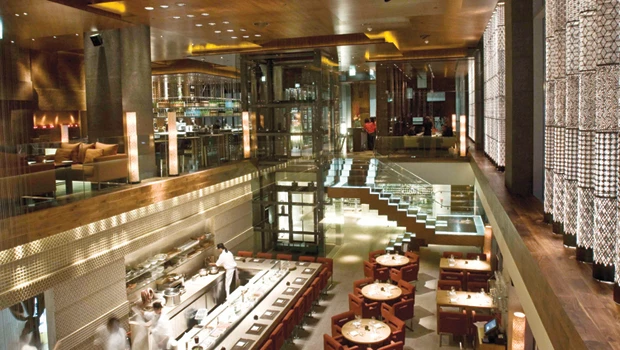
Greatly influenced by his time in Japan, Becker has introduced a contemporary and refined cuisine philosophy, which has been inspired by the more informal Japanese dining style: Izakaya. Essentially, it is made up of three different components: the main kitchen, which offers a selection of contemporary dishes; the Sushi Bar with dedicated sushi chefs; and the Robata Grill, a concept which originates from the cooking style of northern Japanese fishermen.
For Becker, Zuma is about a “complete dining experience,” an experience where each element is of equal importance. Yet, each element serves the same purpose: to complement the taste and flavor of the food.
Following on from its success in London, Hong Kong and Istanbul, Zuma launched in Dubai in September 2008 at the Dubai International Financial Centre. Subsequent openings have taken place in Miami (2010) and Bangkok (2011).
Arab News brings you an exclusive interview with star chef Becker who spoke to Saudi Arabia for the first time. Growing up in Germany, young Becker’s uncompromising attention to detail and unstoppable enthusiasm shaped his career. This committed young chef built the skill foundations of his craft in some of Germany’s most prestigious kitchens, including Goethehaus in Bensberg,
Koenigshop in Munich and culminating as Chef de Cuisine in the Hyatt Regency Hotel in Cologne. He also worked at Park Hyatt Sydney and was awarded Executive Caterer of the Year. In 1994, Becker took a position as Executive Chef in the Park Hyatt Tokyo, where he launched all five restaurants and remained there for six years.
Japan fascinated Becker and he absorbed the culture as he intensified in the skill, history and traditions of Japanese culinary art. In 2002, Becker’s vision became reality and Zuma London was born. Instantly popular, Becker decided to develop a second brand and introduced Roka & Shochu Lounge.
The oomph in his relentless zest for the art of culinary is evident in his persuasion for the very best. He even told us that Zuma are looking at expanding in the Middle East and their next opening will be Beirut.The first time I visited Japan was actually to take the position as the Executive Chef of the Park Hyatt in Tokyo. I was responsible for five different restaurants, including Japanese. I immersed myself in all aspects of Japanese food culture and was fascinated by their approach, the respect to detail, the artistry of it all. Restaurants in Japan are very traditional. For example, if you want tempura you go to a restaurant that only serves tempura, likewise, for sushi or yakitori.Izakaya is a more informal approach where you can mix it up a bit. It's also generally a very “chilled out with friends” experience. My idea for Zuma started then. I wanted to create a restaurant that had all the fun of Izakaya dining but with the design, the detail and respect to a food culture I had grown to love. Zuma serves modern Japanese food that I have evolved for an international clientele but it still respects tradition. Everyone who enjoys good food in a beautiful environment is our customer really. Often, however, people will talk about the different Zumas they have visited, so we do have a very well traveled clientele and a very loyal one too. The tastes and flavors of the food at Zuma are bolder than those that you would find in Japan, as I created dishes for a more global audience. I think the food is tasty, healthy and easy to enjoy, so people seem to connect well with it. I'm German and we don't have one in Germany either! Arjun was looking to open a restaurant in London, I was looking to open Zuma in London and, fortuitously, we met. He loved the concept and Zuma was born. We are both based in London, so it was a natural choice and it has an extremely exciting restaurant scene, second only, I would say, to New York.Every other destination has been carefully considered so no India or Germany as yet.Consistency is key. We drive our team forward to be involved in every aspect and detail of the business and make sure they have the support and tools to carry out their roll.From the dishes to the service to the design even to the ambiance, it's all about detail, detail, detail. That's why our customers eat in Zuma throughout the world. Yes, each location differs, but they are confident in the consistency of what we offer. Zuma is comprised of three kitchens: the main kitchen, the sushi counter and the robata grill. The menu is designed to enjoy a selection of dishes from each kitchen to share.In terms of design, every Zuma is slightly different, drawing energy from the individual locations. However, the concept is always the same. The designer, Nori Muramatsu, has worked with me since the first opening in London 2002 and the original inspiration to embrace the four natural elements (earth, fire, water, air) remains steadfast. We are obviously very proud to have the royal family as customers of Zuma, but it has never been a strategy or an objective. We have always respected the privacy of our guests and we offer a very relaxed environment for people to enjoy themselves. I think, maybe, that allows those guests with a high profile in the media to feel comfortable in our restaurants.
Our signature dishes are really decided by our customers. The popularity of a dish makes it become a Zuma signature. For this reason, we still have a couple of dishes on the menu from the first opening in 2002. I do encourage my chefs, though, to create and evolve their cuisine. However, no matter what even I think, the final test is always the customer. In Dubia, Zuma Classics such as Black Cod, Spicy Beef and Tiger Prawn are always the best sellers, but our new dishes such as the ones below are also doing extremely well:
• Lobster Carpaccio with yuzu dressing and oscietra caviar• Grilled Wagyu fillet AA7 with truffle mayonnaise• Grilled Chilean seabass with green chili ginger dressing and cress salad
• Thinly sliced sea bass with yuzu, truffle oil and salmon roe• Seared tuna with chili daikon and ponzu sauce• Home made tofu served chilled with condiments• Avocado and Japanese herb salad• Spicy beef tenderloin with sesame, red chili and sweet soy