- Each year, 8 million new cases of tuberculosis (TB) occur worldwide, and 3 million people die of the disease.
- Reports of TB worldwide had been on the decline, but in 1985 this trend reversed.
Each year, 8 million new cases of tuberculosis (TB) occur worldwide, and 3 million people die of the disease.
Reports of TB worldwide had been on the decline, but in 1985 this trend reversed. The reversal is attributed to the epidemic HIV. The incidence of TB among HIV patients is 40 times higher than among the unaffected population. Immigration of people from areas with high prevalence of TB is the main contributing factor in the spread of the disease.
Smokers are also at increased risk for the disease. People with COPD smoking 20 cigarettes a day are two to four times more likely to contract TB than nonsmokers. Other disease factors such as alcoholism and diabetes also increase the risk of developing TB. Children younger than 3 and adults older than 65 as well as the chronically ill, malnourished, and immunosuppressed or immunocompromised individuals are at the greatest risk.
Tuberculosis is an airborne, infectious disease caused by bacteria that primarily affect the lungs. When people with active TB cough, spit, or sneeze, they expel up to 40,000 infectious aerosol droplets of the disease. Each one of the droplets may transmit the disease, since the infectious dose of TB is low; as little as 10 droplets are needed to infect an individual. The greatest risk for exposure is for individuals who find themselves in large gatherings, in close contact with others, and in areas of poor ventilation.
TB prevention focuses on vaccination of infants and recognition, identification, and treatment of infected individuals. A simple screening test can determine if an individual has been exposed to the TB bacteria. The use of paper masks is ineffective against the spread of TB. Specialized masks known as HEPA filters are required for use when dealing with an infected patient. Signs and symptoms of TB include cough, fever, night sweats, weight loss, fatigue and blood tinged sputum. TB may also affect the cardiovascular system, skeletal system (although rare), and the central nervous system.
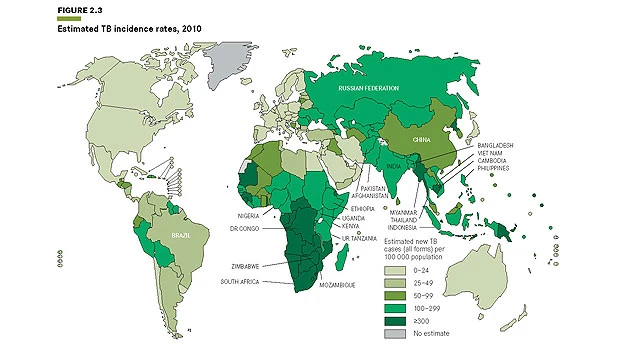
While both preventable and curable, TB remains one of the world’s major causes of illness and death, and in 1993, the World Health Organization declared TB to be a global health emergency. According to the World Health Organization (WHO), there are 22 high-burden countries identified for the incidence of TB. Saudi Arabia is not identified as a high-burden country for TB, but in our region, Afghanistan (22) and Pakistan (8) are classified as such.
Currently, the WHO lists Swaziland as leading the world in infections with 1,257 cases per 100,000 inhabitants and South Africa with 971 per 100,000 inhabitants. Saudi Arabia has one of the lowest infection rates, with only 18 cases per 100,000 inhabitants. (World Health Organization, Global tuberculosis control: surveillance, planning, financing: WHO report 2011.)