DAVOS: It will take some time for the oil market to rebalance, but the market will balance itself, the head of Saudi Arabia's state oil company Saudi Aramco said on Wednesday.
Expectations of higher oil prices by many investors have been shaken to a large degree, said Saudi Aramco Chief Executive Khalid Al-Falih, speaking at the World Economic Forum in Davos.
Saudi Arabia is the largest oil producer in OPEC, which in November declined to cut its oil output and decided instead to focus on market share.
Al-Falih said collaborative efforts can help optimize project execution and create cost efficiencies.
"We are investing in downstream, building resilience in the company thru balanced investment portfolio," he said.
"Industry needs to invest for the long term; shouldn't be swayed away by current downturn,” Al-Falih said.
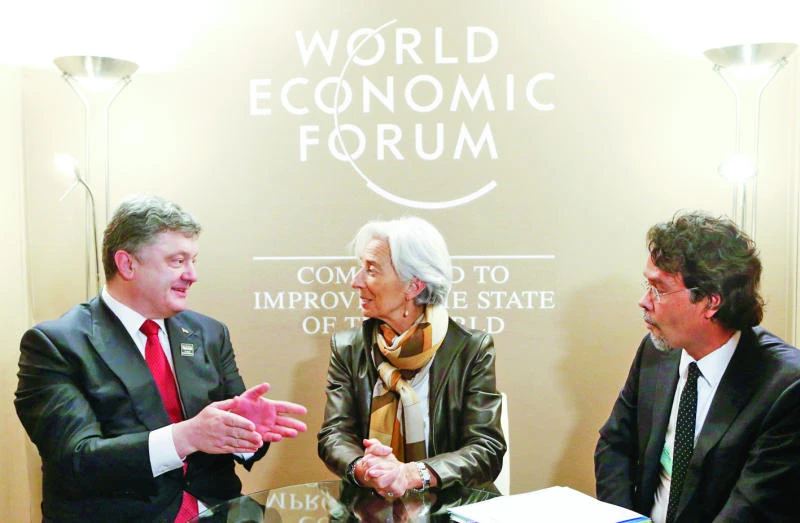
The World Economic Forum kicked off in the Swiss ski resort of Davos with the goal of "improving the state of the world." In practice, it's a massive networking event that brings together 2,500 heads of state, business leaders, philanthropists and artists.
Here are some glimpses of what's happening Wednesday at Davos:
OIL RIPPLES
The acute fall in oil prices and oil's impact on the global economy featured heavily in discussions at the World Economic Forum.
Most participants agreed the scale of the fall to below $50 a barrel— around 60 percent since last June — represents a big boon for the global economy, especially to net importers of oil such as the United States, China, Japan and the 19-country euro zone. The latter, which is stumbling along from one anemic quarter to the next, needs all the help it can get, even with European Central Bank President Mario Draghi expected to announce some stimulus Thursday.
Kenneth Rogoff, economics professor at Harvard University, thinks the positive repercussions will be "pretty big" within the year and that experts are underestimating the impact.
Clearly not all economies stand to benefit — and Russia may be the country most negatively affected by the sharp slide in oil prices. The International Monetary Fund warned this week that the Russian economy could contract 3 percent this year.
Russia's deputy prime minister, Arkady Dvorkovich, hoped that the fall in oil prices would soon end, saying only then would Russia's currency, the beleaguered ruble, find some support.
China's top central banker, Zhou Xiaochuan, also hoped some stability would return to oil prices and noted a potential negative side effect — it makes investing in alternative energies such as wind or solar power relatively less attractive. In a year when climate change is high on the international agenda, that's not helpful.
SWISS FOCUS
Host country Switzerland, in an unusual development, is itself the subject of many discussions this year at the forum. The reason: the massive surge in its currency's value last week.
The jump in the Swiss franc, which at one point Friday rallied 30 percent against the euro and the dollar in minutes, is seen as a sign of the jitteriness in the global economy.
It has also made attending the forum a whole lot more expensive. That's not a problem for many attendees, among them chiefs of industry, billionaires and politicians traveling on a government budgets. But it is ballooning the costs for the hundreds of professionals attending the forum to network with the bigwigs.
Those from the US will find their expenses over 15 percent higher, while euro zone attendees looking at a 20 percent hike.
Al-Falih: Oil industry needs to invest for the long term