The most prominent challenges faced by investors in the construction and contracting sector are represented in labor shortages and a lack of trained work force to execute precise professional work.
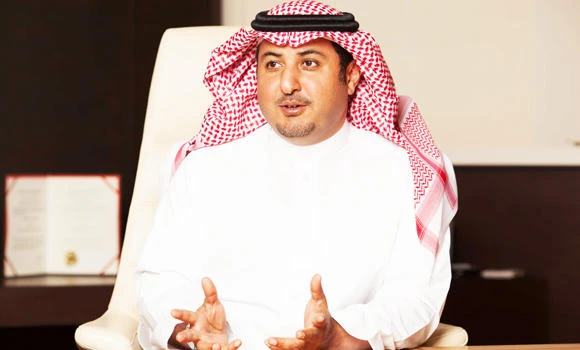
Additionally, competitiveness almost does not exist in this sector due to the dominance of specific companies over most of the mega projects, says Waleed Alsaghyir, vice chairman of Abdul Aziz Alsaghyir Holding Company (AAHC).
“Actually, the fiery competition among companies to win tenders is counted among the major challenges facing the contracting sector,” Alsaghyir told Arab News in an exclusive interview.
“This kind of competition drives the companies to burn prices in order to win tenders and exclude competitors (especially small entities) thus recording lower levels of profitability for the executing body (usually the big companies) and killing the ambition of the small companies leading to their closure or demise,” he said.
The long waiting period experienced by those bidding for tenders and the high costs and risks associated with the process of delaying all lead to cancelation of a lot of projects with zero compensation for these companies. This takes them to dark depths of debt, he said.
The unavailability of bank financing represents another problem — in the case of weak securities — especially with non-governmental projects, he said.
The difference in prices of materials and resources, mainly in the case of long periods between tender procurement and time of its awarding, stands as yet another problem that has inflicted harm upon a very large number of companies.
“These, according to us, are the major challenges and we do aspire for an official intervention in order to adequately address them,” he said.
These are highlights of the interview:
Q: In light of its diverse economic and investment activities, how does Abdulaziz Alsaghyir Holding (AAHC) contribute to the local economy?
A: Our company prides itself for being one of the Saudi companies that has, since more than quarter of a century and till our present moment, keenly supported the national economy.
In fact, our company had contributed to reviving and developing business in the various economic sectors on the national level by means of establishing or partnering in the establishment of powerful gigantic companies in diverse sectors; in time those companies proved to be milestones and points of loftiness in the national economy. Furthermore, AAHC owns investments and ownership interests in a number of companies that operate in different local, regional and even global sectors.
Our company has constantly played a key and constructive role in contributing to boosting the march of development in Saudi Arabia via selective strategic investment plans.
Some of the company’s main investment sectors include the agricultural, industrial and commercial sectors aside from the real estate, construction, financial and banking sectors.
Throughout its network of partners and subsidiaries, AAHC possesses incredible power of self-motivation to conduct diverse business in the entire region.
The company endeavors to expand the prospects of its ambitions by constantly planning to execute new investments and projects.
In achieving that, we started a series of business that initially comprised some small sectors then graduated to currently include globally gigantic sectors.
Q: AAHC seeks to attract investment opportunities and leave its imprint on the rapidly growing Saudi construction market. Do you personally expect more foreign investments in the Saudi construction market?
A: First, let me clarify that the real estate together with the construction and building sectors are of optimal importance for our company.
Real estate is one of the most crucial investment components in the Saudi market and is among those sectors that has maintained increasing growth rates throughout the last 10 years.
We believe that the real estate significance will even upsurge, especially given the increase in population and the customers’ growing desire for innovative real estate solutions that best suit the different incomes.
Actually, we believe that throughout the few coming years the Saudi private sector, particularly the construction and building one, will be achieving the biggest ever development boom in its history.
This aspect is further proved by the plenty of mega projects launched and implemented by the Kingdom as well as the steps taken by the Ministry of Housing through a number of programs dedicated to provide the citizens with an adequate housing system.
Accordingly, we do, by all means, expect a lift in the construction and building sector by about 5-15 percent in the next three years.
Definitely, the massive government expenditure on the infrastructure and mega-projects proposed in the development plans will help the Saudi real estate development sector maintain positive levels throughout 2014.
Such factors will stir the building and basic material companies and accordingly enhance the sector growth to eventually impact the economic growth.
In order to meet this demand and benefit of its growth, one of AAHC subsidiaries specialized in the field of construction works and building materials concluded its strategic investment plan of investing about SR250 million (equivalent to $66.6 million) in this sector.
In effect, the subsidiary will acquire some companies of economic feasibility in the Saudi market and will enter into strategic partnerships with global companies.
Our plan includes allocating a budget of SR350 million (about $93 million) to be spent on the acquisition processes, opening new branches and facilities and boosting the company list of products in the construction and building material market besides concluding agreements and alliances with the major international companies active in the field of building materials.
Our expansion in the Saudi market fits in the context of our ambitious strategy for growth on the local level and to take advantage of the huge demand for our products, ranging from solid wood, wood veneer and equipment and right down to the aluminum, iron and steel products.
Currently, our company is studying the prospect of doubling its sales and trade activity in the building materials sector by means of launching about 25 new branches over the next five years in an attempt to cover the needs of the entire Kingdom.
AAHC also plans to enhance its list of products with some new stuff, such as adhesives and disks, in partnership with one of the most prominent international companies in this field so as to provide the best international products of stunning high quality.
As regards the future of the Saudi contracting sector, especially with the foreign companies now in the picture, we believe that despite the abundance of mega projects in Saudi Arabia, including airports and economic cities, we still lack the experienced contractor who can execute such gigantic cities; in other words transferring the global experiences to the local market is indeed a positive matter.
Likewise, the Saudi partnerships with foreign companies will grant the Saudi contracting sector an additional experience.
Even with an increase in the flow of foreign investments into that sector, the work of such companies still requires the involvement of the local contracting companies, thus generating new powerful job opportunities for the local companies of competence, expertise and financial capacities.
Q: AAHC is one of the most prominent shareholders and founders of a number of companies that operate in various local and global sectors. Which companies do you own and precisely in which sectors?
A: Abdulaziz Alsaghyir Holding started its operations about 40 years ago for the purpose of providing services and solutions for the construction and building materials by means of continuous investment in the rich human and material resources.
All through this period, the company has executed many projects for both the public and private sectors to become today one of the major Saudi companies that locally and internationally possesses multiple powerful investments in the fields of contracting and investment.
Our company keenly pursues the attractive investment opportunities and it definitely aims to leave its very unique imprint on the rapidly growing Saudi construction market.
In the same manner, the company is firmly advancing toward securing its stature among the global companies.
In realizing this purpose, the company relies on the diversity in its investment portfolio and applies the highest international standards in the implementation of its miscellaneous projects and actualization of its strategic plans.
In this respect, Abdulaziz Alsaghyir Holding owns direct investments and ownership interests in a number of companies that operate in different local and international sectors, including Maskan Arabia for Real Estate Development, Bussma Real-Estates Management Co. Ltd., Extra Electronics, Nice for Home Supplies and Zonik Digital Electronic Solutions.
Furthermore, the company invests in the telecommunications and financing fields.
In this context, it possesses ownership stakes in Mobily — for being a founding partner — as well as in Lebanon and Almahjar Banks in Saudi Arabia besides Alrayn and Alsalam Banks in Qatar and Bahrain, respectively.
In addition, the company has a number of portfolios and direct investments in the real estate, petrochemicals, constructions and insurance sectors.
Q: You invest in the telecommunications and banking fields. Which of them do you mainly focus on and particularly in which investment sectors?
A: We do believe in balanced investment policies.
With that in mind, we cared to distribute our investments over a number of significantly vital investment sectors in order to reduce risks and achieve the utmost possible level of growth and stability in revenues.
In fact, we have managed to invest in every field of an estimated good future.
Therefore, we first invested in the real estate, construction, telecommunication, retail and banking sectors and then decided to invade unique and certainly promising sectors, including the privatization, mega-projects and food sectors, driven by our desire to diversify our investments and explore the prospects of new opportunities in multiple sectors.
Moreover, AAHC invests in telecommunications and financing fields with stakes as a founding partner in Mobily, Saudi Arabia’s second main GSM mobile operator.
The telecommunications sector is certainly a promising field for prosperous investments thanks to the government’s successful investment policies as well as its advanced regulations and legislations of relevance to the telecommunications sector.
Within the same framework, Abdulaziz Alsaghyir Holding has investments in the banking and financial sectors — playing a key role in the establishment of a number of banks, like Alrayan, Salam and Bloom banks in Qatar, Bahrain and Saudi Arabia, respectively.
Alsaghyir Holding is also a partner in the establishment of financial and investment companies such as Amwal Alkhaleej and Gulf Capital in the UAE, and Rana and Arcapita for Investment in Bahrain.
AAHC is proud of participating in various investment funds by trading in private equity and international funds along with holding a huge stock portfolio managed by specialized international banks.
The company’s investment and management of a balanced real estate portfolio is another major addition to its network of interests.
This aspect does not only include direct investment in the flourishing real estate market, but also the management of real estate and other property for the benefit of the customers of the company subsidiaries.
The company yet has investments in Dana Gas for Petrochemicals in Abu Dhabi, Nas Construction Solutions Co. in Bahrain and Malaz Insurance Co. in Saudi Arabia.
Q: What about the company investments and its strategic plans in the global markets?
A: Over the last few years, we started to dedicate part of our investments to a range of global markets, particularly in the real estate sector, where in 2013 the volume of our investments exceeded SR500 million.
Real estate investment deals concluded by AAHC throughout the last year were mainly concentrated in three major countries; namely, the US, the UK and Saudi Arabia.
Last year, the company entered into real estate deals in a series of global real estate markets with the purpose of accomplishing a bundle of investment targets.
At the foremost of these targets was entering the American real estate market in order to accomplish about 9 percent annual cash return where dissociation takes place in five years, thus accomplishing the intended investment target, especially that the value of the acquired real estate increases on dissociation. In light of the above mentioned factors, we invested in the US real estate sector after it finally started to recover from the consequences of the global economic crises and general atmosphere once more returned to favorable.
A number of current real estates were acquired in some of the major US states, including Texas, California and the Washington, DC.
Another investment target of ours is invading the European real estate markets via the establishment and development of various residential projects in significant landmarks over Europe.
By doing so, our company desires to achieve an average of 30 percent internal return on investment where dissociation takes place within two or three years.
In actualization of this purpose, the company invested in the establishment and development of real estate projects in the heart of London taking into consideration the importance and attractiveness of the location to the target buyer.
One of our investments that will prove rewarding is in the Kingdom’s real estate sector.
Demand will notably rise for this sector in course of the few coming years, especially that the Kingdom is currently the Middle East economic center and enjoys the bliss of economic and security stability.
Q: What in your opinion are the major challenges facing investors in the construction and contracting sector?
A: We believe that the current most prominent challenges are represented in the scarcity of labor and lack of work force trained to execute precise professional work.
Additionally, competitiveness almost does not exist in this sector due to the dominance of specific companies over most of the mega projects.
Actually, the fiery competition among companies to win tenders is counted among the major challenges facing the contracting sector.
This kind of competition drives the companies to burn prices in order to win tenders and exclude competitors (especially small ones) thus recording lower levels of profitability for the executing body (usually the big companies) and killing the ambition of the small companies leading to their closure or demise.
The long-waiting period for the tender awarding and the high costs and risks associated with the process of delaying all lead to cancelation of a lot of projects with zero compensations for these companies, thus thrusts them in the dark depths of debt.
The unavailability of bank financing represents another problem — in the case of weak securities — especially with the non-governmental projects.
The difference in prices of materials and resources, mainly in the case of long periods between the tender procurement and time of its awarding, stands as yet another problem that inflected harm upon a very large number of companies.
These, according to us, are the major challenges and we do aspire for an official intervention in order to adequately address them.
Q: In light of expansion in your different projects, how do you face the problems of labor shortage and rising wages of workers following the recently issued labor decisions, and what are the solutions through which the state can contribute to overcoming any probable obstacles?
A: The labor market encounters various problems. However, we constantly try to overcome them through systematic methods as we wholly and totally side with the system.
Labor shortage is a persistent problem but we try to overcome it via collaboration with companies active in the same field where they cooperate with us in the implementation of various projects and also support us with their work force.
As for the rising wages of workers, in fact, it negatively impacts us and we are totally against it.
In our opinion, the big increase in the fees required for issuing a worker’s annual work license (particularly those working in fields rejected by Saudis) will eventually harm the end user (the simple citizen) in terms of increasing the product’s final cost due to the increase in production expenses. Here, we would like to kindly request the Ministry of Labor to reconsider its decisions issued in this regard.
Q: How is job localization proceeding in the company, and what are the obstacles facing the contracting and investment companies in this respect?
A: Undoubtedly, the Saudi government and other official bodies of relevance constantly implement ambitious job localization plans.
However, I personally believe that the job market suffers similar problems.
As investors, we always try to overcome these problems by adopting the systematic methods.
Since the middle of 2011, the Ministry of Labor launched a number of programs tailored to improve the work market and raise the percent of Saudis working in the private sector (Saudization).
In this context, the ministry modified the employment system applied in the private sector.
It moreover compelled particular sectors to employ females and also imposed fines on the companies that employ more expatriates than Saudis. Here at AAHC, we have an ambitious Saudization program handled by the company’s HR officials.
In fact, we have attracted a wide number of Saudi youth in order to take charge of the senior administrative, executive and office works, and they have truly proved to be efficient.
But actually we cannot find enough Saudis to cover the labor shortage in some fields like, for instance, the contracting field, which is extremely physically demanding.
As already known, the Saudi youth are reluctant to carry out such jobs for many economic and social reasons.
Q: Would you highlight the company’s future projects on the local, regional and global domain?
A: The company is scheduled to powerfully contribute to two vital economic sectors: The first is the food industry sector, which the company regards as one of the most important economic sectors that will intensely develop given the growing demand for food due to the increase in population and rise in the purchasing power, in addition to the constant change in the customers’ tastes and desires.
In light of this, the company established Abdulaziz Alsaghyir Foods Co. Ltd. specialized in each and every kind of foodstuffs.
The company conducts its investments via the acquisition of companies in the field of foodstuffs or the establishment of specialized ones. In this regard, the company is keen on the manufacturing, distributing and retail aspects.
The second important sector – which the company will soon approach – is the privatization and mega projects sector.
Abdulaziz Alsaghyir Holding has contributed to the establishment of Kodorat Holding for Development, which is a limited liability company specialized in the field of privatization and mega projects, including operating and managing airport activities besides water, energy and mining projects and other gigantic investment fields.
The company functions through the acquisition of shares in some companies in addition to establishing a company specialized in the areas where it operates in collaboration with global technical partners.
Q: The Kingdom is renowned for being one the huge economic markets in the Middle East in general and the Gulf in particular; how do you explain the steadfastness of the Saudi market despite the surrounding political and economic variables that have impacted some of the neighboring countries?
A: The Kingdom represents an attractive environment for major investment companies and capitals.
There are also numerous success factors, including the political, economic and security stability, the availability of a very good infrastructure, possibility of getting cheap energy at prices unavailable elsewhere, miscellaneous governmental support and the possibility of attaining long-term credit facilitates.
Q: Which economic fields you hope the Kingdom will develop and what does it take the Kingdom to support those sectors?
A: For sure, our Kingdom has its own future plans in this field, still I think it will grant utmost priority to the privatization and industrial sectors, especially given the huge boom that the Kingdom currently witnesses.
My own point of view depicts three main factors that the Kingdom truly needs: First, triggering the privatization sector by means of accelerating it and launching more projects. Second, supporting the Saudi industrialists and resolving the issues of lands and licensees for factories.
Third, benefiting of the global experiences in the privatization and industrial fields particularly the best ones for countries that have recently risen in course of the last 25 years such as Korea, Singapore and Malaysia.
Q: How do you evaluate the Kingdom’s market laws and their impact on facilitating projects, and how do you estimate the market prospects in the coming years, especially that the Kingdom has been classified as the best Middle East country in terms of facilitating business?
A: Saudi Arabia keenly endeavors to provide a unique investment environment for the Saudi and non-Saudi investors.
By doing so, the Kingdom aims to develop investments and grant it the brilliant opportunity of supporting the economy.
As noted earlier, the security and political stability as well as the facilities guaranteed to the investors boost their odds of success and their desire to further invest in Saudi Arabia.
Here we should really focus on the fact that the Kingdom enjoys economic, security and political stability that represent an extremely important aspect for investment, especially given the current regional wars and conflicts that hugely impacted the economics of neighboring countries and harmed their investment environment to a great extent.
We certainly cannot predict the future, but we’re confident about having a wise and conscious political leadership that is totally keen on the welfare of our Kingdom and citizens.
From our past experiences, we gathered that the Kingdom’s policy is first and foremost on the side of peace and stability, and that makes us optimistic about the future.
We exert all our efforts to achieve the ultimate best and always set alternative plans in the event that any risk emergencies arise.
Q: What are the Kingdom’s key factors for the success of local investment, and are there any steps required to be taken in order to make investments more attractive and feasible for Saudis and foreigners?
A: Of course, there are various factors, including the availability of a well-prepared infrastructure, abundance of energy at comparatively low prices, in addition to the banking and government credit facilities.
On top of all those factors is the bliss of stability the Kingdom enjoys in all its forms.
Honestly, the only thing we lack is a little bit of organization and transparency in addition to getting rid of the killing bureaucracy.
At times, we suffer from some unstudied sudden decisions, which harm the investment environment as the investor tends to plan for the long term and those abrupt decisions may affect this approach.
Q: In your opinion, does the Saudi investor gain any benefits of partnering with foreign companies, and has your company taken any steps in this regard? Also, how do you respond to those who say that the foreign companies investing in Saudi Arabia have failed to establish projects of notable difference?
A: In the context of the developing age, we are still counted as a young country, so normally we need to acquire the prosperous experience and advanced knowledge of others.
The reason I am stating this fact is to highlight the necessity of establishing partnerships with foreign countries as well as institutions, companies and organizations from all developed countries for the purpose of transferring knowledge, technology and beneficial practical attitudes necessary for us as a developing country.
Such countries have evidently progressed in many scientific and practical fields and specializations so we can simply save years of research and development by taking over from where they have stopped; and as people say, there’s no need to re-invent the bike.
Actually, we have successful experiences in this field but this cannot be thoroughly discussed here.
In my opinion, the failure of some foreign companies reverts to poor planning with the evidence that major foreign companies have been operating for many years in the Kingdom within all its available economic sectors, reaping one success after another due to the availability of the success factors.
Actually, some foreign companies perform better in the Kingdom than in their own motherlands; well generally those who focus on obstacles will be trapped in them while those who focus on success will definitely reach it.
In fact, there is no such thing as a totally perfect investment environment and whoever praises other investment environments would find ours better in certain aspects.
This does not necessarily mean that we are the ultimate best; nevertheless we do enjoy a broad range of advantages, thanks to Allah.
Q: The world currently witnesses major economic problems, and regionally there are a lot of disturbances amid an unpredictable future. How do such matters generally impact the Kingdom’s investment markets and economy?
A: In my personal opinion, the Kingdom’s investments and economy are chiefly related to political stability and security.
Thanks to Allah, the people and government of our Kingdom are coherently woven within one fabric, making our Kingdom a uniquely united entity.
Accordingly, we all aspire that the future will bring us the world’s welfare, growth and prosperity; and why not when every single person is laboring to help elevate the Kingdom to the ultimate horizons of development in all fields. Thus, we have hopes and optimism for a very bright future.
Alsaghyir aims to build on Saudi investment success