BEIJING: China will further tighten controls on individuals’ foreign currency purchases to try to curb massive capital flight from the country as the yuan falls sharply against the dollar.
Individuals wishing to convert yuan to foreign currencies will now have to provide more detailed information to their bank, including an explanation of the funds concerned in addition to their identity papers, said the State Administration of Foreign Exchange (SAFE).
Each year individuals can convert up to the equivalent of $50,000, a maximum sum that will not change, it said on its website.
The tighter controls are aimed at preventing attempts to circumvent this quota.
The idea is to “combat illegal transactions, money-laundering and clandestine banks,” the agency said, vowing to multiply random checks and toughen its sanctions.
Banks must verify the authenticity of the information provided. In addition, from July, financial institutions will have to report to the central bank any international transfer exceeding 200,000 yuan ($28,800), in order to fight laundering, the central bank announced Friday.
The tighter controls are part of an array of measures taken by the government to curb huge capital outflows.
The equivalent of about $1 trillion was transferred out of China in 2015 and another $690 billion in the first 10 months of 2016, according to Bloomberg Intelligence estimates.
Slower growth in China, the weakness of the yuan and the recent rise in US interest rates are encouraging savers to invest their money in other currencies.
The yuan is at its lowest in eight years against the dollar and the outflows are putting further pressure on the currency.
Authorities are trying to support it by buying yuan, drawing on China’s foreign exchange reserves, which fell by nearly $70 billion in November.
Manufacturing growth slows
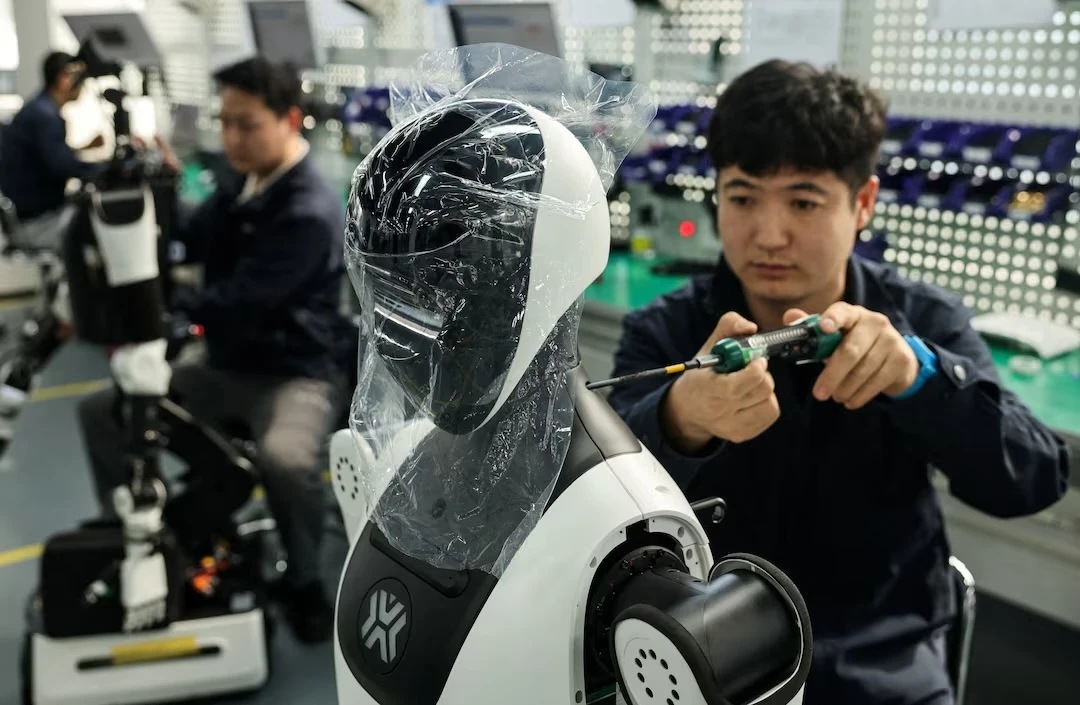
Manufacturing activity in China slowed slightly in December, official figures showed.
The official purchasing managers’ index (PMI), which gauges conditions at factories and mines, came in at 51.4 in December, down from 51.7 the previous month, which marked its fastest growth for two years.
A figure above 50 marks an expansion of manufacturing activity, and below 50 a contraction.
Analysts surveyed by Bloomberg had expected an average of 51.5 for December.
The key manufacturing sector had been struggling in the face of sagging world demand for Chinese products and excess industrial capacity left over from the country’s infrastructure boom.
But an upturn in the housing and construction markets thanks to cheap credit — following a series of monetary easing measures — has contributed to a sharp rebound in manufacturing activity.
However, an alternative index calculated independently by the research firm Caixin Insight Group, which focuses on small and medium-sized companies, shows a sharp decline in growth in recent months.
Its assessment for December will be published next week.
It is mainly large groups that have so far benefited from the government’s fiscal stimulus, notably through tax cuts and increased public spending on infrastructure.
China is a vital driver of global growth, but its economy expanded only 6.9 percent in 2015 — its weakest rate in a quarter of a century — and is predicted to have slowed further last year.
Beijing has said it wants to reorient the economy away from relying on debt-fueled investment and toward a consumer-driven model, but the transition has proven challenging.
Individuals wishing to convert yuan to foreign currencies will now have to provide more detailed information to their bank, including an explanation of the funds concerned in addition to their identity papers, said the State Administration of Foreign Exchange (SAFE).
Each year individuals can convert up to the equivalent of $50,000, a maximum sum that will not change, it said on its website.
The tighter controls are aimed at preventing attempts to circumvent this quota.
The idea is to “combat illegal transactions, money-laundering and clandestine banks,” the agency said, vowing to multiply random checks and toughen its sanctions.
Banks must verify the authenticity of the information provided. In addition, from July, financial institutions will have to report to the central bank any international transfer exceeding 200,000 yuan ($28,800), in order to fight laundering, the central bank announced Friday.
The tighter controls are part of an array of measures taken by the government to curb huge capital outflows.
The equivalent of about $1 trillion was transferred out of China in 2015 and another $690 billion in the first 10 months of 2016, according to Bloomberg Intelligence estimates.
Slower growth in China, the weakness of the yuan and the recent rise in US interest rates are encouraging savers to invest their money in other currencies.
The yuan is at its lowest in eight years against the dollar and the outflows are putting further pressure on the currency.
Authorities are trying to support it by buying yuan, drawing on China’s foreign exchange reserves, which fell by nearly $70 billion in November.
Manufacturing growth slows
Manufacturing activity in China slowed slightly in December, official figures showed.
The official purchasing managers’ index (PMI), which gauges conditions at factories and mines, came in at 51.4 in December, down from 51.7 the previous month, which marked its fastest growth for two years.
A figure above 50 marks an expansion of manufacturing activity, and below 50 a contraction.
Analysts surveyed by Bloomberg had expected an average of 51.5 for December.
The key manufacturing sector had been struggling in the face of sagging world demand for Chinese products and excess industrial capacity left over from the country’s infrastructure boom.
But an upturn in the housing and construction markets thanks to cheap credit — following a series of monetary easing measures — has contributed to a sharp rebound in manufacturing activity.
However, an alternative index calculated independently by the research firm Caixin Insight Group, which focuses on small and medium-sized companies, shows a sharp decline in growth in recent months.
Its assessment for December will be published next week.
It is mainly large groups that have so far benefited from the government’s fiscal stimulus, notably through tax cuts and increased public spending on infrastructure.
China is a vital driver of global growth, but its economy expanded only 6.9 percent in 2015 — its weakest rate in a quarter of a century — and is predicted to have slowed further last year.
Beijing has said it wants to reorient the economy away from relying on debt-fueled investment and toward a consumer-driven model, but the transition has proven challenging.