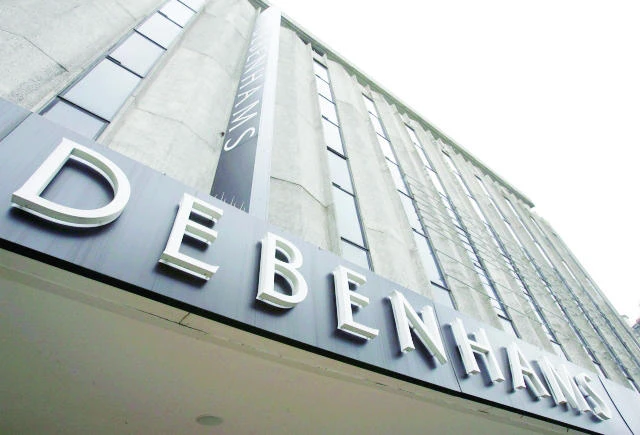
LONDON: The finance chief of Debenhams Plc quit after trading updates showed just how far the 200-year-old British retailer had fallen behind rivals John Lewis and House of Fraser over the crucial Christmas period.
The departure of Simon Herrick from Britain’s second-largest department stores group follows a profit warning on Tuesday, its second in less than a year, after the company admitted its margins had been squeezed by heavy discounts that nonetheless failed to spark a late surge in festive shopping.
Debenhams blamed a 25 percent cut to its first-half profit forecast on an unprecedented industry-wide outbreak of Christmas promotions that left many British retail centers emblazoned with “sale” signs, as well as the impact of mild autumn weather on demand for warm clothing and continued pressure on household incomes.
But some analysts said Debenhams has struggled more than most due to its weaker online offering, reliance on discount offers whose impact may damage its image over time and own-brand ranges that lack the cachet of labels found at rivals.
“We are confident that the strong updates from House of Fraser and John Lewis will put them both firmly in the ‘winners’ column this year, but .. see enough to suggest that Debenhams’ problems are more company-specific than market-led,” analysts at brokerage Numis said.
Debenhams stores have also failed to keep pace with the more modern outlets of John Lewis, Britain’s biggest department store group, which has outperformed competitors in recent years due to its strong web presence, attractive stores and more affluent customer base focused in southeast England.
Trading updates from employee-owned John Lewis and smaller rival House of Fraser showed a stark contrast with Debenhams, as both posted record Christmas sales on the back of strong demand for more premium fashion and electrical items and growing online trade.
“With a price-matching promise instead of a discounting strategy on branded products and only infrequent planned discounting on its private labels, John Lewis does not devalue its product offer,” said analyst Kate Ormond at reserch group Verdict.
Despite discounts on some products of 50 percent in the run-up to Christmas, Debenhams said prices would be slashed further in January and February to shift stock, knocking 80 to 100 basis points off its gross margin for the first half.
Over the 17 weeks to Dec. 28, Debenhams eeked out 0.1 percent like-for-like sales growth, well behind the 4.3 percent and 6.9 percent recorded by House of Fraser and John Lewis respectively in the smaller reporting periods of nine and five weeks to Dec. 28.
Despite efforts to improve its fortunes, analysts at Numis expect Debenhams’ 156-store UK business to post a fourth straight year of earnings decline this year, dropping from 174 million pounds in 2010 to 95 million.
Faced with falling “footfall” figures — or the number of store visitors — the group is in the middle of a program to modernize its stores, such as a 25 million pound makeover of its flagship on London’s Oxford Street, and is working on ways to improve its online presence.
Debenhams finance chief quits as rivals triumph in Christmas battle