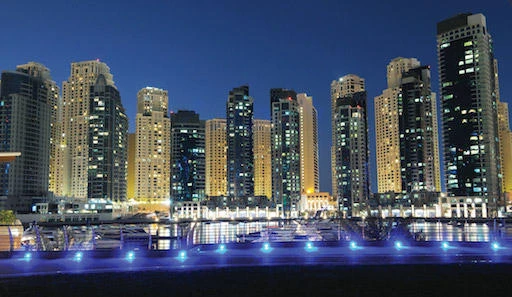
DUBAI: Dubai’s luxury home prices rose at their slowest pace in over a year in the final quarter of 2013, as steps by authorities to avert another property market bubble took effect, a report said.
Both prime apartment and villa prices grew 15 percent year-on-year in the fourth quarter, after an average annual rate of 21 percent in the preceding four quarters, property consultants Knight Frank said.
A number of “cooling” measures in the second half of the year were the reason for the deceleration, it added.
Dubai doubled the registration fee charged on real estate transactions to 4 percent in October in an effort to prevent excessive speculation in its property market, which led to a real estate industry collapse in 2008-2009.
Also last year, the UAE central bank introduced caps on banks’ mortgage lending to foreigners and locals buying property in the country.
Prime home prices, however, could still rise by 10-15 percent this year, buoyed by limited new supply in 2014 and a boost in confidence after Dubai won the right to host the World Expo in 2020, the report added.
After crashing more than 50 percent as the bubble burst, pushing Dubai close to a debt default, the emirate’s residential real estate prices began rebounding rapidly last year. The International Monetary Fund warned in July that authorities might need to intervene to prevent another bubble from forming.
The report said average prime apartment prices were still about a third below their peak.
Another report from a real estate advisory firm said Abu Dhabi’s residential real estate market rebounded strongly last year from a slump, helped by government intervention.
Jones Lang LaSalle said prime residential sales prices jumped 25 percent in 2013, with an increase of 6 percent in the fourth quarter alone.
Rents in prime residential projects increased 17 percent, with a rise of 8 percent in the fourth quarter, driven partly by the creation of new jobs in Abu Dhabi and the removal of a 5 percent cap on rent rises, it said.
Abu Dhabi’s real estate market slumped about 50 percent from its peak in 2008 after the global financial crisis triggered a crash. The Jones Lang LaSalle reports suggests Abu Dhabi may now be recovering roughly as fast as neighboring Dubai.
The capital of the UAE has been making attempts to boost its residential market through new rules for the last couple of years.
In 2012, Abu Dhabi pressed public sector employees who reside outside the emirate to relocate within its borders, which analysts said aimed to address heavy oversupply in its real estate market. Many employees commuted daily from Dubai.
Last November, Abu Dhabi scrapped a 5 percent cap on annual rent increases. The cap had been imposed in January 2008 after surging demand drove rents and inflation higher.
“A sustainable recovery is dependent on the government continuing to implement further supply controls to ensure a balanced real estate market going forward,” said David Dudley, regional director and head of the Abu Dhabi office of Jones Lang LaSalle.
“The Abu Dhabi market looks positive in the medium term, but there will be selective strong performers specific to sectors, locations, user requirements, property management and overall infrastructure.”
Dubai luxury home price growth slows on state cooling measures