NEW YORK: Americans hunting for a bargain on a new Beemer, bottle of Chateau Margaux or Hermes handbag thanks to the sliding euro should put away their gold cards. European luxury goods sold in the US still carry luxurious price tags.
The European currency has fallen 10 percent against the dollar this year. In theory, car dealerships, department stores and other companies that sell goods from Europe could pass on the savings to their American customers, said Ira Kalish, chief global economist at Deloitte, the consulting and accounting firm.
“But what would be the point of doing that?” Kalish asked. Demand for anything made in Europe is so strong that they have little trouble moving merchandise. “From their perspective, it’s better to leave the price unchanged and pocket the profit.”
The euro has been in a long tailspin. Last April, it was trading just shy of $1.40. Since then, it sank as low as $1.04 in March before bouncing back to $1.10 on Monday.
In other words, you used to have to pay $1.40 to buy a single euro; today, you pay just $1.10.
So where are the bargains? There’s no reason to think that prices for Italian shoes and French red wines will fall along with the euro, analysts said. Part of the reason is that most European consumer products sold in the US aren’t aimed at most consumers. Armani, Hermes, and Prada cater to the affluent, selling well-made products as well as the perception of prestige and status. They have an image to maintain and slashing prices isn’t part of it, Kalish said. Loyal customers might consider it, well, gauche.
“If a luxury product becomes really cheap, they might think, ‘Why am I buying it, then?’” Kalish said. “The high price makes it attractive for some people.”
WATCHES, HANDBAGS
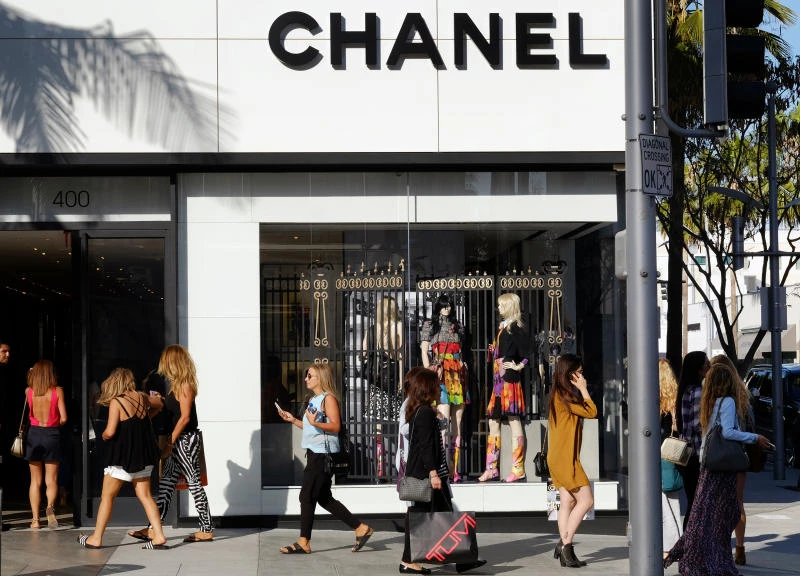
Anyone looking to score a Chanel handbag on the cheap is in for a letdown.
Chanel’s classic handbag carried a $4,900 price tag last year, according to Robert Burke and Associates, a luxury consulting firm. That’s up from $2,250 in 2007.
Chanel is reportedly tweaking prices in other parts of the globe while leaving them alone at its US stores.
Robert Burke said he expects other luxury retailers to follow Chanel’s cue.
Demand remains so solid for these products in the US that high-end retailers have no reason to pare prices. It would only tarnish their elite image.
Nate Herman, vice president of international trade for the American Apparel & Footwear Association, said higher manufacturing costs give these companies another reason to keep prices high.
Over the past decade, luxury brands such as Louis Vuitton and Prada shifted some of their production to Asia, as manufacturers in the region improved their ability to craft high-end goods. As a result, the euro’s fall against Asian currencies has driven up their costs.
CARS
It’s the same story with German luxury cars.
Americans with a taste for fancy rides are already able to afford them, so there’s no need for Mercedes-Benz, BMW or Audi to pass along the benefit of a falling euro to customers by slashing prices.
Demand for these German cars remains solid.
Audi’s US sales climbed 15 percent last year, while Mercedes’s sales rose nearly 10 percent and BMW’s 6.5 percent.
Each company is likely to pocket the extra money from exchanging dollars to euros, no matter whether the cars are made overseas or in the US.
The exception might be Volkswagen, whose US sales sank 3 percent last year.
The company behind the Beetle, Golf and Touareg could use the weak euro to cut prices and lure more buyers.
Euro falls near $1, but goods remain pricey