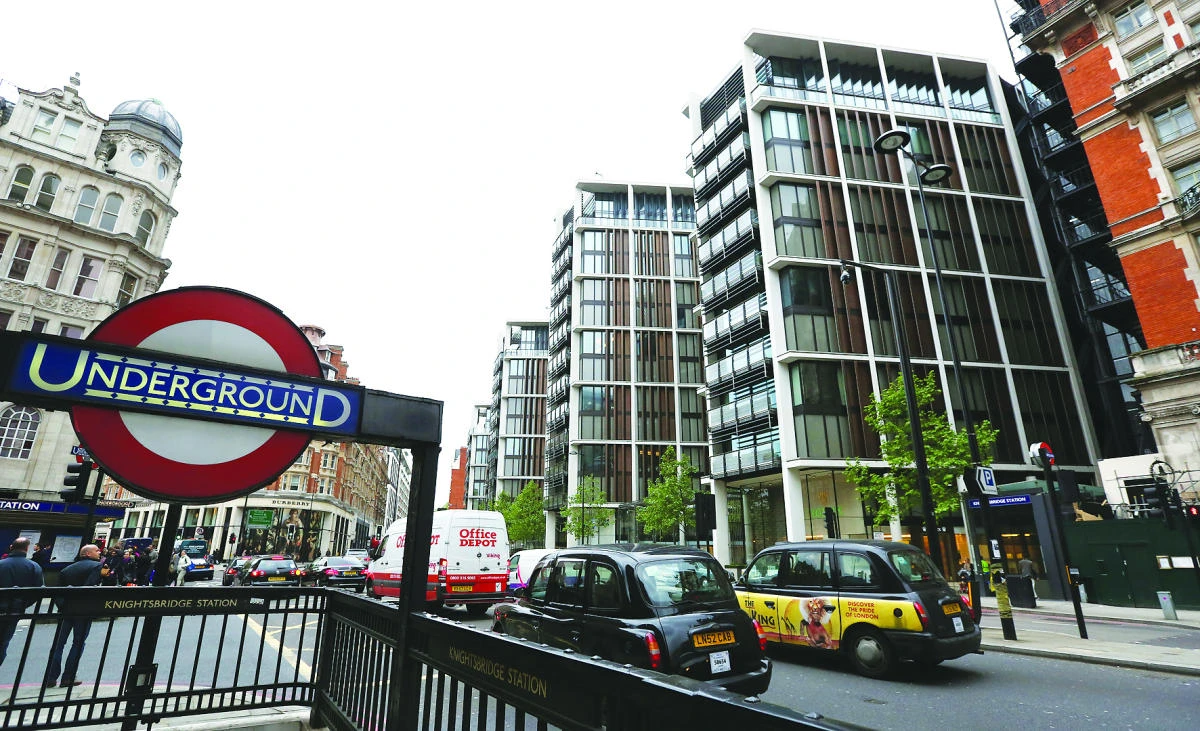
LONDON: A flat sold for £90 million ($117 million) in Knightsbridge in the second quarter was the most expensive residential property sale to date, according to data compiled by consultancy London Central Portfolio (LCP).
The property at 199 Knightsbridge — opposite Hyde Park and round the corner from the Harrods department store — was bought by Ashley Tabor, the owner of the UK radio stations Classic FM and Heart FM. He plans to knock through to the next-door apartment which he already owns to create one huge deluxe flat.
The sale is just one sign that the market for prime central London residential property began to recover in the second quarter, after two years of stagnation due to the Brexit impact and taxation issues, according to LCP’s analysis, based on data recorded by the Land Registry in England and Wales.
LCP defines prime central London as any properties in the Royal Borough of Kensington and Chelsea and the City of Westminster.
Average prices in prime central London reached £1,946,151 in the second quarter, marking a quarterly price growth of 7.9 percent. Sales volumes also strengthened, with an annual increase of 4.8 percent to reach 3,885 properties sold.
Much of this recovery was due to sales of luxury high-end property, rather than being indicative of a broader recovery across the central London market, said Naomi Heaton, CEO of LCP.
“The increase in average prices appears to reflect a greater proportion of high-value properties being sold, rather than any significant underlying growth,” she said.
“Not only have we seen some very large individual sales but transaction data shows the £5 million-£10 million bracket was the most active in 2Q with a 23 percent increase over 1Q. This can be attributed to international homebuyers taking advantage of notable price discounts, alongside beneficial currency exchange rates.”
Average prices in the top 10 percent of the market rose by 20 percent in the second quarter to reach £8 million.
The most sluggish growth was in the buy-to-let sector, with only a 1.3 percent increase in average prices for properties under £810,000. If the top 10 percent of the market is excluded, the average quarterly price growth in Central London was 4.5 percent.
“Looking at the monthly breakdown gives us a clearer picture of what is really happening in the market overall. Whilst bumper transactions boosted average prices to as high as £2.2 million in April and May, which included the most expensive sale to register through (the) Land Registry at £90 million, June reflected a more sedate picture with average prices falling back to £1.65 million,” said Heaton.
The property market looked less upbeat in greater London, where annual transactions fell by 24 percent in the second quarter with just 88,545 sales.
Elsewhere in England and Wales, the property market continues to stagnate, with close to zero quarterly price growth of 0.27 percent. Average residential prices now stand at £287,823.
The property at 199 Knightsbridge — opposite Hyde Park and round the corner from the Harrods department store — was bought by Ashley Tabor, the owner of the UK radio stations Classic FM and Heart FM. He plans to knock through to the next-door apartment which he already owns to create one huge deluxe flat.
The sale is just one sign that the market for prime central London residential property began to recover in the second quarter, after two years of stagnation due to the Brexit impact and taxation issues, according to LCP’s analysis, based on data recorded by the Land Registry in England and Wales.
LCP defines prime central London as any properties in the Royal Borough of Kensington and Chelsea and the City of Westminster.
Average prices in prime central London reached £1,946,151 in the second quarter, marking a quarterly price growth of 7.9 percent. Sales volumes also strengthened, with an annual increase of 4.8 percent to reach 3,885 properties sold.
Much of this recovery was due to sales of luxury high-end property, rather than being indicative of a broader recovery across the central London market, said Naomi Heaton, CEO of LCP.
“The increase in average prices appears to reflect a greater proportion of high-value properties being sold, rather than any significant underlying growth,” she said.
“Not only have we seen some very large individual sales but transaction data shows the £5 million-£10 million bracket was the most active in 2Q with a 23 percent increase over 1Q. This can be attributed to international homebuyers taking advantage of notable price discounts, alongside beneficial currency exchange rates.”
Average prices in the top 10 percent of the market rose by 20 percent in the second quarter to reach £8 million.
The most sluggish growth was in the buy-to-let sector, with only a 1.3 percent increase in average prices for properties under £810,000. If the top 10 percent of the market is excluded, the average quarterly price growth in Central London was 4.5 percent.
“Looking at the monthly breakdown gives us a clearer picture of what is really happening in the market overall. Whilst bumper transactions boosted average prices to as high as £2.2 million in April and May, which included the most expensive sale to register through (the) Land Registry at £90 million, June reflected a more sedate picture with average prices falling back to £1.65 million,” said Heaton.
The property market looked less upbeat in greater London, where annual transactions fell by 24 percent in the second quarter with just 88,545 sales.
Elsewhere in England and Wales, the property market continues to stagnate, with close to zero quarterly price growth of 0.27 percent. Average residential prices now stand at £287,823.