BERLIN: The German government plans to close a legal loophole to prevent utility companies from evading a 40 billion-euro ($45 billion) payment to fund the country's nuclear exit, a copy of the draft law seen by Reuters shows.
The move deals a major blow to the country's biggest utility E.ON, which has announced plans to spin-off its ailing power plants, blaming German energy policy that has promoted renewables at the expense of conventional power. It threatened legal action on Wednesday if the revision of the law goes ahead.
Under current corporate laws German energy companies are only liable for spun off companies for five years. The revised law will make them liable for the costs of shutting down and decommissioning power plants, as well as disposing of nuclear waste, for as long as it takes, even if they spin off subsidiaries that own the nuclear entities, the document showed.
"The five-year period is by far too short. Dismantling a nuclear plant alone usually takes about 20 years," the text of the draft law said. It foresees extending liability until the point at which remaining nuclear waste has been sealed.
Germany's "big four" utilities, E.ON, RWE, EnBW and Vattenfall, have set aside a combined 38.5 billion euros to cover the dismantling of their nuclear plants. But there has been concern that they might break up to avoid paying for dismantling the plants — the last of which will be shut for good in 2022 — and the revised law aims to prevent the costs falling on the taxpayer.
Relevant government ministries approved the plans on Wednesday with few changes and the Cabinet will now discuss it, an economy ministry spokeswoman said.
E.ON said it would oppose any potential change of the law.
"Should (the draft) be passed in its current form, we would likely have to take legal action," a spokesman for E.ON said in emailed comments to Reuters.
E.ON shares fell as much as 2.1 percent following the news but narrowed losses to trade down 0.3 percent by 1314 GMT.
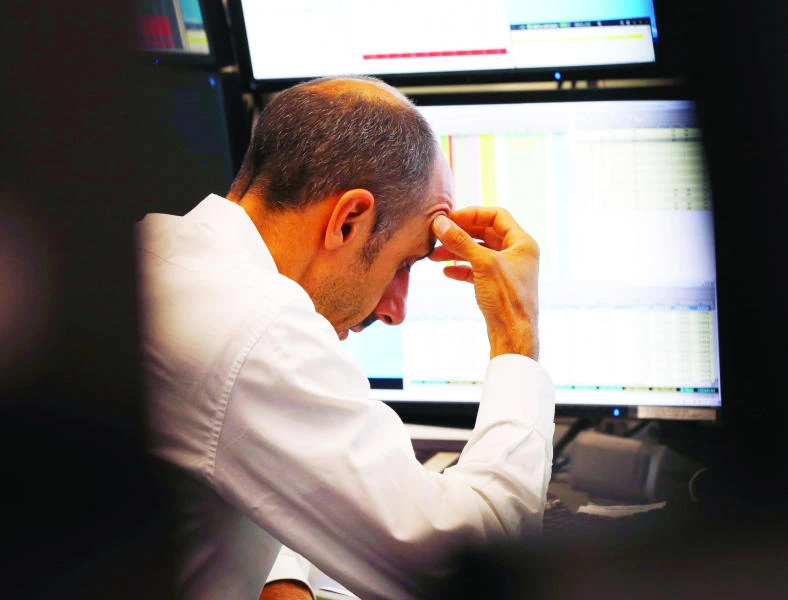
"The bad news just keeps coming," a Frankfurt-based trader said.
Shares in E.ON, under pressure from ultra-low wholesale power prices that have driven many of its power plants into the red, have shed about a third of their value since the spin-off was announced last year.
The German government is stress-testing the provisions made by utilities in Germany and expects to publish its results in the autumn.
It is also setting up a commission to make recommendations by the end of November on how to safeguard provisions in the long term.
Germany deals blow to E.ON spin-off with draft law