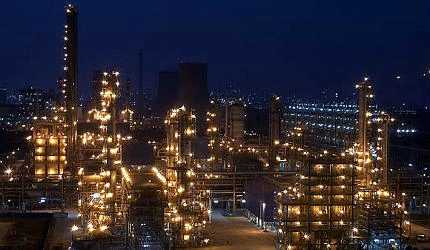
With water consumption by the GCC petrochemicals industry reaching 1.16 trillion cubic meters in 2012, petrochemical producers must conserve water in their manufacturing processes to avoid the implementation of strict regulations, advises the Gulf Petrochemicals and Chemicals Association (GPCA), claimed to be the region’s longest standing trade association.
The findings on water usage in the Gulf’s petrochemical industry are revealed in the GPCA’s latest Performance Metrics Report, which also measures greenhouse gas emissions and hazardous waste generated by the sector. According to the report, water consumption in the region has risen from 1.12 trillion cubic meters in 2010, an increase of 3.5 percent over a two-year period.
“The industry’s capacity has grown by more than 12 percent over the last two years. However, GCC petrochemical companies should take steps to conserve water due to the scarcity of this finite resource in the region,” said Abdulwahab Al-Sadoun, secretary general of the GPCA.
Last year, the United Nations World Water Development Report noted that the growth in population and consumption in the Middle East threatened the quality and quantity of available water in the region, which now imports up to 60 percent of its fresh water.
Significant volumes of water - either from underground sources or desalination - are used by the petrochemical industry in the GCC for the production of petrochemicals or for cooling purposes, explained Al-Sadoun. “It is in the interest of the petrochemical industry to conserve and protect this finite resource. The sector is dependent on water in nearly every aspect of its value chain,” said Al-Sadoun.
GCC petrochemical producers must develop strategies, processes and practices that conserve the quantity and quality of water now. “If the GCC leaders pass regulations on water conservation tomorrow, it will be very difficult for the region’s petrochemical producers to change their procedures overnight.”
The region’s petrochemical producers have already started to change the way they use water. Borouge uses over a billion cubic meters fresh and municipal water to produce plastics. However, between 2011 and 2012, the company saved 24 million cubic meters of fresh water by introducing cold seawater, sourced from the local utilities plant, in their manufacturing processes.
Meanwhile, Saudi Basic Industries Corporation (SABIC) has a water management system that is focused on minimizing the use of fresh water. The company recycles a large percentage of water in its operations. This strategy has led to savings of one million cubic meters of fresh water in the 2011-2012 period.
Water management in the petrochemicals industry will be a key focus at the inaugural Sustainability Conference. Hosted by the GPCA, the event gathers industry leaders and experts to discuss ways in which chemicals companies can operate profitably, in a way that is responsible to the people and planet.
The GPCA Sustainability Conference will be held from Dec. 17-19 at the Ritz-Carlton Hotel in DIFC.
GPCA urges Gulf petrochemical producers to conserve water or face strict regulations