COLOMBO: The Sri Lankan rupee ended slightly higher on dollar sales by exporters and banks in thin trade as dealers were unwilling to trade above the central bank’s earlier directed rate of 132 per dollar, dealers said.
The International Monetary Fund earlier urged the central bank to keep interest rates steady and limit its intervention in the rupee exchange rate “to dealing with excessive short term volatility.”
The rupee spot closed at 131.90/132.00, compared with Wednesday’s close of 131.95/132.05.
“The rupee is firmer on banks and exporter selling (of dollars). There is not much of a demand,” said a currency dealer who declined to be named.
Many dealers expect the rupee to hold steady around the 132.00 level following inflows from the National Savings Bank’s $750-million five-year bond issue. (Full Story)
However, some dealers also said the rupee could falter in the medium term, noting the recent pressure caused by lack of steady dollar inflows from exports and remittances from overseas workers.
The currency hit a record low of 135.20 on Aug. 28, but has managed to stem further losses since then. It has fallen 3.3 percent this year, after depreciating about 10 percent in 2012.
The IMF warned Sri Lanka that its economy may grow more slowly than expected as it urged the island nation to improve its business climate.
The IMF mission made the comments after a visit to assess the economy.
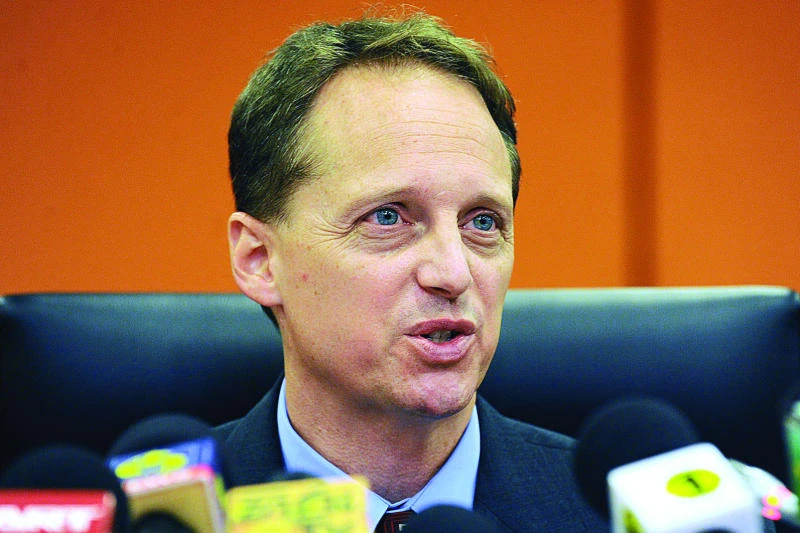
Mission chief Todd Schneider said his talks with business leaders suggested economic conditions had worsened.
The IMF expects growth for the current calendar year to be about 6.5 percent, Schneider said, a full percentage point lower than the central bank’s recent forecast of 7.5 percent.
Lower exports due to weaker overseas markets, slower credit disbursement to the private sector and flat government revenues will drag down growth, Schneider added.
The economy recorded eight percent-plus growth rates for two straight years after security forces crushed separatist Tamil Tiger rebels in May 2009 and declared an end to decades of ethnic war.
The island logged growth of 6.4 percent last year.
“Efforts to boost growth should focus on structural measures such as tariff reforms, enhanced revenue mobilization and improvements in the general business climate,” Schneider said.
Sri Lanka must also ensure investments made with foreign borrowing offer healthy returns in order to service external debt, which he described as too high.
“New external borrowings should be done with a close eye to sustainability,” Schneider said.
The government and banks have raised billions of dollars in debt at rates of sometimes over eight percent, making the borrowing among the world’s most expensive.
Schneider said Sri Lanka’s short-term external debt represented 51 percent of the country’s foreign reserves. Central bank data showed the nation’s foreign reserves totalled $6.3 billion at the end of July.
IMF warns Sri Lanka of slower growth