JEDDAH: Saudi economic data for the month of February continues to hint at a mixed picture, according to a report,
Data on ATM withdrawals and point-of-sales (POS) transactions showed a monthly slowdown, while the non-oil PMI rose from its lowest point on record.
The report, released by Jadwa Investment, states: “In February, ATM withdrawals and POS transactions fell by 3.4 percent, and 8 percent, month-on-month, respectively. Cement sales were at healthy levels during the first two months of 2016.”
In terms of government finance, the report states that net monthly change to government accounts with SAMA remained in the negative territory in February.
The main net withdrawal came from the projects account, while current deposits posted a net addition.
Bank credit to the private sector remained resilient during the month, rising in both month-on-month and annual terms. As a result, the loan-to-deposit ratio rose to 88.1, its highest since November 2008.
According to the report, this reflects an increase in refinancing activity as businesses manage their cash flows in response to delayed government payments.
Bank credit to private sector rose by 1.5 percent month-on-month and 9.9 percent year-on-year.
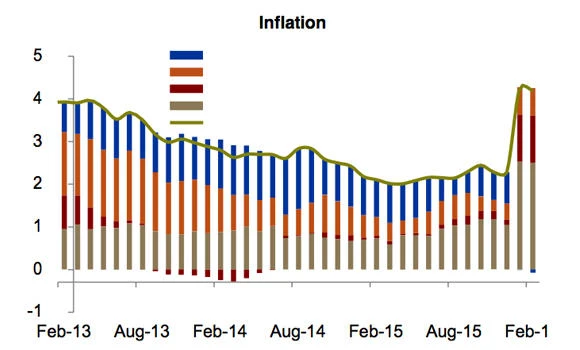
Saudi Consumer Price Index (CPI) edged downward to 4.2 percent in February, down from 4.3 percent in January.
The report states that food prices remain subdued, continuing to be impacted by the deflationary trend in international foodstuffs.
Brent rose by 19 percent and WTI by 24 percent month-on-month as sentiments were lifted over talks of a ‘production freeze’. A number of OPEC countries and Russia have agreed to meet in April to further discuss the ‘production freeze’ proposal. The report adds that, in the background, commercial crude stocks continue to rise.
Credit to the private sector remained resilient in February, rising in both month-on-month and annual terms.
Bank credit to private sector rose by 1.5 percent month-on-month and 9.9 percent year-on-year
“We think this reflects an increase in refinancing activity as business manage their cash flows in response to delayed government payments,” said
As a result, the loan-to- deposit ratio rose to 88.1, its highest since November 2008. This led some banks to increasingly rely on interbank lending to manage their liquidity.
This led some banks to tap into the interbank market, resulting in a sharp increase in this type of lending activity to SR71 billion in February, the highest on record.
The report added that a rise in oil prices helped ease speculative pressure on the one year US dollar/riyal forward rate during the month.
KSA bank credit to private sector remains resilient