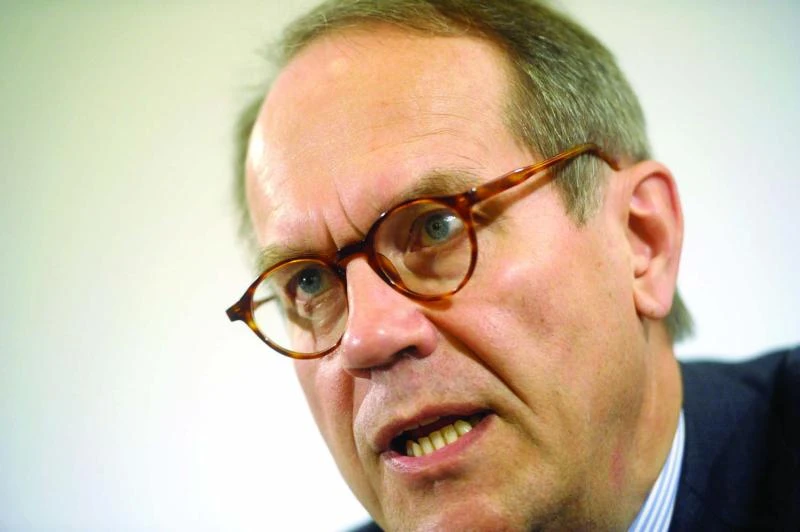
HELSINKI: Ex-Nokia CEO Jorma Ollila says the former No. 1 mobile phone company made several mistakes at its peak, including failure to predict changing customers' needs.
In his autobiography, which translates from the Finnish as 'An Impossible Success', Ollila concedes that after 2001 the Finnish company was unable to sustain its role as the main innovator in the wireless industry.
Several of its models flopped and it failed to sense popular trends such as folding clamshell handsets and touch screen models.
Ollila said at the book publication that Nokia became "painfully aware" that its cellphone platforms lagged behind US software and the challenges posed by the iPhone.
He also described the planned sale of Nokia's smartphones and services to Microsoft as "dramatic and brave."
Nokia realized the significance of smartphones "too early", the former chief executive says in his new book, countering the view that the brand's failure to remain a world leader was due to it being late to spot the market shift.
In his autobiography, Ollila rejected the idea that Nokia failed to foresee the popularity of phones connected to the Internet.
"We believed in the arrival of smart phones. We believed in it so strongly that we even created a new organisational unit focusing on smart phones," 63-year-old Ollila wrote in the book.
Nokia launched a reorganization in 2004 to "reflect over what was about to happen on the phone market," according to Ollila.
The former chief executive recalled that the mobile phone companies didn't have much to offer the early smart phone users before the withering success of Apple's iPhone.
"It later turned out that we had invested in the right idea, but far too early... It wasn't until much later that the operators were ready to offer services that accelerated the rise of the smart phones," he wrote.
When the iPhone arrived on the market in 2007, Nokia presented the successful N95 — without a touch screen. But the follow-up, the N97 — with a touch screen, wasn't launched until 2009, becoming "a total failure, just when Nokia needed to succeed and change its direction," wrote Ollila.
"We did the right things, but the results were still weak. We tried to do exactly the same things as what Apple, Google and Microsoft already would do later," he wrote.
Nokia will hand over its mobile phone handset division to US giant Microsoft in early 2014 for 5.44 billion euros ($7.4 billion), ending the Finnish company's in the segment in which it was long a global leader.
Ollila also regretted having missed out on software design, especially the development of the operating system Meego.
"Even though 1,800 employees" worked on Meego, the results were "very poor", Ollila told media in Helsinki.
Finally, Nokia went for Microsoft's new Windows mobile operating system, after "exceptionally careful" planning.
The ex-chief executive also noted achievements, like the decision not to buy American telecommunications equipment company Lucent in 2005.
Nokia concluded the company had "too high fixed costs and too much staff," and that it needed a worldwide reorganisation. In 2006, it was bought by French Alcatel, since then with shaky results.
"It was clear pretty soon that Alcatel didn't get the expected benefits. Like in many business acquisitions, the synergies didn't show," said Ollila.
Nokia downturn: Ex-CEO Ollila concedes mistakes