- Chairman Senate committee on privatization says confident the dispute would be resolved within two months
- Recovering the amount will be a welcome boost to Pakistan’s cash-strapped government
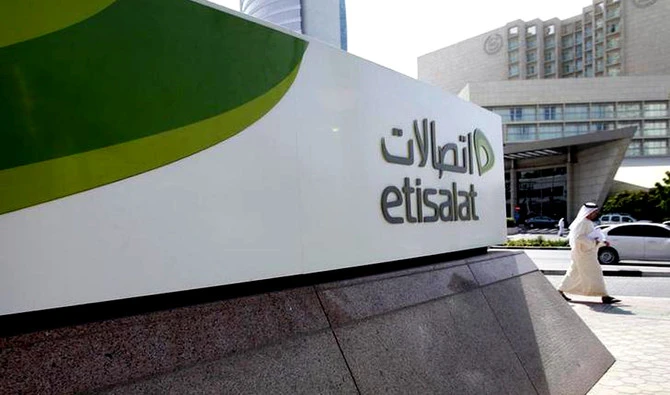
KARACHI: Pakistan and the United Arab Emirates are inching closer to resolving a fourteen year deadlock with Emirati telecommunications company Etisalat involving a pending $800 million bill from the privatization of Pakistan Telecommunication Company Limited (PTCL), a senior Pakistani official said on Saturday.
An Etisalat consortium bought a 26-percent stake in PTCL for $2.6 billion in 2005 that also gave Etisalat majority voting rights. The UAE firm paid an initial $1.80 billion as per the deal terms, which also included transferring ownership of the properties to PTCL from the government.
Etisalat was to pay the remaining $800 million it owed in six twice-yearly installments of $133 million, but withheld payment as the transfer of some of these properties stalled.
Speaking to Arab News on Saturday, Mir Muhammad Yousaf Badini, the chairman of a Senate committee on privatization, said he was confident that the payment dispute “would be resolved within... two months.”
“Meetings between the officials of Pakistan and Etisalat have been held and it has been agreed to solve the issue mutually through negotiations,” he said.
Etisalat has withheld payment on the grounds that Pakistan has not yet transferred close to 3,400 properties as part of its agreement but the government says only 34 properties are disputed and non-transferable due to legal reasons.
In a briefing earlier this year, the secretary of Pakistan’s privatization commission said the price of untransferable properties had been calculated at market price and deducted from Etisalat’s pending bill.
According to Badini, Etisalat representatives are “physically examining properties which were not handed over to them.”
“Then we will sit with them to decide terms and conditions,” he said.
Recovering this amount from Etisalat would be a welcome boost to the cash-strapped Pakistani administration which is in talks with the International Monetary Fund for a bailout to stabilize an economy in deep crisis.
On Thursday, Pakistani Prime Minister Imran Khan replaced finance minister Asad Umar with a new finance adviser, Abdul Hafeez Shaikh, due to a worsening economic outlook on Umar’s watch and delays in finalizing the IMF deal.
Inflation, at its highest in more than five years, has shocked many Pakistanis who voted for Khan and his promise to eradicate poverty, create jobs and build an Islamic welfare state. Pakistan’s central bank last month lowered growth forecasts and the rupee currency has also lost about 35 percent since December 2017.