- Foreign investors await final outcome of Pakistan-IMF talks to add to equity market, analysts say
- Pakistan expects $6-$8 bn bailout package from the fund
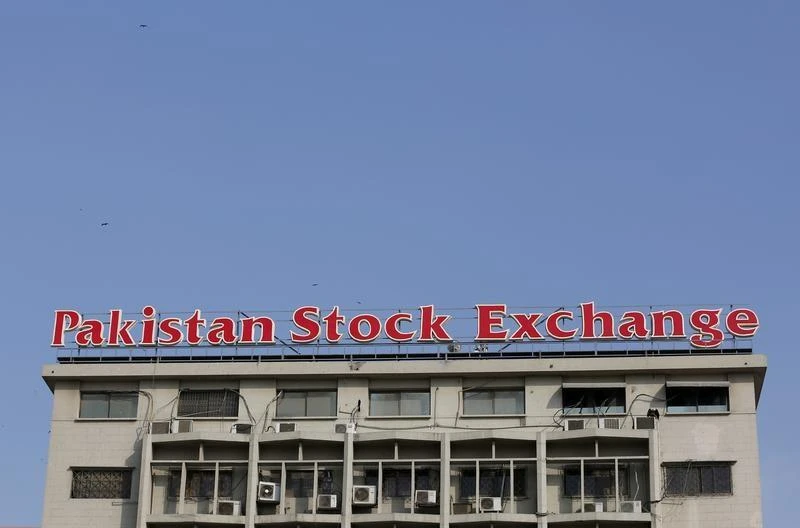
KARACHI: Pakistan’s equity market closed bearish on Friday as uncertainty grips investors amid country’s negotiations for a bailout program with the International Monetary Fund (IMF).
Then benchmark KSE 100 index nosedived by 424.68 points at the weekend trading session to close at 36122.95 level.
“Stocks battered in the post quarter end earnings season on investor fears over likely tough IMF modalities for $6.5 bn bailout package,” Ahsan Mehanti, Chief Executive of Arif Habib Corporation, commented. “Slump in global crude oil prices, weak economic outlook, reports on IMF condition for raise in power tariff by 25 percent impacting corporate earnings outlook played a catalyst role in bearish close,” he added.
The stock market also remained subdued in the month of April 2019 (worst performing April in 14 years ) declining by 1,865 points, showing a negative return of 4.8 percent on monthly basis compared to a negative return of 1 percent in March 2019.
Interest rate hike by the central bank to 11.25 percent, more than expected inflationary numbers of March at five year high of 9.41 percent, economic growth downgraded by IMF, World Bank and Asian Development Bank were the major headwinds. Besides, IMF bailout program and tax amnesty scheme delays also played key role.
“The market remains volatile due to uncertainty regarding talks with the IMF,” said Samiullah Tariq of Arif Habib Limited. Conditionalities like discount rate hike that could have negative impact on the market and imposition of taxes are further fueling negative trends, he said.
Foreign investment in Pakistan is at its lowest levels. Analysts opine that foreign investors also await the final outcome of Pakistan-IMF talks to shape their investment decisions.
“Foreign investors are looking for the finalization of program that is expected to bring major structural reforms in the economy. Once this is done they will increase investment in the equity market,” Muhammad Faizan, head of Foreign Institutional sales at Next Capital Limited, told Arab News.
Pakistan is currently negotiating with IMF for a bailout program to stabilize its economy marred by ballooning external payment crisis and fiscal imbalances. The country, expecting $6 billion to $8 billion, has resumed talks with the fund’s mission which arrived in Islamabad on Monday.
“We are having negotiations with the IMF and obviously we will have to ensure that a reasonable program gets developed, so that one can create a platform for sustainable macroeconomic stability and to ensure that we also use that to enhance further our relationship with other international players such as World Bank, Asian Development Bank, Islamic Development Bank, our bilateral friends and so on,” Dr. Abdul Hafeez Shaikh, adviser to Prime Minister on Finance, said on Friday.
“It is a good signal to send that the government is committed to fiscal discipline, committed to reasonable macroeconomic policy and is committed for engagement with the rest of the world,” Shaikh said while addressing an Investment Conference in Islamabad.
Analysts say that the stock market will rebound with the final outcome of the talks with the IMF as it would revive the market sentiments and it will paved the way for potential funding from other multilateral donors.