- Careem "in talks with people about passenger drones, as and when they get regulate," says co-founder Mudassir Sheikha.
- “We want to build. We want to build something big, something lasting and most importantly, something meaningful."
DUBAI: A Careem press day is an invigorating experience.
The Middle East’s very own ride-hailing company hosted one last week to brief media on the latest developments in the fast-moving world of Internet-based travel, laced with a big dose of corporate bonding and comradely back-slapping.
A series of enthusiastic millennials delivered slick presentations with the casual flick of an electronic pointer; senior executives expounded mission statements and visions; the achievement of “milestones” — notably the launch of services in Sudanese capital Khartoum, the company’s 100th city — was met by American-style whoops and yells from the Careem acolytes.
At the center of it all, inspiring the troops one minute, under the bright lights of a TV interview the next, was Mudassir Shaikha, the co-founder (along with long-term partner Magnus Olsson) and managing director of the company that claims to be the leading car-riding business in the Middle East, as well as the local champion against international giants like Uber.
“We want to build. We want to build something big, something lasting and most importantly, something meaningful — an institution where we can be a home for tech talent, provide them with an awesome company where they can work locally, and help continue to build the dream,” he told me.
It was an interesting answer, not least because my question hadn’t been about “dreams” at all, but about a hypothetical merger with Uber. It neatly side-stepped the central issue in the car-ride business in the region: which of the two — Uber or Career — will come out on top to win a dominant position in a $100 billion market that has profound social and economic repercussions for virtually everybody living in the region.
Not that it is easy to get a precise break-down of the current state of play. Sheikha told the gathering that Careem was now in 100 cities between Morocco and Pakistan, that it had 24 million users, and 800,000 “captains”, as it calls it drivers.
An Uber fact sheet last month showed it in just 15 cities regionally; but the American company stressed the difficulty in providing comparable figures and differences in how size is measured in the ride-hailing business.
Mudassir pointed instead to the size of the market that had yet to be exploited. “Together Careem and Uber are just 2 percent of a market worth $100bn. So the bigger opportunity is how we get the remaining 98 percent on to the platform.”
He aims to get the rest of that market by expanding services and geographies, and by adopting a new strategic direction which will make Careem an “Internet platform” rather than just a ride-hailing and delivery service.

Careem has always been good at thinking up new ways to get users onto its app. While in Dubai the service is traditionally via the ubiquitous while Lexus saloon, elsewhere is also offers scooter rides, trikes, tuktuks, golf carts, boats, and even an ambulance service in Pakistan.
It was the first to offer the option of paying by cash — essential in some of its bigger markets like Pakistan and Egypt where credit cards are not widely held — and of booking scheduled rides, rather than waiting for the first available car on a street corner.
Earlier this year it bought the RoundMenu online restaurant business to boost its food delivery service, one of the fastest growing sectors.
Sheikha is looking at the potential of airborne passenger services, but thinks implementing the concept is some way off. “It’s of interest to us, we are a mobility platform. We’re in talks with people about passenger drones, as and when they get regulated. A lot of regulation is required before it become feasible,” he said.
He is much more cautious on the concept of self-driving cars than the competition. “We don’t believe we need to invest in building self-drive cars, but we are working on a framework for different kinds of autonomous vehicles within our operations. We aim to become a facilitator and enabler of self-drive operations,” he said.
He pointed out that the cost of “captains” is much lower in the Middle East than in other parts of the world, and that the Middle East’s road system does not always lend itself to the complex navigation systems guiding self-drive in the West. And besides, there are the drivers to be considered.
“To be honest, we’d be concerned about our captains. What happens to them in the self-drive era, and their wives and children?” he asked.
Some ride-hailing companies have been criticized, in the West in particular, for their perceived participation in the “gig economy” that exploits drivers and other employees, but, Mudassir insists, the circumstances in the Middle East are very different.
“The context of the region is quite different. In the Middle East, a large number of people are unemployed or underemployed, so the challenge for us is to make them part of the economy,” he said.
“In other ways too, we play a role in their lives beyond just having them as captains. In Pakistan we have set up an emergency fund for their needs. We give subsidized education for captain’s children. In Egypt, we give subsidized loans for vehicle purchase, we negotiate subsidies for fuel purchase, and we offer insurance,” he added.
On the geographical front, Saudi Arabia is much on his mind. The lifting of the ban on women driving next month is a dramatic change not only for the social and economic life of the Kingdom, but also has big implications for the Careem business model there.
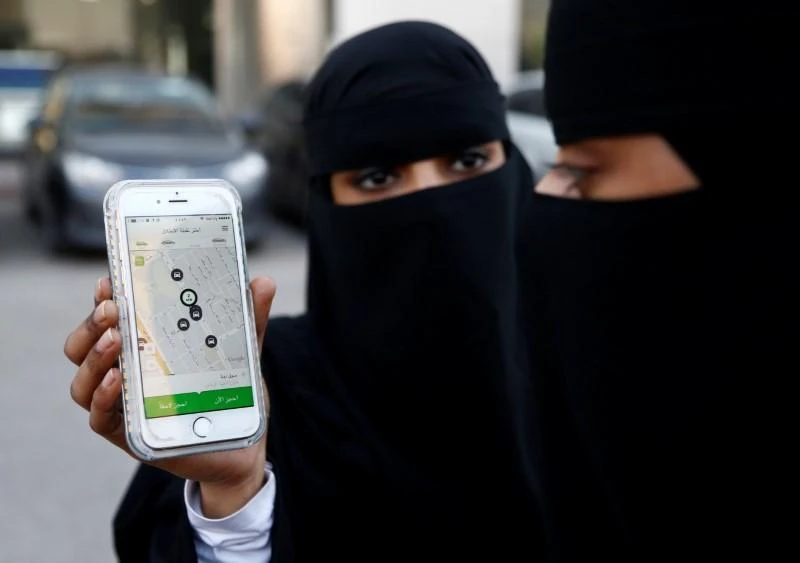
When Careem launched in Saudi in 2013, the vast majority of its captains were expat men, but now 95 percent are Saudi citizens. From June 24 it will be introducing “captainahs” — female drivers” — to its Saudi workforce. The company last week selected Enaam Gazi Al-Aswad to be its first capitainah from among around 3,000 women looking for employment with the company.
Moving women from the back passenger seat to behind the wheel might seem a big negative for a ride-hailing company, but Sheikha does not see it like that.
“It will just be a temporary blip. People will be going to malls and other social places, more just hanging out with each other. A small percentage of riders will be lost, but there will be much more general mobility,” he said.
The changes in Saudi Arabia are only going to accelerate Careem’s expansion plans in the country. Currently in 30 cities in the country, Sheikha wants to add another 10 or 15 to that list, and to expand the range of services on offer to include more affordable transport, smaller cars and minivans, pooling services (one is already operating in Jeddah and doing well, he says) as well as scooters and tuktuks “in certain places.”
But the Kingdom is important for another big reason. Last year Careem replaced one of its long standing investors, the Dubai based Abraaj Group, with Kingdom Holding, the conglomerate headed by Prince Talal Al Waleed, which has since been caught up in the big anti-corruption campaign launched by the government.
Sheikha chose his words carefully. “Kingdom is one of the investors in the regional sector that understands technology. It has invested in Apple, Twitter and Lyft in the US. It is a global tech investor. It will help us scale up from the financial position we have today. I have heard nothing about or from Kingdom that changes the situation,” he said.
In fact, Saudi Arabia finds itself at the center of the global ride-hailing business at a time of change and consolidation. The Kingdom’s Public Investment Fund has a $3.5 billion stake in rival Uber, and the SoftBank Vision Fund — in which PIF is a major investor — is also a big player in the global business via stakes in many of the international market leaders, including Uber.
Careem is a rare “unicorn” in Middle East business, a start up with a valuation of $1 billion or over, but it will need even greater financial firepower to compete with the global giants. There is much talk of another round of fund raising, to inject around $500 millio or so into it, and an initial public offering to give it access to even bigger funds (and an exit for some existing investors).
Again, Mudassir chose his words carefully. “We have completed the largest fund raising ever done in the region and we still have money in the bank from that. We have sufficient for our existing business plan,” he said.
Of course, the essence of a good business plan is adaptability, especially in pursuit of a “dream.” “From time to time, people approach us with strategic opportunities. We want to be a broader Internet platform in the region, and we are always looking at the strategic angle when we talk to potential investors,” he said.