SEOUL: A patent filing shows Samsung Electronics Co. is working on a device it calls sports glasses in a possible response to Google’s Internet-connected eyewear.
A design patent filing at the Korean Intellectual Property Office shows a Samsung design for smartphone-connected glasses that can display information from the handset.
It said the glasses can play music and receive phone calls through earphones built into the eyewear’s frame. It also gives hands-free control over the smartphone.
Reminiscent of the Google Glass design, Samsung’s sketch shows a thumbnail-sized display over the left eyeglass. Google’s eyewear has a tiny display over the right eyeglass that shows information and websites.
It was not clear from Samsung’s sketch and description whether its eyewear would be equipped with a touch control and a camera like Google Glass nor whether it would connect directly to the mobile Internet or be a slave to a smartphone.
The name and the description specify the Samsung product is designed for outdoors activities or sports.
Samsung did not respond to an e-mail and a call seeking comment.
Google Inc. is testing an early version of Google Glass with 10,000 people in the US after giving the public a first look at its Internet-connected eyewear in June last year. The early version can take pictures, record videos, navigate maps and works without a smartphone.
Other tech companies are also exploring ways to bring mobile computing to everyday objects such as watches and glasses.
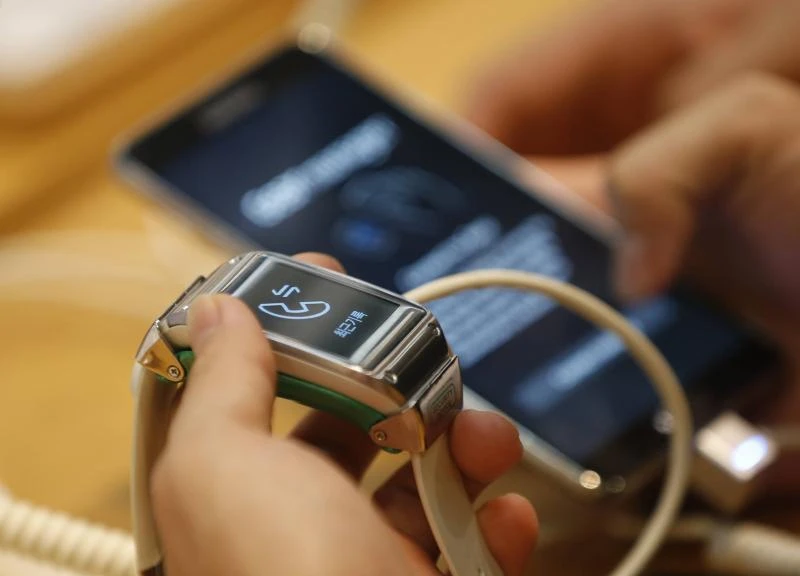
Samsung introduced a smartphone-connected watch called the Galaxy Gear last month. Sony also announced a smart watch.
Samsung filed the application for the eyewear design patent on March 8.
Samsung Electronics Co. reported another record quarterly profit as a revival in its semiconductor business and strong shipments of cheaper handsets offset flat sales of high-end smartphones.
The company said its July-September net profit rose 25 percent over a year earlier to 8 trillion won ($7.5 billion).
It was the seventh quarter in a row that Samsung posted record earnings.
Growth was driven by semiconductors and sales of cheaper smartphones in contrast to previous quarters that relied on premium smartphones.
Third-quarter profit from its semiconductor business doubled over a year earlier to 2.06 trillion won as demand rose for memory chips used in mobile devices, servers and digital game consoles.
Samsung’s mobile business posted a record profit, contributing nearly 70 percent of the company’s total operating profit.
However, growth in sales of premium smartphones, the Galaxy S4 and the Galaxy Note 3, came to a halt during the third quarter, staying at the same level as the previous quarter.
In the premium market, Samsung is feeling the heat from the launch of Apple’s latest phone. Counterpoint Technology Market Research said Samsung’s smartphone market share in the US fell to 29 percent in September from 37 percent in August, yielding the top spot to Apple whose share surged to 39 percent thanks to the iPhone 5S.
Patent shows Samsung’s rival to Google Glass