With two China steel graphs
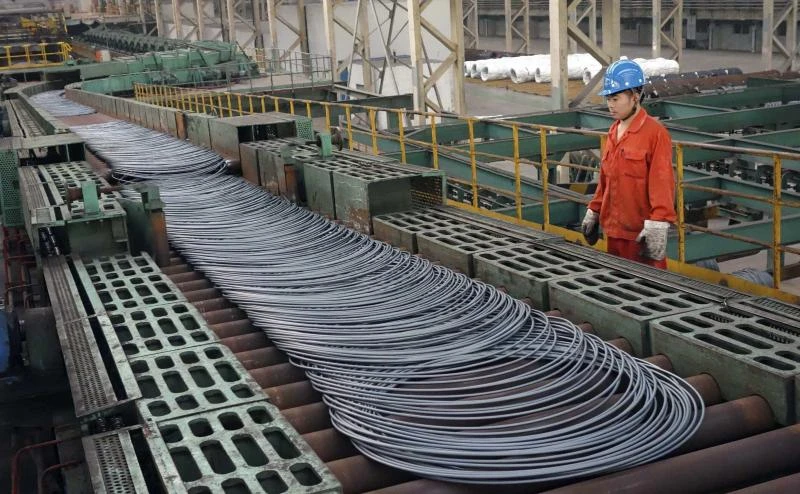
LONDON: China's leviathan steel sector churned out 66.28 million tons of the stuff last month.
That was 12.8 percent, or roughly 7.5 million tons, more than was produced in August 2012. Cumulative production so far this year has grown by 7.8 percent. This time last year the growth rate was a modest 2.9 percent.
The strength of the sector has surprised analysts and jars with the dominant narrative of China slowdown in the rest of the industrial metals space.
Ironically, though, just as markets such as copper take fresh heart from improving manufacturing indicators in China, the country's steel sector is showing increasing signs of stress.
Re-adjustments of steel supply and demand in China have in the past often been short, brutish and nasty affairs, capable of transmitting shock waves into the iron ore market.
There are good reasons for believing that a smoother adjustment process might be achievable this time around but the mounting pressures are becoming difficult to ignore.
What's so remarkable about that August production rate is that it happened in August.
Steel production in China has previously been highly seasonal, dipping in the hot summer months, just as it does in the rest of the world.
But not this year.
Annualized production was running at 770-780 million tons in July and August. The latest figures from the China Iron and Steel Association (CISA) show no let-up this month either with production over the middle of September running at 782 million tons annualized.
So what has changed?
Analysts at Jefferies argue that the break with the "normal" seasonal pattern may in part reflect changed producer behavior.
Competition for market share among the country's major producers may have resulted in reduced maintenance downtime this year, while smaller mills "may have come to terms with the "new normal" of lower margins, and so maintained high output levels even for marginal gains."
Those at Morgan Stanley point to the steel-intensive nature of Beijing's targeted stimulus in infrastructure spend. But the simple reality is that steel producers have been churning the stuff out because it has been profitable to do so thanks to the strength of the real estate sector.
Despite all the official rhetoric about damping down speculation in a bubbling property market, the single-most powerful driver of Chinese steel demand has accelerated this year.
Real estate investment grew by 19.3 percent in the first eight months of the year, compared with 16.2 percent last year.
Floor space under construction? Up 14.4 percent compared with 13.2 percent last year. Floor space newly started? Up 4.0 percent after a 7.3 percent drop in 2012.
China's manufacturing impetus may have waned over the earlier part of this year, but the commercial property sector has just carried on booming.
Most property sector indicators showed signs of cooling in August, albeit from elevated levels.
Deutsche Bank, which uses year-on-year changes in property sales as a leading indicator for steel production changes, warns that "the current property cycle seems to be peaking."
Certainly, warning signs are now flashing in the Chinese steel sector.
Stocks, which largely flat-lined over the middle of this year, are now rising again.
Those of rebar, the steel product most directly linked to construction activity, rose to 6.0809 million tons last week from 5.9704 million tons in the previous week, according to Chinese consultancy Mysteel.
Exports are also trending higher.
The outflow of steel products in August was an all-time record at 6.14 million tons, up a full million tons on July.
Cumulative exports so far this year are now up by 17.4 percent, the fastest rate of growth since 2010.
Coupled with rising domestic inventories, this accelerated outflow suggests China's steel production is moving out of kilter with domestic demand, however robust the latter has proved to be.
The key warning signal, of course, is the price of steel rebar traded on the Shanghai Futures Exchange.
The most active contract SRBcv1, that for January 2014 delivery, today hit a low of 3,570 yuan ($580) a ton, its weakest print since July 3.
The contract fell 1.2 percent over the week and has lost more than 4 percent this month. The last time rebar fell for six consecutive weeks was in April-May 2012.
So far the impact on the iron ore price has been minimal. Benchmark 62-percent grade iron ore was unchanged at $133.80 a ton on Thursday, according to data provider Steel Index.
It is down by 2.8 percent on the month, but has actually been edging up over the last week.
The combination of falling steel price and largely steady iron ore price is an unhappy one for Chinese steel margins.
It is margin compression that has in the past triggered dramatic shifts in steel production rates and, on occasions, ferocious destocks both up and down the steel production chain.
There are good reasons to hope that this pattern is not going to repeat itself.
Firstly, although the property sector is showing signs of peaking, there seems little prospect of a pending slump. Official attempts to micro manage prices are right now acting as no more than a brake on continued robust growth.
Secondly, positive signals from the manufacturing sector suggest some sort of compensatory demand pick-up, albeit one more beneficial to flat steel products than long products such as rebar.
Thirdly, even if there is a jagged rather than smooth adjustment of steel run rates to slowing demand growth, iron ore inventories are still low by any historical norm. Simply put, there is not much to destock this time around.
The new wild card, though, is the fact that these steel sector pressures are building just as flows of iron ore from Australia are gaining momentum.
The long-feared wall of supply is finally starting to arrive thanks to the combination of expansions and new mines coming on stream.
Chinese buyers may simply choose to absorb that extra supply over the next few months, given that the first quarter of any year is prone to monsoon and rain disruption to production in both Australia and Brazil.
There again, they might not.
There are a number of possible scenarios at play in the coming few months. But a continuation of current steel production, steel price and iron ore price trends is the least likely.
— Andy Home is a Reuters columnist. The opinions expressed are his own.
Pressures building in Chinese steel sector