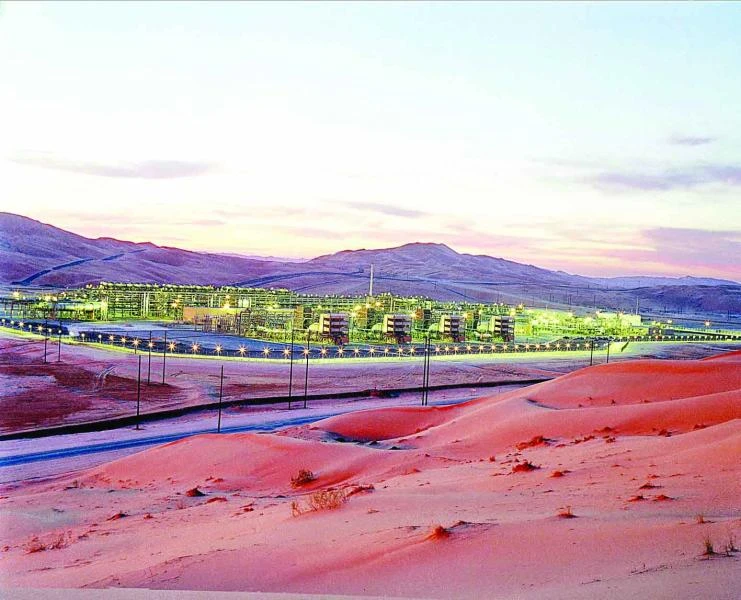
ALKHOBAR: Saudi Arabia produced 9.66 million barrels per day (bpd) of crude oil in April, up from 9.566 million bpd in March, an industry source familiar with the matter said.
Saudi Arabia supplied 9.650 million bpd in April to the market, up from 9.533 million bpd in March, the source said.
Supply to market may differ from production depending on the movement of barrels in and out of storage.
“It is generated by customers,” the source said when asked about the reason for higher output and supply from the Kingdom.
“But an increase of 100,000 to 200,000 is not an indication of anything. It is not an indication that there is a change in the global market.”
“The market is balanced. We expect the situation to remain the same for the rest of the year in terms of prices and market demand and supply, unless we see surprises,” the source added.
A Reuters survey showed output from the Organization of the Petroleum Exporting Countries rose by 160,000 barrels per day (bpd) in April on increases in Saudi Arabia, Algeria, Iraq and Libya.
Overall OPEC supply remains below its supply target of 30 million barrels per day (bpd). Output rose above that level in February, after four straight months below 30 million bpd, according to Reuters estimates.
OPEC ministers will meet on June 11 to decide on output policy for the rest of the year.
Brent oil fell below $108 a barrel on Thursday as tensions in Ukraine appeared to show signs of easing but the crisis in Libya and a jump in Chinese crude imports to a record high underpinned prices.
Front-month Brent, the international benchmark, shed 59 cents at $107.54 per barrel by 1328 GMT, after settling $1.07 higher on Wednesday.
US crude was 60 cents lower at $100.17 per barrel, having briefly dropped below $100 and notched its biggest daily percentage fall in a week. It had gained $1.27 in the previous session on data showing a surprise drop in US crude stocks.
The price differential between WTI and Brent widened to $7.38 a barrel, after it hit $6.56 in the previous session, its narrowest in two weeks.
“Things have dipped a little bit on the basis of slightly more positive signs or at least less worrying signs out of Ukraine,” Simon Wardell, an analyst at Global Insight, said.
Brent also found some support from the standoff in Libya, where rebels in the east boycotted the new prime minister and said they would keep two major terminals shut.
Optimism about higher Libyan exports had helped to put pressure on oil prices since the end of last month, when some oil ports shut since last year were reopened. But Libyan production remains at just over 250,000 bpd, less than a fifth of the output around 1.4 million bpd in mid-2013.
“One week we think that the flows are going to come back and then they don’t come back, so it’s difficult to have a trending market when you have this uncertainty on Libya,” added Jakob.
Brent had received some support earlier in the session from Chinese data showing crude oil imports rose to a record 6.78 million barrels per day (bpd) in April, after slipping below 6 million bpd in March for the first time since November 2013.
The data also showed that total exports rose, against forecasts for a decline, offering some rare good news for China’s slowing economy.
Oil futures rose by more than $1 on both sides of the Atlantic on Wednesday after data from the US Energy Information Administration (EIA) showed an unexpected drop in US inventories in the week ended May 2, although total stocks remained close to record high levels.
Total stocks fell 1.8 million barrels last week, according to the EIA. Stocks fell 1.4 million barrels at the Cushing, Oklahoma, delivery point for the US futures contract, to their lowest since 2008.
Saudi Arabia crude output rises to 9.66 million bpd