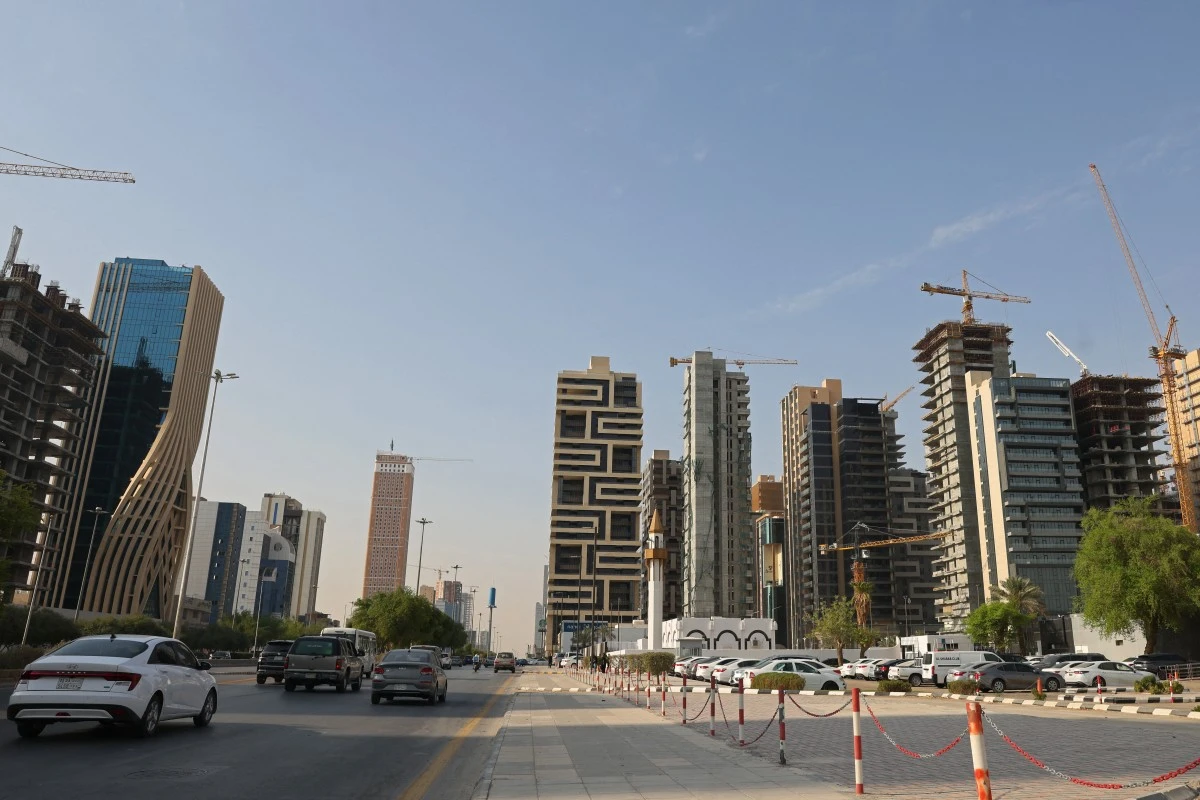
RIYADH: Saudi Arabia’s projects market in 2016 boasts $500 billion worth of schemes in the pre-execution phase spanning the power and water, transport, hydrocarbons and construction sectors.
Detailed news and analysis of the Kingdom’s plans to deliver these projects are contained in a new MEED report entitled Saudi Arabia Strategies 2016: Adapting to a new economic reality, which examines how its recently revealed Vision 2030 strategy will change the business landscape in the country.
Under the ambitious reform agenda being driven by Deputy Crown Prince Mohammed bin Salman, within its recently announced Vision 2030 framework, Saudi Arabia is seeking to drive the non-oil economy and stimulate private investment in state activities.
In its Vision 2030 strategy, Riyadh has set itself the target of increasing the private sector’s contribution to GDP from 40 percent today to 65 percent by 2030, and growing non-oil government revenues from SR163 billion ($43 billion) to SR1 trillion ($267 billion) by the end of the next decade.
The latest market report on Saudi Arabia by MEED, the leading source of Middle East business intelligence, identifies new and emerging opportunities for investors and companies in the region’s biggest market.
It also highlights the challenges that companies need to be aware of as the kingdom forges ahead with its economic development plan for the next 14 years.
Construction is the largest sector with a pipeline worth $442 billion, followed transport with $228 billion and power with $170 billion in the pipeline.
“Construction and transport have traditionally been the largest sectors in the Saudi Arabia, awarding $155 billion and $98 billion of major contracts respectively between 2006 and 2015. Nearly $89 billion of power contracts were awarded over the period,” says MEED Editorial Director Richard Thompson.
Creating a successful partnership between private sector investors and the government will be the critical factor in shaping Saudi Arabia’s development over the coming five years, according to a new research report from MEED.
With government debt rising sharply in the wake of the collapse in oil prices, Riyadh is exploring using public-private partnerships (PPP) for its most important infrastructure projects. And with a raft of road, rail, port and airport projects planned, the report looks at how PPP and other financing models will be used to deliver transport projects.
In addition, MEED’s latest market report provides an up-to-date and expert assessment of Saudi Arabia’s giant power and water sector, which is Riyadh’s priority sector for investment and reform.
“Saudi Arabia needs to install nearly 48GW new electricity generation capacity by 2024 in order to meet demand, which is growing by 7 percent a year,” says Thompson.
“To deliver this, Riyadh will return to building power and water capacity using the private developer market. It will take the same approach to deliver the estimated $25 billion of planned water and wastewater projects over the next five years,” said the director.
“The reforms involve rolling back the state as an economic actor in the kingdom and will be painful in the short term. But they are much needed and if implemented properly will provide the basis for sustainable growth and development for the next generation of Saudi nationals.”
With a detailed assessment of Riyadh’s plans to award nearly $41 billion of project contracts in 2016, detailing how and when these schemes will be awarded, by whom, and who is likely to win the contracts, the Saudi Arabia Strategies 2016: Adapting to a new economic reality explains how Riyadh’s spending constraints are opening the door for alternative financing models to be pursued, in particular public-private partnerships, which will offer new opportunities to those hoping to win work in Saudi Arabia.
Detailed news and analysis of the Kingdom’s plans to deliver these projects are contained in a new MEED report entitled Saudi Arabia Strategies 2016: Adapting to a new economic reality, which examines how its recently revealed Vision 2030 strategy will change the business landscape in the country.
Under the ambitious reform agenda being driven by Deputy Crown Prince Mohammed bin Salman, within its recently announced Vision 2030 framework, Saudi Arabia is seeking to drive the non-oil economy and stimulate private investment in state activities.
In its Vision 2030 strategy, Riyadh has set itself the target of increasing the private sector’s contribution to GDP from 40 percent today to 65 percent by 2030, and growing non-oil government revenues from SR163 billion ($43 billion) to SR1 trillion ($267 billion) by the end of the next decade.
The latest market report on Saudi Arabia by MEED, the leading source of Middle East business intelligence, identifies new and emerging opportunities for investors and companies in the region’s biggest market.
It also highlights the challenges that companies need to be aware of as the kingdom forges ahead with its economic development plan for the next 14 years.
Construction is the largest sector with a pipeline worth $442 billion, followed transport with $228 billion and power with $170 billion in the pipeline.
“Construction and transport have traditionally been the largest sectors in the Saudi Arabia, awarding $155 billion and $98 billion of major contracts respectively between 2006 and 2015. Nearly $89 billion of power contracts were awarded over the period,” says MEED Editorial Director Richard Thompson.
Creating a successful partnership between private sector investors and the government will be the critical factor in shaping Saudi Arabia’s development over the coming five years, according to a new research report from MEED.
With government debt rising sharply in the wake of the collapse in oil prices, Riyadh is exploring using public-private partnerships (PPP) for its most important infrastructure projects. And with a raft of road, rail, port and airport projects planned, the report looks at how PPP and other financing models will be used to deliver transport projects.
In addition, MEED’s latest market report provides an up-to-date and expert assessment of Saudi Arabia’s giant power and water sector, which is Riyadh’s priority sector for investment and reform.
“Saudi Arabia needs to install nearly 48GW new electricity generation capacity by 2024 in order to meet demand, which is growing by 7 percent a year,” says Thompson.
“To deliver this, Riyadh will return to building power and water capacity using the private developer market. It will take the same approach to deliver the estimated $25 billion of planned water and wastewater projects over the next five years,” said the director.
“The reforms involve rolling back the state as an economic actor in the kingdom and will be painful in the short term. But they are much needed and if implemented properly will provide the basis for sustainable growth and development for the next generation of Saudi nationals.”
With a detailed assessment of Riyadh’s plans to award nearly $41 billion of project contracts in 2016, detailing how and when these schemes will be awarded, by whom, and who is likely to win the contracts, the Saudi Arabia Strategies 2016: Adapting to a new economic reality explains how Riyadh’s spending constraints are opening the door for alternative financing models to be pursued, in particular public-private partnerships, which will offer new opportunities to those hoping to win work in Saudi Arabia.