JEDDAH: The Saudi market volatility will continue for some time as falling oil prices have impacted the sentiment in the region, says a Jeddah-based economist.
Said Al-Shaikh, the National Commercial Bank Group chief economist, was reacting to Tadawul’s persistent fall in August.
The Tadawul All-Share Index (TASI) dropped 2.1 percent on Wednesday after rising 7.4 percent on Tuesday.
The stock market volume, which had jumped on Tuesday to its highest level since May 2014, shrank by more than a third, Reuters reported.
Al-Shaikh said the collapse of China’s stock market and devaluation of yuan sent the global equity markets on a rollercoaster ride.
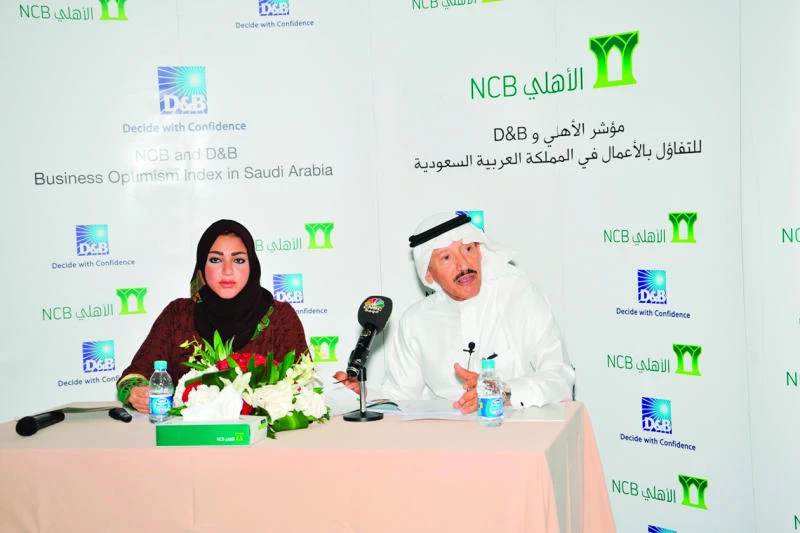
“The sentiment in the region is affected due to falling oil prices and volatility will continue in the Saudi stock market as other global markets are also volatile,” Al-Shaikh said on Wednesday when Dun & Bradstreet South Asia Middle East Ltd. (D&B) in association with the National Commercial Bank released the D&B Business Optimism Index (BOI) survey for Saudi Arabia for Q3 2015.
The BOI survey reveals lower optimism levels for the key sectors of the Saudi economy.
Al-Shaikh said: “The Tadawul is still attractive because valuation is attractive. There are long-term investors in the market. Those who entered the market late obviously will suffer losses.”
He said due to falling oil prices Saudi Arabia will scale down some projects but will continue to award projects and will keep awarding projects.
Al-Shaikh said according to the NCB estimates, the Saudi economy will grow 3.3 percent this year.
Commenting on Tadawul’s surge on Tuesday, Fawaz H. Alfawaz, a Riyadh-based economic consultant, told Arab News: “The impetus for the adjustment in the stock market was the significant change in the international capital markets. The Saudi market in a sense was waiting for a reason to adjust to the new state of the oil market. The more profound change in the assets owned by Saudis is in the overpriced real estate market. It is also much larger than the stock market but less transparent and less liquid.”
About bonds, Al-Shaikh said Saudi Arabia has issued some development bonds and will continue issuing bonds of SR115 billion in order to finance the budget deficit.
According to the survey, the composite BOI for the Saudi non-hydrocarbon sector stands at 36 in Q3, 2015, the same level as a year ago (Q3, 2014) but a softer outlook when compared to Q2, 2015 (BOI of 43).
The hydrocarbon sector composite BOI is at a 6-year low of 9 points weighed down by a cautious outlook for selling prices.
As in the previous quarter, the finance, real estate and business services sub-sector is most optimistic, with real estate being the sole sub-segment showing stronger expectations for Q3, 2015 compared to Q2, 2015
Al-Shaikh said the impact of oil prices remains the key factor of concern for oil and gas firms, while shortage and cost of skilled labor is the foremost concern for non-hydrocarbon sector firms.
However, the outlook for investment in business expansion has weakened for the non-hydrocarbon sector but improved for the hydrocarbon sector.
Some institutional investors came back into the markets to buy selected stocks with valuations that they now saw as reasonable. But with global oil prices and equities still unstable and the economic outlook for China unclear, fund managers do not have any confidence that Gulf bourses have bottomed for the longer term, Reuters said.
Dubai's stock index, which had jumped 4.6 percent on Tuesday, fell back 1.4 percent, while Abu Dhabi index edged down 0.1 percent.
Sharihan Al-Manzalawi, NCB economist, said: “With the continuation of lower oil prices, the level of optimism for the hydrocarbon and non-hydrocarbon sectors weakened, as the hydrocarbon sector’s composite BOI has retreated to 9 points for Q3, 2015, which is the lowest reading for the composite BOI since 2009.”
‘Saudi market volatility to continue for a while’