- Inflationary pressure, elevated current account deficit major reasons for move
- Fiscal deficit in FY19 would be breached due to shortfalls in revenue collections and escalating security-related expenditures
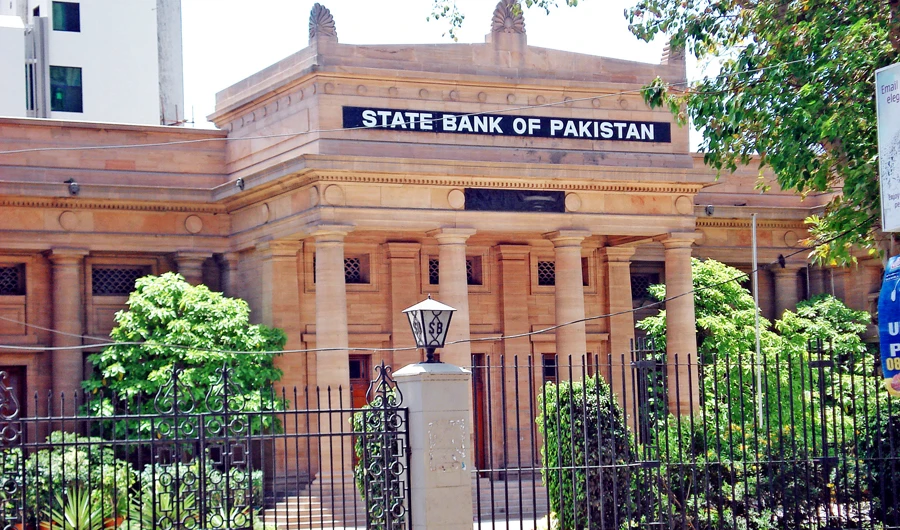
KARACHI: The State Bank of Pakistan on Friday increased its key policy rate by 50 basis points to 10.75 percent, keeping in line with the market's expectations, citing inflationary pressure, elevated fiscal and current account deficits as the major reasons for its decision.
The central bank further downgraded the GDP forecast to 3.5 percent.
“Taking into account the developments and the evolving macroeconomic situation, the Monetary Policy Committee (MPC) noted that sustainable growth and overall macroeconomic stability requires further policy measures as underlying inflationary pressures continue, the fiscal deficit is elevated, and despite an improvement, the current account deficit is still high," a statement issued by the SBP read.
The average headline CPI inflation reached 6.5 percent in Jul-Feb FY19 compared to 3.8 percent recorded in the same period last year. Meanwhile, YoY CPI inflation has risen considerably to 7.2 percent in January 2019 and increased to 8.2 percent in February 2019 - the highest YoY increase in inflation since June 2014.
“These pressures on headline inflation are explained by adjustments in the administered prices of electricity and gas, significant increase in perishable food prices, and the continued unfolding impact of exchange rate depreciation. Core inflation maintained its 13-month upward trajectory accelerating to 8.8 percent in February 2019 from 5.2 percent a year earlier," the central bank said.
Furthermore, the SBP said that rising input costs on the back of higher energy prices and the lagged impact of exchange rate depreciation are likely to maintain an upward pressure on inflation, despite a moderation in aggregate demand due to a proactive monetary management. “As a result, headline CPI inflation is projected to fall in the range of 6.5 to 7.5 percent for FY19," it added.
Large-scale Manufacturing (LSM) declined by 2.3 percent during Jul-Jan FY19 against 7.2 percent growth recorded in the same period last year. The latest available estimates of major crops also depict a lackluster performance by the agriculture sector. The slowdown in commodity producing sectors has downside implications for growth in the services sector as well. “Similarly, a deceleration in consumer demand and capital investments, reflected through a cut in development spending and deceleration in credit for fixed investments, indicates a moderation in domestic demand. In this backdrop, the real GDP growth is projected to be around 3.5 percent in FY19,” the SBP projected.
Owing to stabilization measures, the current account deficit narrowed to $8.8 billion in Jul-Feb FY19 compared to a deficit of $11.4billion during the same period last year – a fall of 22.6 percent. This includes a notable pace of retrenchment of the current account deficit by 59.9 percent during the first two months of 2019 over the same period last year. This reduction in the external balance was mainly driven by a 29.7 percent decline in the trade deficit in goods and services as well as a strong growth in remittances. The reduction in the trade deficit is in large part driven by import compression- this decline would have been even more pronounced if not for a rise in oil prices.
Exports in dollar value, during this period remained flat. However, in terms of quantum there has been a notable improvement. Though still posing a significant challenge in terms of its financing, the narrowing of the current account deficit has translated into some stability in the foreign exchange market.
With an improvement in the external balance as well as an increase in bilateral official inflows, the SBP’s foreign exchange reserves gradually recovered to $10.7 billion on March 25 this year. While the reserves are still below the standard adequacy levels (equal to three months of imports cover), the recent improvement on the external front has nevertheless improved business confidence.
The fiscal deficit for HI-FY19 was higher at 2.7 percent of GDP when compared with 2.3 percent for the same period last year. In view of the shortfalls in revenue collections and escalating security-related expenditures it is most likely that the target for the fiscal deficit in FY19 would be breached. So far, a significant portion of the fiscal deficit was financed through borrowings from SBP, which if continued, will not only complicate the transmission of monetary policy but also dilute its impact and prolong the ongoing consolidation efforts.
In absolute terms, the government borrowed Rs3.3 trillion from SBP and retired Rs2.2 trillion of its borrowing from scheduled banks (on cash basis) during 1st Jul – 15th Mar, FY19. This in turn, facilitated the banks to meet private sector credit demand that increased by 9.2 percent without putting pressures on the market interest rates, according to the SBP.