RIYADH: Saudi Arabia’s consumer spending rose 3.5 percent to SR13.37 billion ($3.57 billion) in the week ending Sept. 26, with hotels, recreation and furniture among the sectors recording the strongest gains, official data showed.
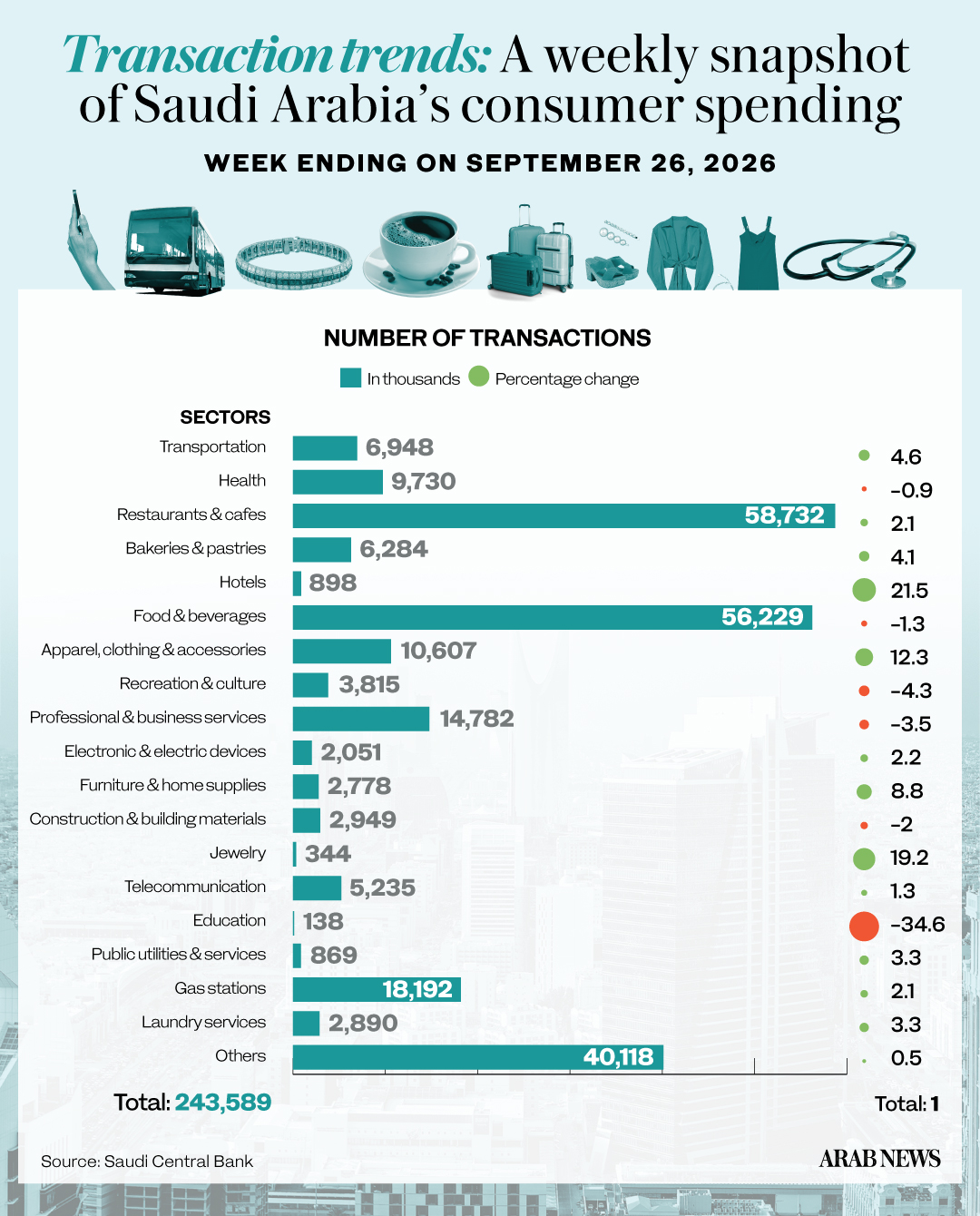
The number of point-of-sale transactions during the monitored week rose 1 percent to 243.59 million, according to the Saudi Central Bank.
Education spending fell 51.5 percent week on week to SR87.56 million, and the number of education-related transactions dropped 34.6 percent.
The increase comes as Saudi Arabia’s expanding calendar of sporting, entertainment and tourism events supports domestic leisure activity and travel, economist Talat Hafiz told Arab News.
“These events can encourage domestic travel and leisure spending, supporting hotels, recreation, restaurants, and related services,” he said.
He explained that the upcoming Riyadh Season in October could provide an additional catalyst for consumer spending. “With its extensive calendar of sporting and entertainment events, it could also attract visitors from across the Kingdom and internationally, creating further momentum for tourism-related activity and non-oil economic growth,” Hafiz added.
Sectoral spending
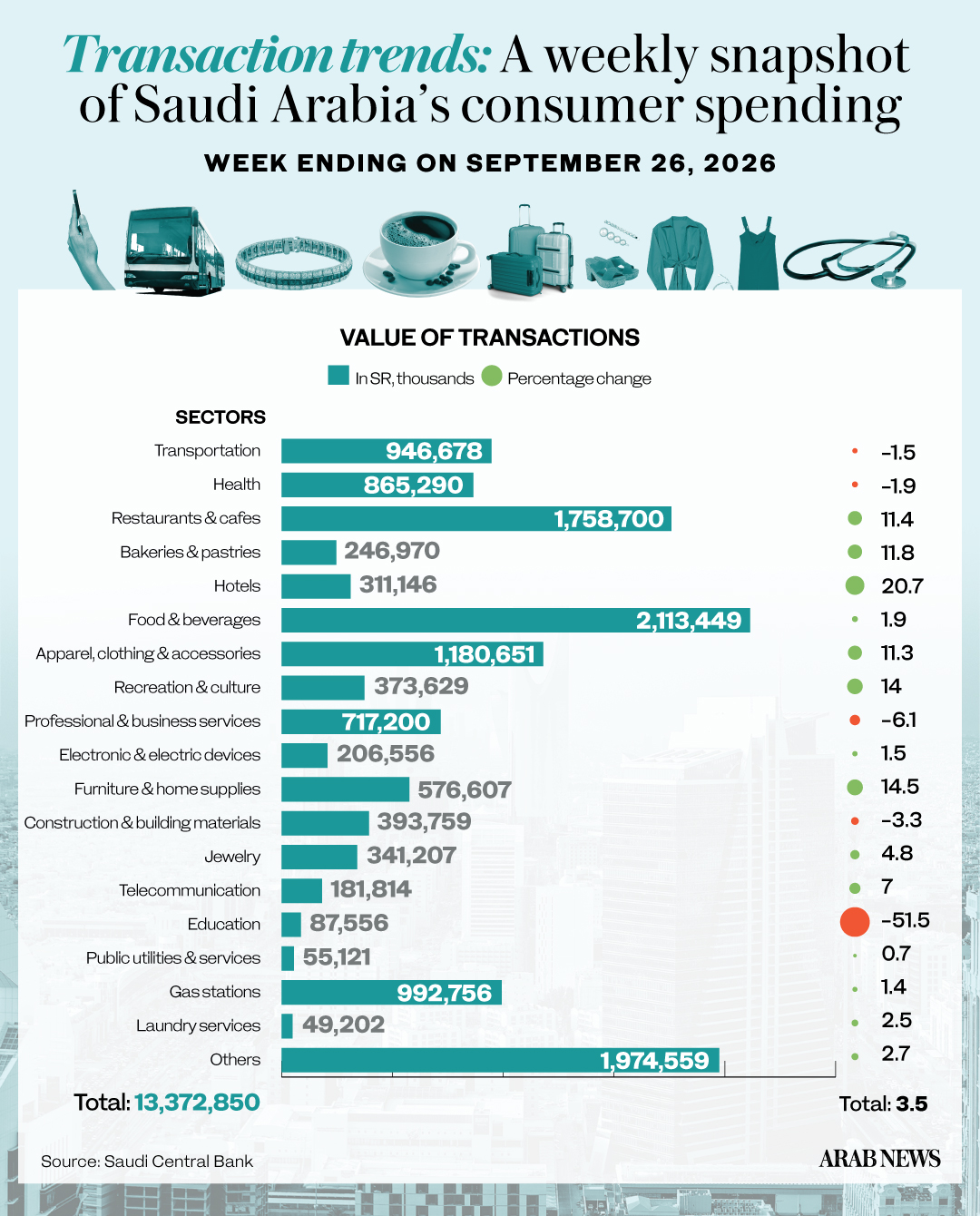
Spending on food and beverages amounted to SR2.11 billion, up 1.9 percent. Restaurants and cafes recorded SR1.76 billion, a rise of 11.4 percent, while apparel, clothing and accessories totaled SR1.18 billion, up 11.3 percent.
Gas stations recorded transactions worth SR992.76 million, up 1.4 percent, while the transportation sector saw SR946.68 million, down 1.5 percent. Within transportation, airline spending fell 14.9 percent to SR35.89 million.
Hotels stood out with a 20.7 percent jump to SR311.15 million, as the number of transactions rose 21.5 percent. Recreation climbed 18.5 percent to SR253.97 million, and recreation and culture spending rose 14 percent to SR373.63 million.
Hafiz said that the trends “point to a temporary shift toward domestic, event-driven leisure spending rather than overseas travel, which, in turn, would support the growth of non-oil revenues.”
Furniture and home supplies grew 14.5 percent to SR576.61 million, and personal care spending rose 13.4 percent to SR138.45 million.
Spending on books and stationery rose 5.6 percent to SR119.66 million, even as the number of transactions fell 29.8 percent.
Geographic breakdown
Riyadh led POS spending at SR4.69 billion, up only 0.5 percent from the previous week, even as the number of transactions slipped 0.6 percent to 80.88 million.
Jeddah recorded SR1.85 billion, an increase of 4.3 percent, with 27.64 million transactions. Dammam followed with SR677.7 million, up 2.1 percent, ahead of Makkah at SR550.65 million, up 8.4 percent, and Madinah at SR536.03 million, up 10 percent.
Hafiz cautioned about interpreting one week’s data as evidence of a structural shift away from Riyadh. “Riyadh remains the Kingdom’s largest POS market, and its relatively modest growth of 0.5 percent may simply indicate that spending momentum was distributed more broadly across other cities and destinations during the week.”
He further explained that the more important takeaway is that Saudi Arabia’s expanding calendar of sporting, entertainment, and tourism events is increasingly influencing consumer spending patterns, encouraging domestic tourism, and contributing to broader economic diversification under Vision 2030.