The Saudi stock market is certainly not reflective of the Kingdom’s robust economy but is rather influenced by external shocks as the geopolitical tensions alarmed local investors, according to economic experts.
“Listed stocks have started announcing their quarterly corporate profitability and judging by the handful of announcements from cement, banking and retail companies, profit levels are on the rise again,” says the latest NCB Saudi Economic Review.
The top performing sectors since the beginning of the year are hotels, retail and real estate with YTD gains of 102.9 percent, 50.8 percent and 43.0 percent respectively.
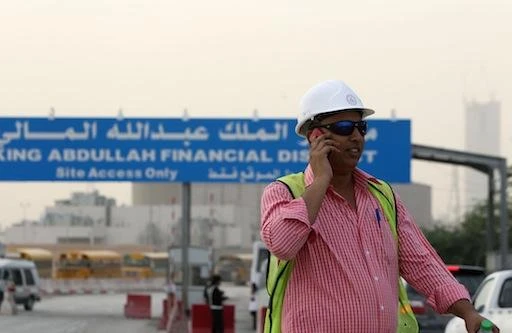
The report said robust oil prices and vibrant economic activity in Saudi Arabia led to a surge in urban development, increasing demand for foreign labor. Estimating over $27.6 billion of outward remittance flow in 2012, the World Bank ranks Saudi Arabia as the second top remittance-sending country in the world after the US.
The Saudi economy has relished with large influxes of oil revenues and has kept a strong foothold with sound economic indicators, according to the report.
The monetary state has been expanding as M0, the monetary base, increased by 8.4 percent during August on an an-nual basis, rising to SR307.6 billion.
The main driver for M0’s growth was banks’ deposits with Saudi Arabian Monetary Agency (SAMA) which rose by 11.4% Y/Y.
Meanwhile, cash in vault grew by 6.8 percent annually to bring total bank reserves to SR166.1 billion by the end of August. SAMA has shown the ability to control the increasing monetary levels in the local economy by absorbing liquidity to avoid inflationary pressures domestically.
In addition, currency outside banks picked up by 5.9% Y/Y during August as consumers were in the peak of Ramadan expenditure season.
SAMA’s macroprudential policy will contain potential liquidity risks by its willingness to use conventional tools such as treasury bills.
Consequently, the broader meas-ure of money supply, M3, decelerated to record a gain of 13.8 percent on an annual basis.
On a monthly basis, M3 declined from its all-time high of SR 1’474.0 billion during July to SR1’467.1 billion by the end of August.
The highlight of the month was the sizable growth in time and savings deposits.
Amid the globally suppressed interest rate market and the bullish momentum of the local stock market during August, time and saving deposits man-aged to gain a significant 11.2 percent Y/Y, the fastest pace since October 2012.
Meanwhile, the largest component of M3, demand deposits, continues to expand rapidly by posting an annual 19.1 percent growth rate.
Consumer prices have been contained and the bench-mark inflation rate recorded a 3.5 percent annual rise during August, according to the NCB Saudi Economic Review.
The recently rebased index peaked at 3.96 percent last April, but since then, policy makers have been pro-active in subduing any inflationary pressures. Imported inflation considerably influences local prices given the heavy reliance on imports. Food prices remain the lead-ing category driving up prices as the sub-category accel-erated by 6.5 percent Y/Y.
Interestingly, the category of furnishings and household equipment witnessed a second consecutive rise in annual prices at 5.9 percent.
The category holds a weight of 9.09 percent within the index.
Furthermore, rental prices were supported higher by the academic holiday and Ramadan season.
Real estate prices remain a priority concern for consumers as the youth population seek to own their assets.
However, elevated prices have been a major burden for the majority of citizens and the situation is yet to be mended by the mortgage law.
The inflation rate is expected to remain subdued despite the liquid state of the economy.
“We do not foresee the index rising to 4 percent within 2013 with upside risks in 2014 as the expected drop in the dollar, given the US tapering intentions, will contribute to higher imported inflation,” the NCB report said.
Vibrant economic activity boosts demand for foreign labor in Saudi Arabia