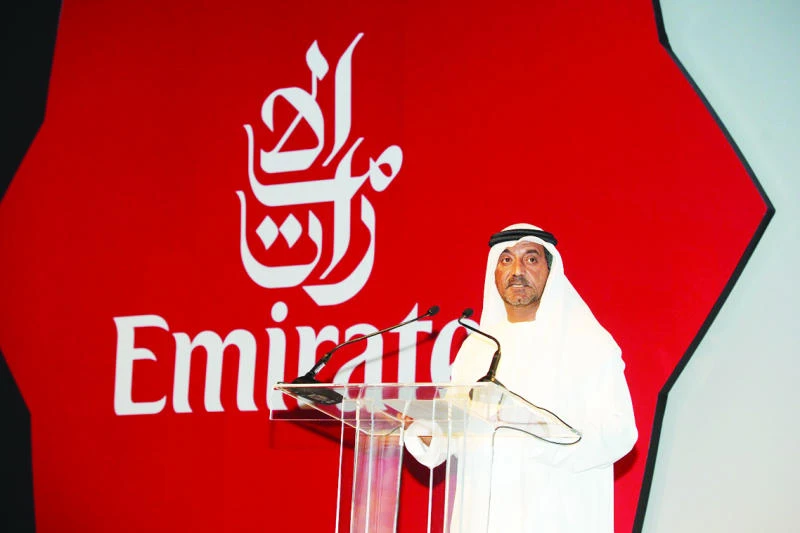
Arab airlines have increasing impact and visibility on the global stage, with many countries in the Arab world recognizing the economic importance of aviation and investing in infrastructure, said Sheikh Ahmed bin Saeed Al-Maktoum, chairman and chief executive of Emirates Airline & Group, president of Dubai Civil Aviation Authority, and chairman Dubai Airports.
He made his remarks as patron of the 47th Arab Air Carriers Organization Annual General Meeting (AACO AGM), at the event’s official opening dinner in Dubai.
“47 years ago, in 1967, the world’s airlines transported less than 300 million passengers annually. Today, airlines serve an estimated 3.3 billion passengers. What’s more, the 31-airline members of AACO are playing a bigger role in world air traffic than ever before,” he added.
According to figures from Airbus, in less than 10 years between 2003 and 2013, the number of passengers carried by airlines in MENA increased by more than 300 percent.
“In the past, European airports were the default hubs for travelers flying East to West, or North to South. Today, more and more travelers are choosing to fly via hubs in our region because we can offer better connection times, and a better travel experience. This huge shift in global aviation is a success story for all of us. As individual airlines, and together with our home countries, we have made the world sit up and take notice,” he added.
He also remarked that aviation is recognized as a key economic driver in many MENA countries, citing the UAE and Dubai as an example.
The latest study from Oxford Economics shows that the aviation sector contributed 26.7 percent to Dubai’s GDP in 2013, and supported over 400,000 jobs. In 2020, aviation’s contribution to Dubai’s GDP is expected to be $53 billion, and $88.1 billion by 2030.
sponsored
Emirates chairman: Arab airlines have increasing global impact and visibility