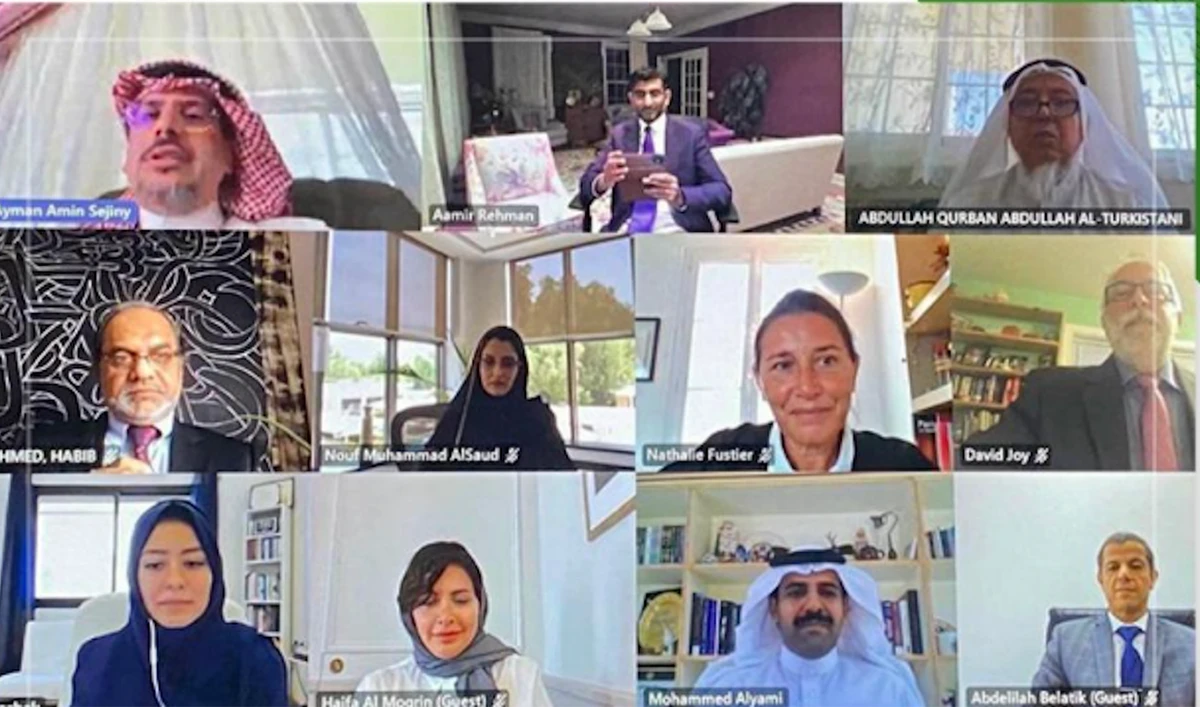
The United Nations Resident Coordinator’s Office (UNRCO) in Saudi Arabia and the Islamic Corporation for the Development of the Private Sector (ICD), announced the launch of their joint initiative’s newly formed advisory committee on Aug. 27 in Riyadh.
On April 23, UNRCO and ICD signed a letter of understanding to conduct a study on the potential of awqaf (religious endowments) in contributing to the achievement of Saudi Arabia’s National Transformation Program (NTP) and the United Nations Sustainable Development Goals (SDGs) in the Kingdom. Last week, UNRCO and ICD kicked off their first advisory committee meeting. The advisory committee will play a major role in supporting the direction of the research study as it includes distinguished sustainable Islamic financing leaders whose focus will be to shape and guide the paper while working closely with the chairpersons. The committee will be co-chaired by Nathalie Fustier of UNRCO and Dr. Mohammed Alyami, director of development effectiveness at ICD.
The chairpersons will oversee the overall process of the research, ensure proper direction to the advisory committee and the research consultants, and ensure access to resources.
The advisory committee members are: Princess Nouf Al-Saud, CEO King Khalid Foundation; Princess Haifa Al-Mogrin, G20 Development Working Group chair; Abdulrahman Alaqeel, deputy governor, General Authority for Awqaf; Dr. Sami Al-Suwailem, acting director general, IRTI; Dr. Abdelilah Belatik, secretary-general, CIBAFI; Dr. Abdullah Turkistani, dean of Islamic Economics Institute, King Abdul Aziz University; and Majid Al-Asfoor, general manager for strategy and alignment, Ministry of Economy and Planning.
Fustier said: “It is our pleasure to welcome the advisory committee and we look forward to engaging with the members over the coming months. The advisory committee will be crucial to ensure that the research is solid and produces actionable recommendations.”
Dr. Alyami said: “ICD is keen to work closely with UNRCO and the advisory committee members to conduct a referential research which will increase the awqaf potential in the Kingdom of Saudi Arabia, while also assisting in reinforcing the economies of ICD member countries to develop certain vital sectors of economy and support any humanitarian and social action deemed necessary.”
Ayman Sejiny, chief executive of ICD, said: “Throughout history, awqaf have proven to play a major role in providing sustainable financing and that is why ICD and UNRCO are keen to study the potential of awqaf in this challenging era.”
Fustier said cooperation with ICD on the issue will be instrumental in finding innovative ways to navigate these uncertain times. “The socio-economic impact of COVID-19 will hit the most vulnerable people first and awqaf have the potential to make a difference not only in Saudi Arabia but eventually in a number of Islamic countries,” she said.
Established in 1999, ICD is a multilateral development organization and a member of the Islamic Development Bank (IsDB) Group. The mandate of ICD is to support economic development and promote the development of the private sector in its 55 member countries through providing financing facilities and/or investments in viable projects sponsored by eligible enterprises in accordance with the principles of Shariah.
ICD also provides technical assistance and advisory services to member countries and their public and private enterprises with a view to improving the environment for private investment, facilitating the identification and promotion of investment opportunities, privatization of public enterprises and the development of the Islamic capital markets.