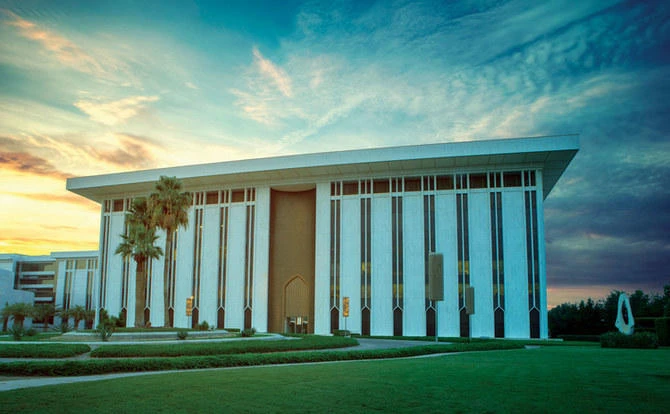
- Saudi Arabia and several Gulf countries raised key interest rates by 25 basis points following the US Federal Reserve's hike, in line with the need to maintain monetary and exchange-rate stability.
- The Saudi Central Bank increased its repurchase agreement rate to 4.5% and its reverse repo rate to 4% to ensure monetary stability.
RIYADH: Saudi Arabia and several Gulf countries raised key interest rates by 25 basis points following the US Federal Reserve’s first hike since 2023, as regional central banks moved to preserve monetary and exchange-rate stability.
The Federal Open Market Committee voted unanimously to raise rates rate by a quarter percentage point to a range of 3.75 percent to 4 percent, saying the move would support a “timelier return” of inflation to its 2 percent target.
As a result, the Saudi Central Bank, also known as SAMA, increased its repurchase agreement rate by 25 basis points to 4.5 percent and its reverse repo rate by the same amount to 4 percent.
“This decision is in line with SAMA’s mandate of preserving monetary stability,” SAMA said.
Saudi Arabia and most of its Gulf peers generally move their policy rates in tandem with the Fed because their currencies are pegged to the US dollar, helping to maintain monetary and exchange-rate stability.
Borrowing costs
Abdullah Almeer, assistant professor of economics at King Fahd University of Petroleum & Minerals Business School, told Arab News that SAMA’s decision, alongside similar moves across the Gulf, reflects the objective of maintaining dollar pegs and preserving monetary and exchange-rate stability.
“Higher repo and reverse repo rates will likely raise borrowing costs slightly,” Almeer said. “Since commercial lending rates are linked to interbank rates such as SIBOR, businesses and households may face higher financing costs.”
He highlighted that higher financing costs could moderate credit growth and excessive borrowing while helping contain inflationary pressures.
Almeer added that matching US monetary tightening also helps preserve the credibility of Gulf currency pegs and reduces the risk of speculative capital movements.
Regional moves
The UAE Central Bank raised the base rate on its Overnight Deposit Facility by 25 basis points to 3.9 percent, while Oman’s central bank increased its repo rate by the same amount to 4.5 percent.
Qatar also raised its deposit, lending and repo rates by 25 basis points, while Bahrain increased its overnight deposit rate by the same amount to 4.5 percent.
Kuwait is the only GCC currency not pegged solely to the dollar, with the dinar pegged to a basket of currencies rather than solely to the US dollar. Its central bank kept the discount rate unchanged at 3.5 percent.
The Central Bank of Kuwait said current data reflected the soundness and strength of monetary and financial stability in the country.
Repo rates are rates at which banks can obtain short-term liquidity from a central bank against eligible securities, while reverse repo rates determine the return banks receive when placing surplus funds with a central bank.