Diversified media and improved information technologies are exposing people to a broader range of ideas.
Across the globe, journalists and non-journalists are using digital media tools such as Internet, short-message service (SMS) messaging and small cellphone video cameras to gather and disseminate information.
Blogging, online video and text messaging are new media technologies that have become widely used and adapted in the last five years.
As new forms gain a greater audience share, traditionalists keep worrying about what they term as 'journalism without verification'.
There is also intense debate about whether practitioners of the new media honor the time-honored professional standards that separate journalism from mere “gossip sheets”.
Social media channels are experiencing growth primarily through mobile these days.
Facebook said in July that it generated 41 percent of its ad revenue from mobile promotions in the latest quarter, up from 14 percent a year earlier.
NowThis News is new site that has caught the attention of new media followers in recent months.
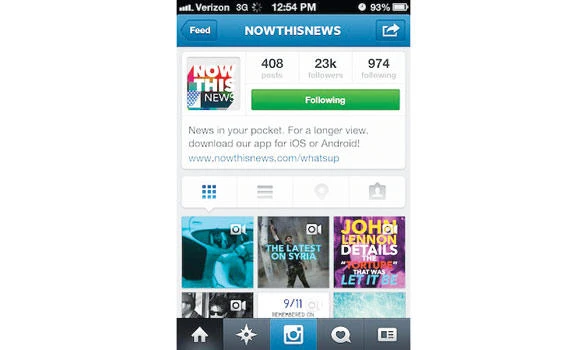
It has found a new distribution platform that is drawing a big share of its strategic attention: Instagram.
Facebook’s addition of video to the photo sharing app Instagram in August wasn’t just a competitive swipe at Vine.
It’s changing the way one original reporting site is presenting the news, says media analysts.
NowThis News is making Vine and Instagram central to its news gathering efforts.
“We are built to do original news content on both our mobile platforms, iOS and Android, and natively on social networks," Ed O’Keefe, editor in chief, was quoted as saying in a recent report.
"What Netflix is to entertainment, NowThis News is to news,” said the 12-year ABC News veteran.
The NowThis News Instagram account has gained more than 50,000 followers since it began publishing videos in July.
Its content is geared toward 18-to-34-year olds who have adopted mobile devices and social platforms as a portal for finding and sharing news and commentary.
“Our only real limitation in terms of our production is that we don’t want to flood the feed,” says O’Keefe.
“There’s nothing more annoying than that friend who constantly posts, and every time you go you see nothing but their posts. We could do more — we just choose not to.”
Twitter played a major role in the new media expansion.
Twitter's projected 2013 revenue is about $582 million, according to research firm eMarketer.
But some capital market analysts say that Twitter's user growth is slowing and it is showing no sign of turning a profit.
Other analysts point out that the numbers provided in Twitter's IPO filing failed to live up to the most optimistic estimates for growth in users and revenues.
Twitter unsealed the papers with the US Securities and Exchange Commission last month, giving potential investors and its users a look inside its business.
In the offering prospectus, Twitter pegged the fair value of its common stock at $20.62 a share as of August.
There are 620 million shares outstanding, Bloomberg reported citing people with knowledge of the matter.
Two other factors weighing on Twitter’s appeal are slowing growth in new users, and the fact that it remains unprofitable despite surging sales.
Bloomberg said average monthly active user growth slowed to 44 percent in the three months to June 30 from 78 percent in the year prior.
Expenses jumped 87 percent in the first six months of 2013, led mostly by research and development costs, compared with the same period last year.
NowThis News makes the most of Instagram