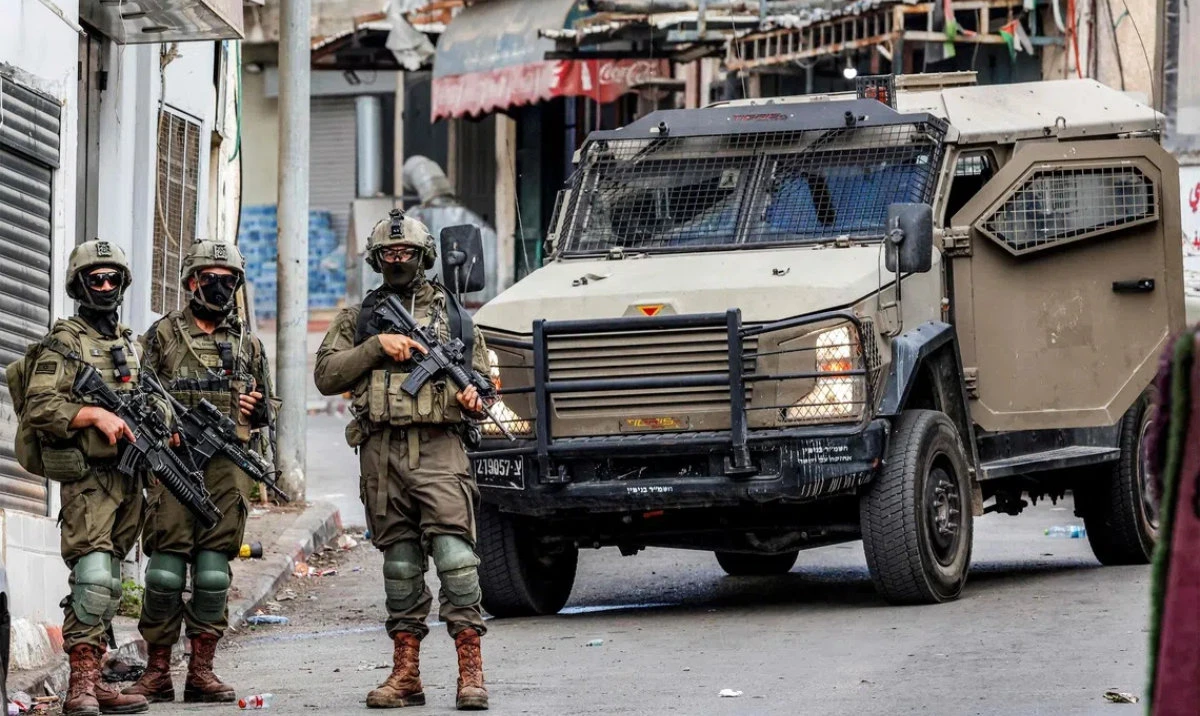
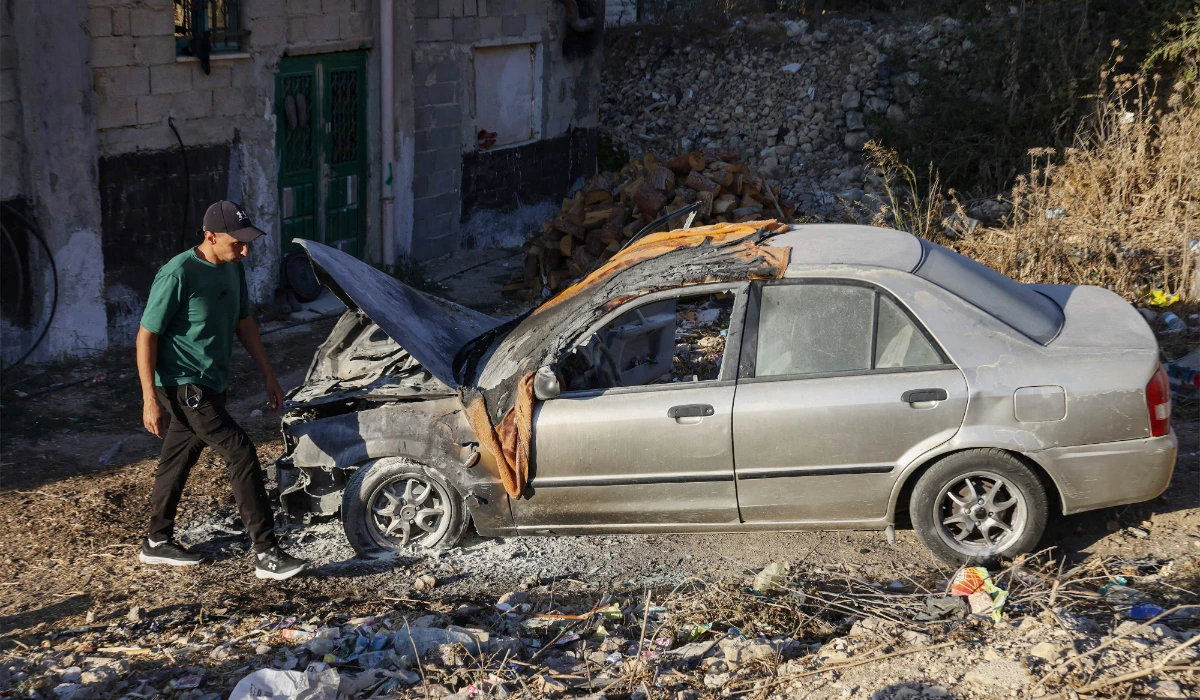
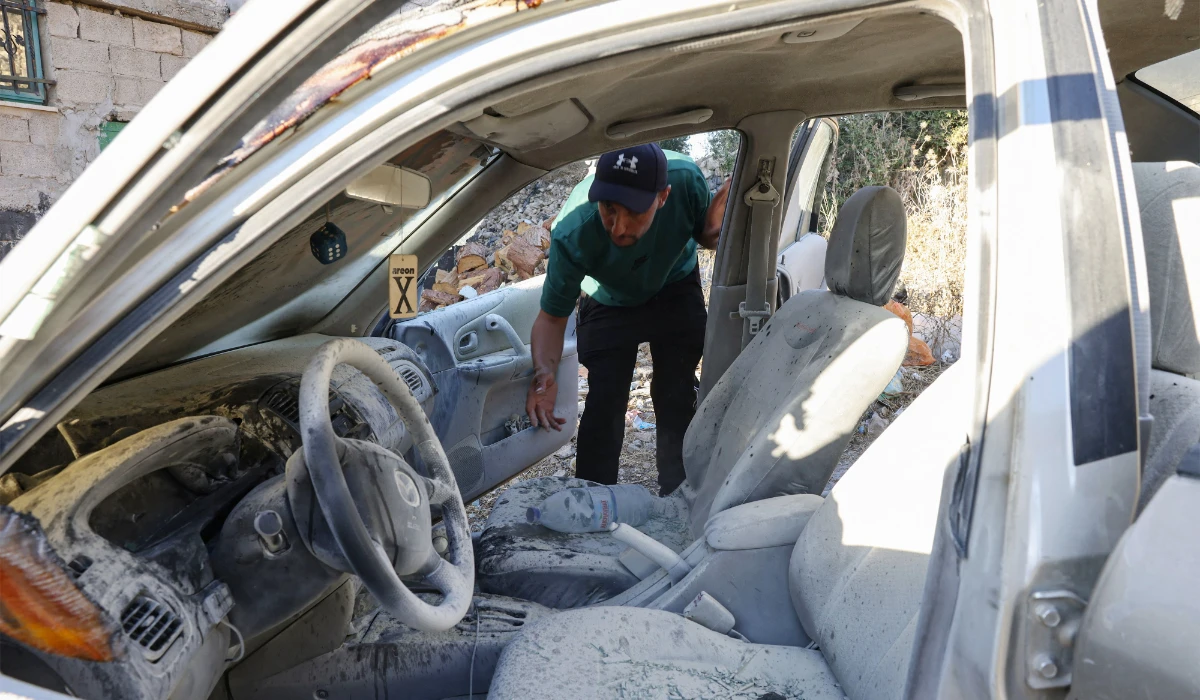
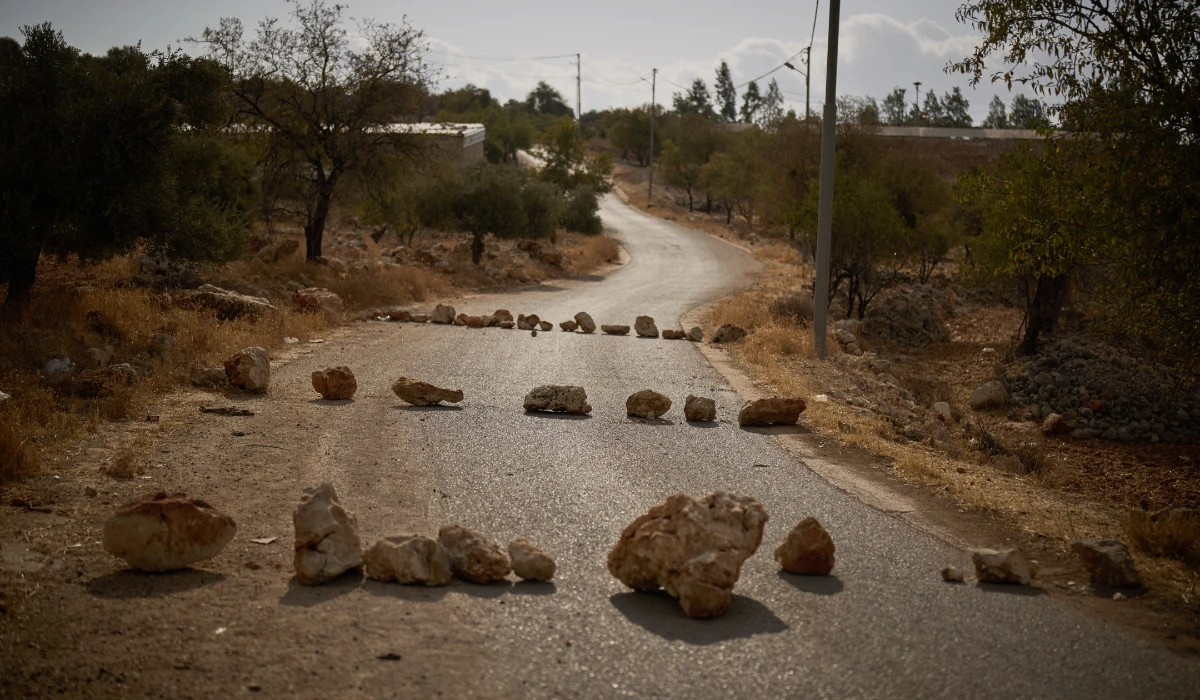
- The settlers, emboldened by Prime Minister Benjamin Netanyahu’s right-wing government, have ramped up attacks on Palestinian towns and villages, harassing residents and setting homes, mosques and fields on fire
TAYBEH, West Bank: Leo Correa began working in the Middle East as a freelance photographer for The Associated Press in 2023 and joined the AP staff in 2024.
Here’s what he had to say about this extraordinary photo:
Since the start of the Israel-Hamas war, settler violence has surged across the Israeli-occupied West Bank, with an increase in attacks by Israeli settlers against Palestinians and repeated Israeli military raids.
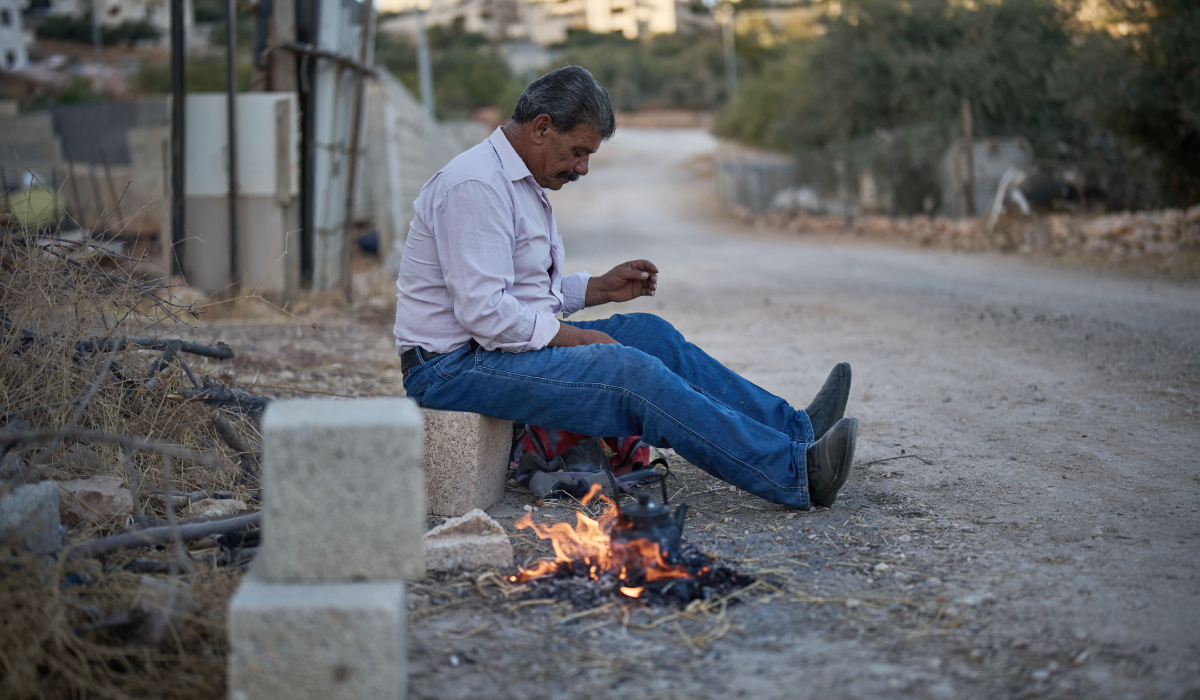
I visited the Kaabneh family earlier this July on assignment for AP as part of a visual story about life alongside Israeli outposts, on the outskirts of the town of Taybeh. At that time an Israeli settler stepped into the courtyard of their house as another stood next to the fence, trespassing on Palestinian-Bedouin property. Settlers lingered outside talking on their phones and taking videos of the family and also activists, who were there as a protective presence to support the Palestinians.
Why shoot this photo
As part of my work in the region, I have been following the escalation of violence in the Palestinian territories and on Sept. 10 I went back to the same place where the presence of Israeli settlers is part of the routine. The family has reinforced their property with a barbed-wire fence to try to prevent attacks. Every morning and evening, settlers still go around the house, filming with their phones and staying as close as possible. Activists and volunteers stay outside following the settlers’ steps.
How he made this photo
Like shadows at dusk, once again settlers came around Nayef Kaabneh’s family home, walking around. Nayef grabbed a flashlight to track their movements while also trying to record them on his phone to document what was happening.
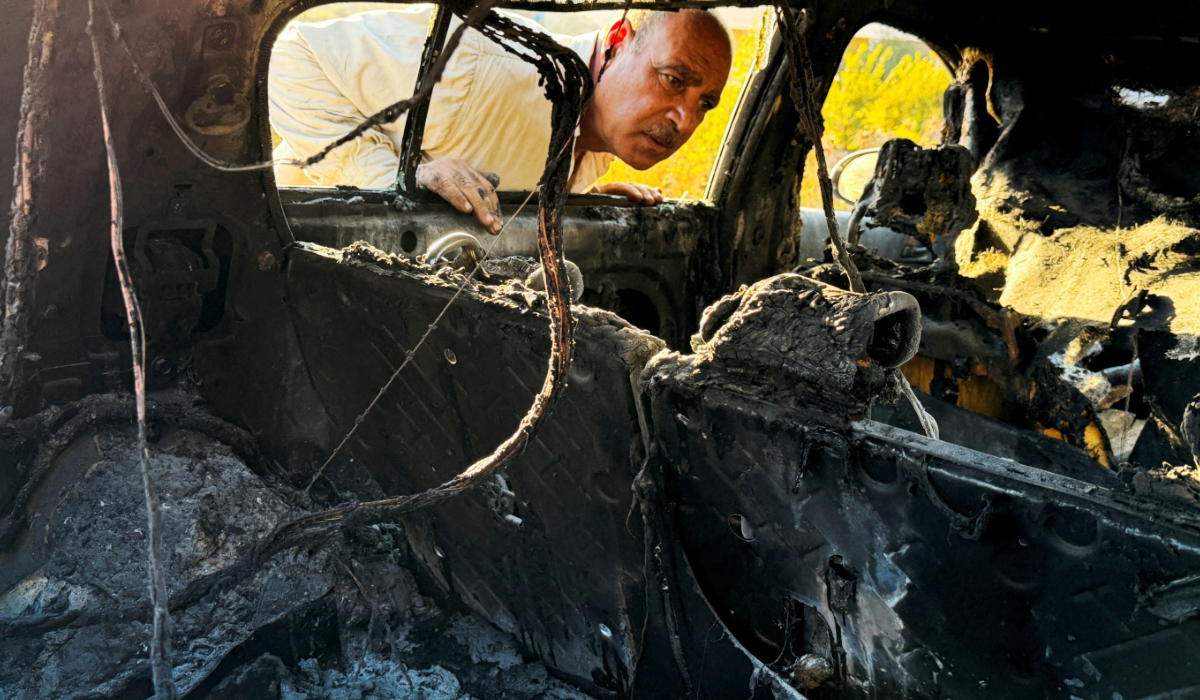
I was with other members of the family when settlers arrived with their sheep and goats around his property, and Nayef began moving up through his courtyard with his flashlight and phone. For them, documenting this in video is an important measure to defend their rights in these circumstances.
He stopped next to me and started filming again. His eyes moved back and forth between the horizon line, where a settler stood, and the screen of his phone making sure he was recording properly.
I started to photograph this moment and crouched down trying to better frame not only Nayef and his nephew but also the fence against the fading light in the sky. I used a 35 mm Zeiss lens at f/1.6.
Why it works
The settlers, emboldened by Prime Minister Benjamin Netanyahu’s right-wing government, have ramped up attacks on Palestinian towns and villages, harassing residents and setting homes, mosques and fields on fire.
I think the image works because it makes you question what is going on. When I took the photo, the flashlight partially lit the fence as Nayef’s nephew Muhammad stands next to him helping to spot the settlers. It’s a low-angle frame that helps to emphasize the fence against the fading sky. Standing next to a tree, Nayef is looking through his phone to spot the settlers.
The viewer doesn’t see the settlers, but the image can convey that something is happening beyond the frame.
Israel captured the West Bank in the 1967 Mideast war and in the decades since has built dozens of settlements that are now home to more than 500,000 Jewish settlers living alongside around 2.5 million Palestinians. The UN and much of the international community consider them to be illegally occupied, and an obstacle to peace with the Palestinians.
Israel’s military operates in all parts of the West Bank, but rights groups have said the military frequently turns a blind eye to settler violence. The settlers are Israeli citizens, and Israel’s defense minister recently announced plans to fully transfer law enforcement among settlers to the Israeli police.
More about the photographer
Correa began with AP as a freelancer in Brazil in 2013. He moved to Senegal in 2020 and later worked on two extended assignments in Ukraine. Correa previously worked for newspapers in Brazil and has a bachelor’s degree in history.