- Protests erupted across several regions after gasoline and diesel prices were raised by up to 40 percent
- Higher fares add to pressure on households already struggling with poverty and scarce essential services
DUBAI: Protests broke out across parts of Syria on Sunday over a government decision to raise fuel prices, with demonstrators blocking roads and demanding that the increase be scrapped as the cost of living continues to bite.
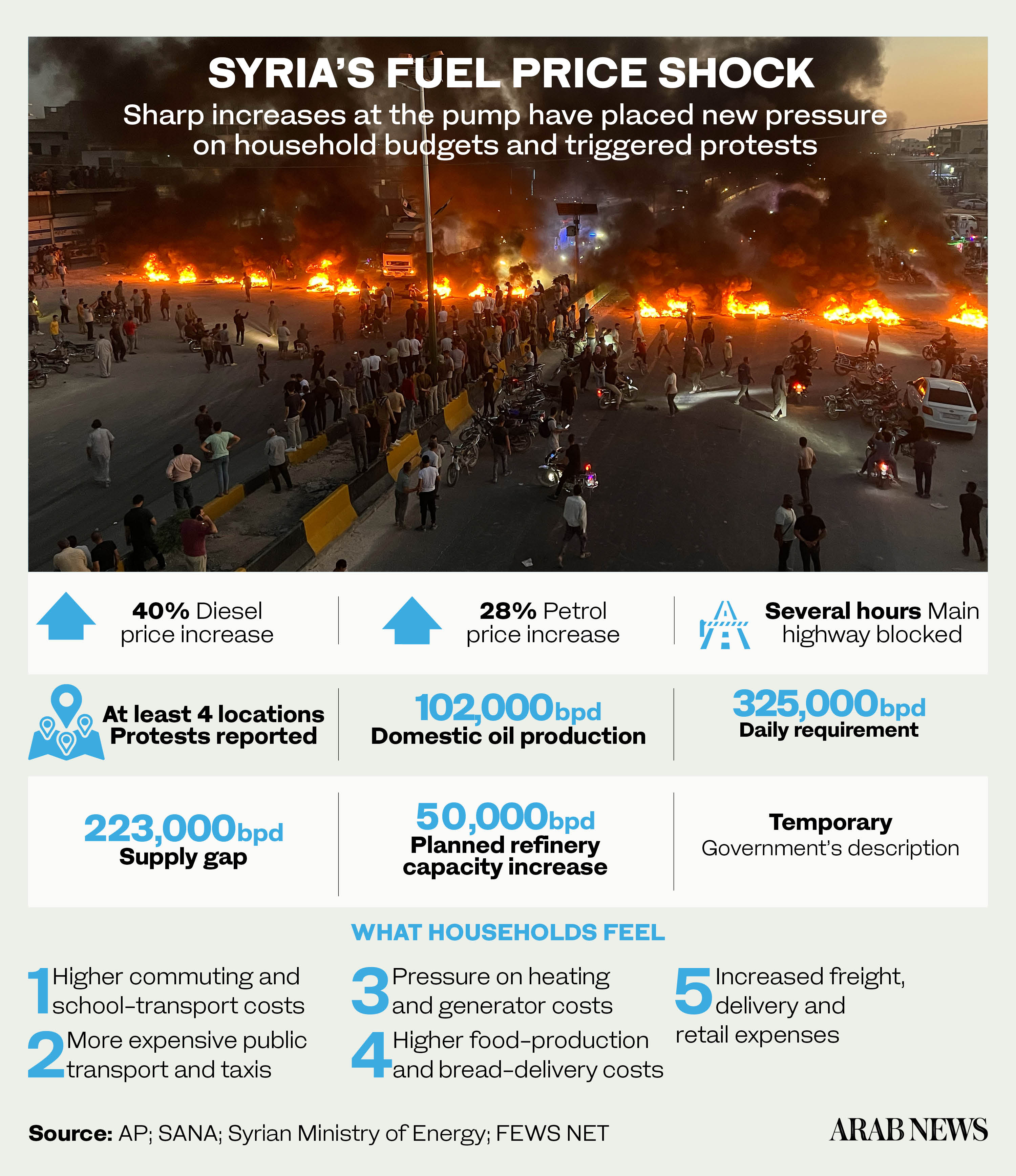
The widespread anger came a day after Mohammed Al-Bashir, Syria’s energy minister, said the country was producing around 102,000 barrels of oil per day, compared with domestic demand of about 325,000 barrels, forcing the government to increase imports to make up for the shortfall and raise petrol and diesel prices by up to 40 percent.
The rise in costs, along with a two-month overhaul of the Baniyas Refinery, also contributed to what the ministry described as a “temporary” fuel price increase.
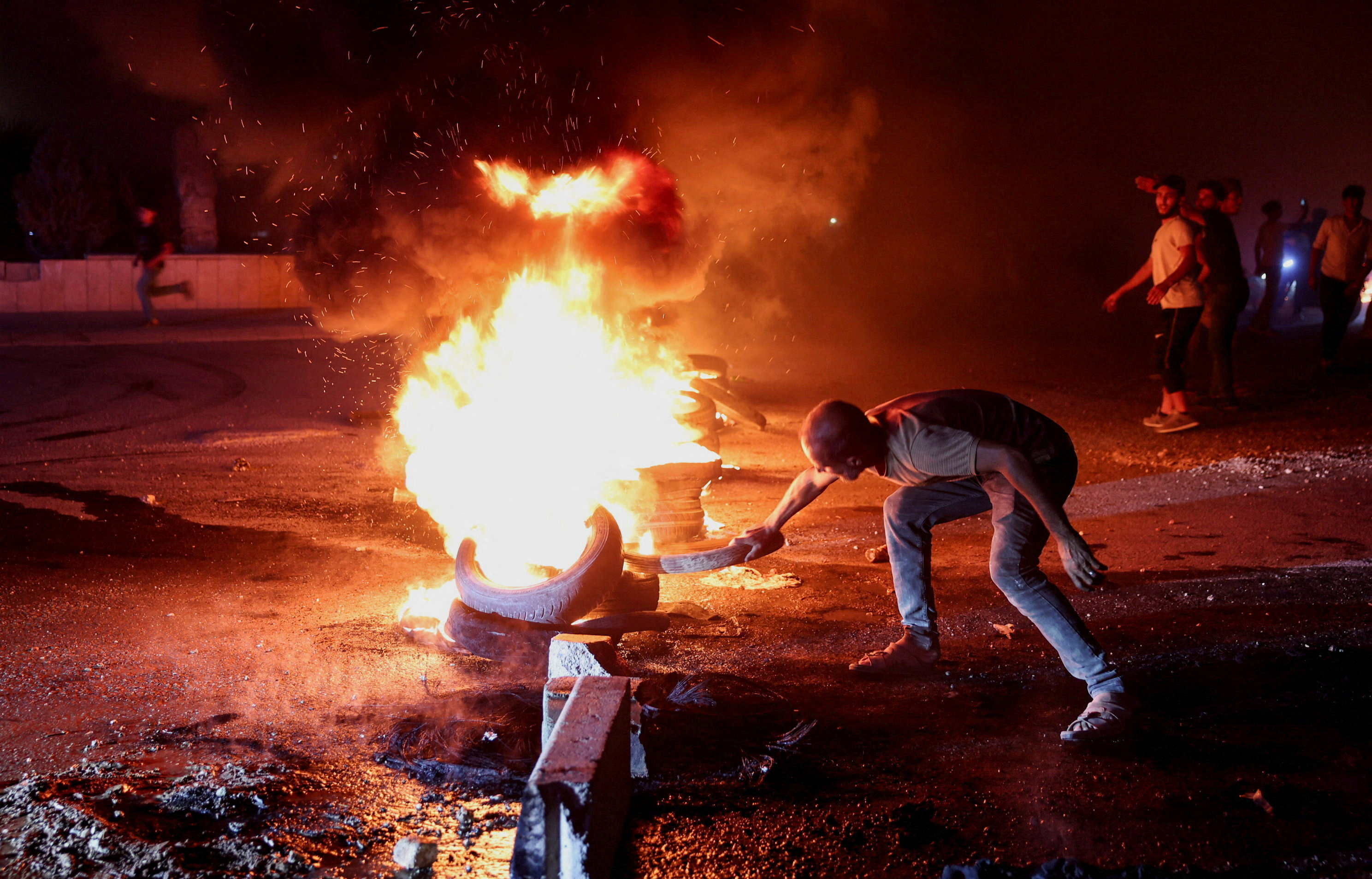
In the Aleppo countryside, people took to the streets in Azaz and Al-Bab, chanting against the price hikes and closing roads in protest against the decision. Protesters also blocked the M5 international highway near Maarat Al-Numan in southern Idlib countryside, according to videos and images circulating online that showed burning tires on the road.
The demonstrations also spread to a few towns and villages in the countryside of Deir Ezzor, Hasakah and Raqqa, where crude oil tankers were stopped from reaching their destination.
“We should not be rioting for this. We should not be rioting to live,” Mohammed, a Deir Ezzor resident who did not want to give his full name, told Arab News.
“We have been through and overcome so much. Our basic living standards should be met.”
Mohammed said although it is undeniable that the authorities inherited a failed state after the collapse of the Bashar Assad regime in December 2024, the consensus among many is the government should do more to support the average citizen.
While the political situation may have changed, the people’s needs remain the same in a country where 90 percent of the population live under the poverty line.
A report by the UN Development Programme put the country’s GDP loss at an estimated $800 billion between 2011 and 2025. Three out of four people rely on humanitarian aid and require support in matters of health, education, food insecurity, housing and unemployment.
Meanwhile, energy production across Syria has fallen by 80 percent, with over 70 percent of power plants and transmission lines damaged, reducing the national grid capacity by more than three-quarters.
The latest price hike is more than a mere number on paper for most Syrians as they struggle to make ends meet. They are wondering how they will afford heating fuel for winter and how to cope with higher transportation costs.
Economists have warned that the impact could extend well beyond the price paid at fuel stations.
In an interview with a Syrian media outlet, Hassan Murad, an economic expert, said: “The issue of fuel prices in Syria is neither simply a discussion about the price of a liter of gasoline or diesel, nor merely a financial decision added to a series of price increases.
“It has become a much bigger issue, concerning the future of production, transportation costs, food prices, citizens’ purchasing power, businesses’ profitability, employment, investment, and even the Syrian economy’s ability to recover and rebuild.”
He said higher fuel prices would increase the cost of transporting raw materials and finished goods, as well as operating agricultural machinery, irrigation pumps, generators and delivery services.
“The question is not how much does oil cost in the international market. It is, how much can the Syrian economy and the Syrian citizen afford to pay? And that is a fundamental difference,” he said.
Murad also questioned whether international prices should automatically be passed on to Syrian consumers, noting that the country has such advantages as domestic oil production, local resources and refining facilities, although their capacity is limited.
He proposed calculating fuel prices using a weighted average that factors in domestic production and import costs, along with refining, transportation, distribution and insurance expenses.
The immediate impact has been felt on the roads, where the cost of getting to work, school and other daily activities has risen.
In Damascus, fares for minibuses and taxis increased on several routes within a day of the new fuel prices taking effect, according to local reporting.
The increases varied considerably between routes and drivers. Minibus fares in the capital were reported to have risen by roughly 35 percent to 70 percent, while taxi journeys became between 30 percent and 60 percent more expensive depending on the distance.
The absence of a single, consistently applied fare has added to passengers’ frustration, with commuters reporting that drivers operating on the same route were charging different amounts.
Residents said the additional expense was especially difficult for families whose children depend on public transport to get to school. The increase also comes as many households face higher costs for other essential goods and services, leaving less room in already stretched budgets.
Drivers, meanwhile, have complained that the higher fares do not necessarily amount to higher earnings. The cost of diesel has risen sharply, while they continue to face expenses including vehicle maintenance, wages and payments to vehicle owners.
Some drivers said the modest fare increases they introduced were barely sufficient to offset the additional cost of fuel.
According to a taxi driver who suffers from post-traumatic stress syndrome owing to his incarceration under the Assad regime, every day has been a struggle to keep going.
“I was imprisoned for over seven years in Assad’s dungeons. I now make do driving a taxi and I get a panic attack every time I come across a police or military checkpoint as it reminds me of my arrest,” Omar, who gave only his first name, told Arab News.
“I thought my struggle was largely over when I was freed. But now I don’t save enough to keep my children enrolled in school, fed and clothed. Everything I earn, I spend trying to cope with the next month’s bills.”
The disruption has also spilled into the wider protests against the fuel-price decision.
In Hasakah, reports said some bus stations stopped operating amid calls for drivers to strike, while demonstrations in other parts of the country have included demands for authorities to reconsider the impact of fuel prices on transportation and living costs.
The consequences could extend further as higher transport expenses raise the cost of moving workers, agricultural products, raw materials and consumer goods, potentially putting further pressure on prices across the economy.
“We thank God for freedom, for getting rid of a tyrant, but the Syrian people have been through so much, and we deserve to live like the rest of the people in the world, that is our right,” Omar said.
“We support the government, but our patience is wearing thin.”