- Prime Minister Ali Al-Zaidi sets June 2027 target for disarmament as Iraq prepares to mark the departure of US troops
- Analysts say ambitions and influence of Iran-linked factions could frustrate push to bring weapons under state control
LONDON: Next Wednesday, Sept. 30, will be Sovereignty Day in Iraq, a new national holiday created to celebrate the withdrawal of the last US troops from the country after a 23-year presence.
What Wednesday will not be, despite much speculation to the contrary over the past few months, is the day that Iraq’s multiple pro-Iran militias surrender their weapons to the state.
Since Iraq’s latest prime minister, Ali Al-Zaidi, took office in May, Sept. 30 has been widely mooted as disarmament day. There has, however, been widespread and mounting skepticism that such a challenging ambition could possibly be achieved in just four months — and on Saturday, Al-Zaidi acknowledged as much.
Just 11 days before the supposed deadline, in an exclusive interview in Baghdad with The New York Times, he laid out a new timeline for disarmament, committed to a new deadline — June 30, 2027 — and bought himself another nine months.
“This is not something that is optional,” Al-Zaidi said. “It is a necessity.”
His nation, he added, was determined “to build bridges and economic ties between Iraq and the countries of the world. Under this government, Iraq will be a meeting point, not a point of hostility.”
All that will happen now on Sept. 30 is the unveiling of a detailed timeline for disarmament. This, Al-Zaidi said, will begin with a 90-day period during which the militias would carry out no attacks, and in return would not be attacked by the US.
After this, the process of disarming would begin, culminating on June 30, at which point the militias would cease to exist and their members “will join the Popular Mobilization Forces as individuals and integrate into them.” Any groups that refuse “will be deemed outlaws.”
The evaporation of the Sept. 30 deadline comes as no surprise, said Lahib Higel, deputy director of the Middle East and North Africa program at the International Crisis Group.
“Anyone who has followed any kind of disarmament, demobilization and integration process anywhere in the world knows that they don’t happen on a specific date unless you’ve come very far into a negotiating process,” she said.
“So, the whole idea that this was going to happen on that day was unrealistic to start with; not to mention the fact that you have a handful of groups that are publicly declaring that they won’t disarm.”
But there is no doubt that the announcement of the new deadline for disarmament represented a climbdown by Al-Zaidi in the face of the realities of a complex security and militia landscape in Iraq.
It will also have ruffled feathers in Washington, which was putting pressure on Iraq to break ties with Iran, opposed any role for the militias in Iraq’s government, and had been personally assured by Al-Zaidi that disarmament would be linked to the US withdrawal.
As recently as June, an Iraqi government spokesman said there was a “deadline … a time marker after which the reasons for unregulated weapons end, which is the end of September, the end of the International Coalition’s presence.”
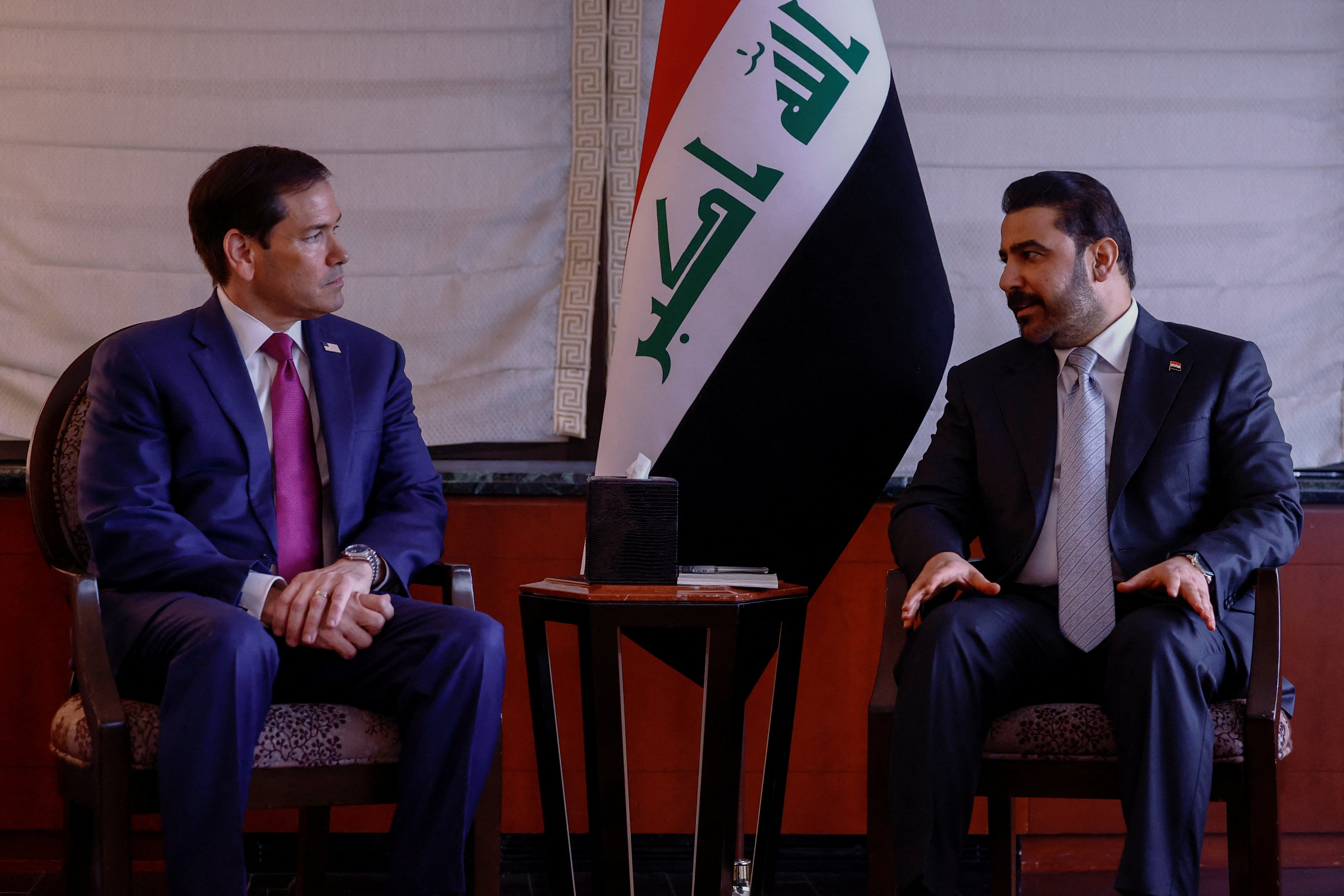
On July 15, two months after becoming prime minister, Al-Zaidi departed from Iraq on his first overseas visit, bound for Washington. There, he received a warm welcome from US President Donald Trump at the White House and delivered a similar message.
Speaking via an interpreter, Al-Zaidi said that as soon as American troops had left Iraq there would be no remaining justification for the existence of armed militias in the country.
“I have made a decision on this issue and there will be no turning back,” he said. “There will be no need for any armed factions after Sept. 30.”
Al-Zaidi, a newcomer with no political track record, is well aware that he owes his job to Trump, and that to remain in Washington’s good books he must deliver on his promise to neuter Iran’s friends and proxies in Iraq.
When he took office as prime minister on May 14, he was almost nobody’s first choice for the job, but got it largely thanks to the personal backing by Trump.
After weeks of internal wrangling, Al-Zaidi was nominated as a compromise candidate by the Coordination Framework, the influential coalition of Shiite parties that forms the largest bloc in Iraq’s parliament.
The coalition’s first choice was the former prime minister, Nouri Al-Maliki, but it changed course after a very public and frank intervention by Trump.
“I’m hearing that the Great Country of Iraq might make a very bad choice by reinstalling Nouri Al-Maliki as Prime Minister,” he wrote on social media on Jan. 27.
The last time Al-Maliki was in power, Trump added, the country “descended into poverty and total chaos. That should not be allowed to happen again.
“Because of his insane policies and ideologies, if elected, the United States of America will no longer help Iraq.”
Al-Maliki, who was prime minister from 2006 until 2014, is leader of the Islamic Dawa Party. After Iran’s supreme leader, Ali Khamenei, was killed in an Israeli airstrike on Tehran in February, Al-Maliki was among the Shiite leaders who pledged allegiance to his successor, Mojtaba Khamenei.
The political class in Iraq had already been left in no doubt that Washington was determined to curb the influence of Iran-linked political parties in the country.
Four days before Trump’s remarks, stories had started to circulate that the US government had threatened senior Iraqi politicians with sanctions if any armed groups linked to Iran were included in the country’s next government.
According to sources cited by Reuters in a report on Jan. 23, the US named 58 members of Iraq’s parliament whom it said should play no part in government. If they did, the US would block cash flows from Iraqi oil sales, which are vital for its economy.
The rumored threat to Iraqi sovereignty seemed fanciful — until a spokesperson for the US State Department all but confirmed it.
“The United States supports Iraqi sovereignty, and the sovereignty of every country in the region,” the spokesperson told Reuters. “That leaves absolutely no role for Iran-backed militias that pursue malign interests, cause sectarian division, and spread terrorism across the region.”
Many, although not all, of the parties under the umbrella of the Coordination Framework have close ties to Iran. Nevertheless, the coalition took the US threats seriously and turned to Al-Zaidi as a compromise candidate whose appointment would appease Washington.
“Mark my words, I knew what I was doing,” Trump said as he sat alongside Al-Zaidi in the Oval Office.
“This man is going to be a great leader in the Middle East, beyond Iraq. His influence is going to spread all throughout the Middle East.”
But the narrowness of the tightrope Al-Zaidi must walk was emphasized when, just over a week after his visit to the White House, he flew to Tehran for his first meeting with Iranian leaders, including President Masoud Pezeshkian.
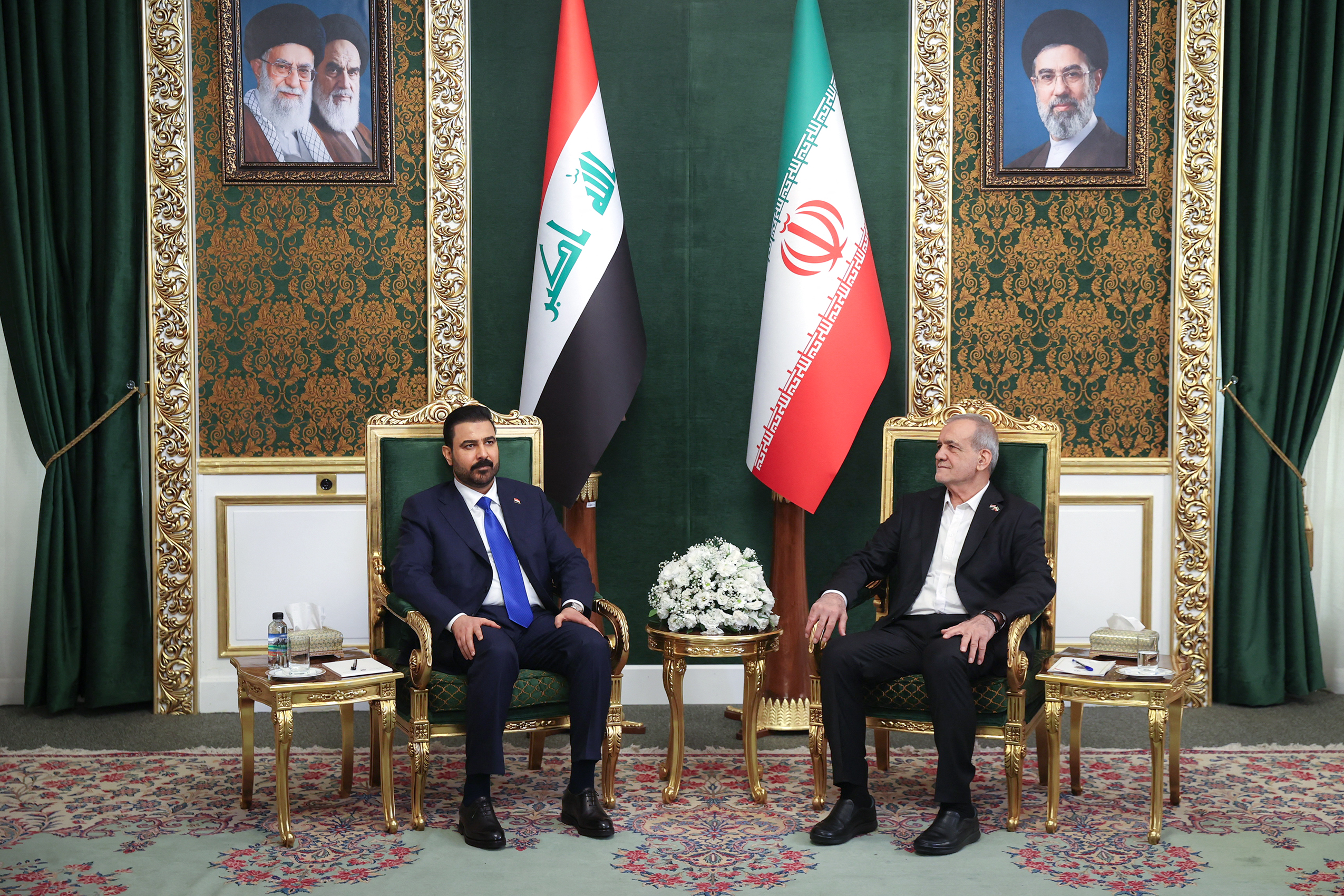
The official Iraqi News Agency reported that the meetings and various memorandums of understanding that were signed during his visit were focused on foreign affairs, finance and energy supplies; Iraq is heavily reliant on Iranian electricity and gas.
But without doubt, Iran’s insistence that Iraq’s pro-Tehran militias should be allowed to keep their weapons will have been at the top of the agenda. As recently as Sunday, Al Arabiya reported that “Iran is pressuring Iraqi armed factions not to surrender their weapons.”
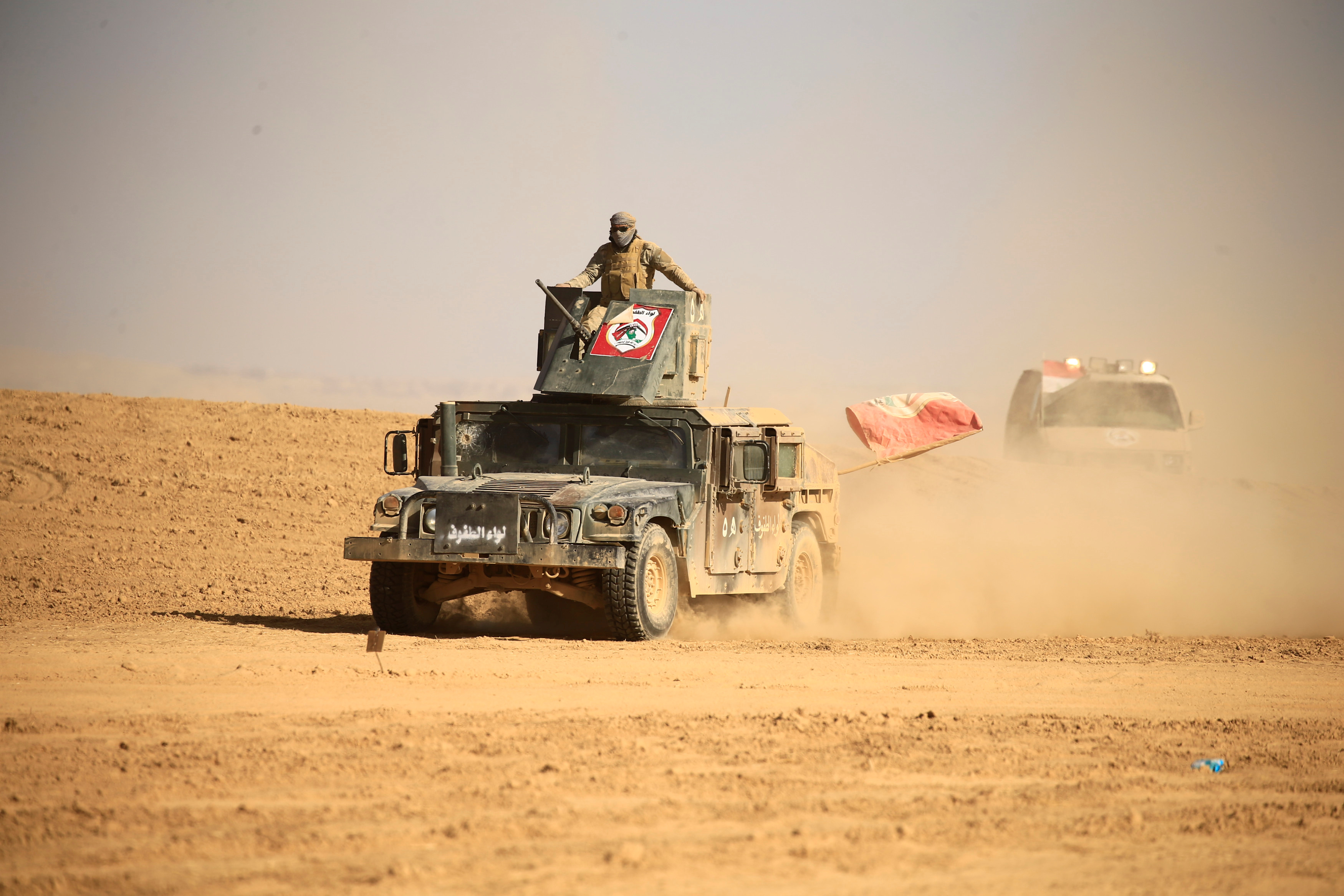
Iraq’s problem with pro-Iranian militias took root in the summer of 2014, when Shiite cleric Ali Al-Sistani called on Iraqis to take up arms and defend their country against Daesh, which had overwhelmed the Iraqi army, seized a third of the country’s territory and come within striking distance of Baghdad.
Many heeded the call and joined Shiite armed groups, which Al-Maliki, the prime minister at the time, attempted to bring under state control by grouping under an umbrella organization called the Popular Mobilization Forces, also known as PMF, or Hashd Al-Shaabi.
Al-Zaidi’s attempt to bring the multiple elements of the PMF to heel is not the first. His predecessors, prime ministers Haider Al-Abadi and Mohammed Shia Al-Sudani, both tried and failed — and there is little to suggest Al-Zaidi will have any more success.
The issue now, as before, is not only about disarmament; to its fighters and their families, the PMF has become a state within a state, providing salaries and welfare benefits, while several of its component organizations have inserted themselves into Iraq’s political fabric.
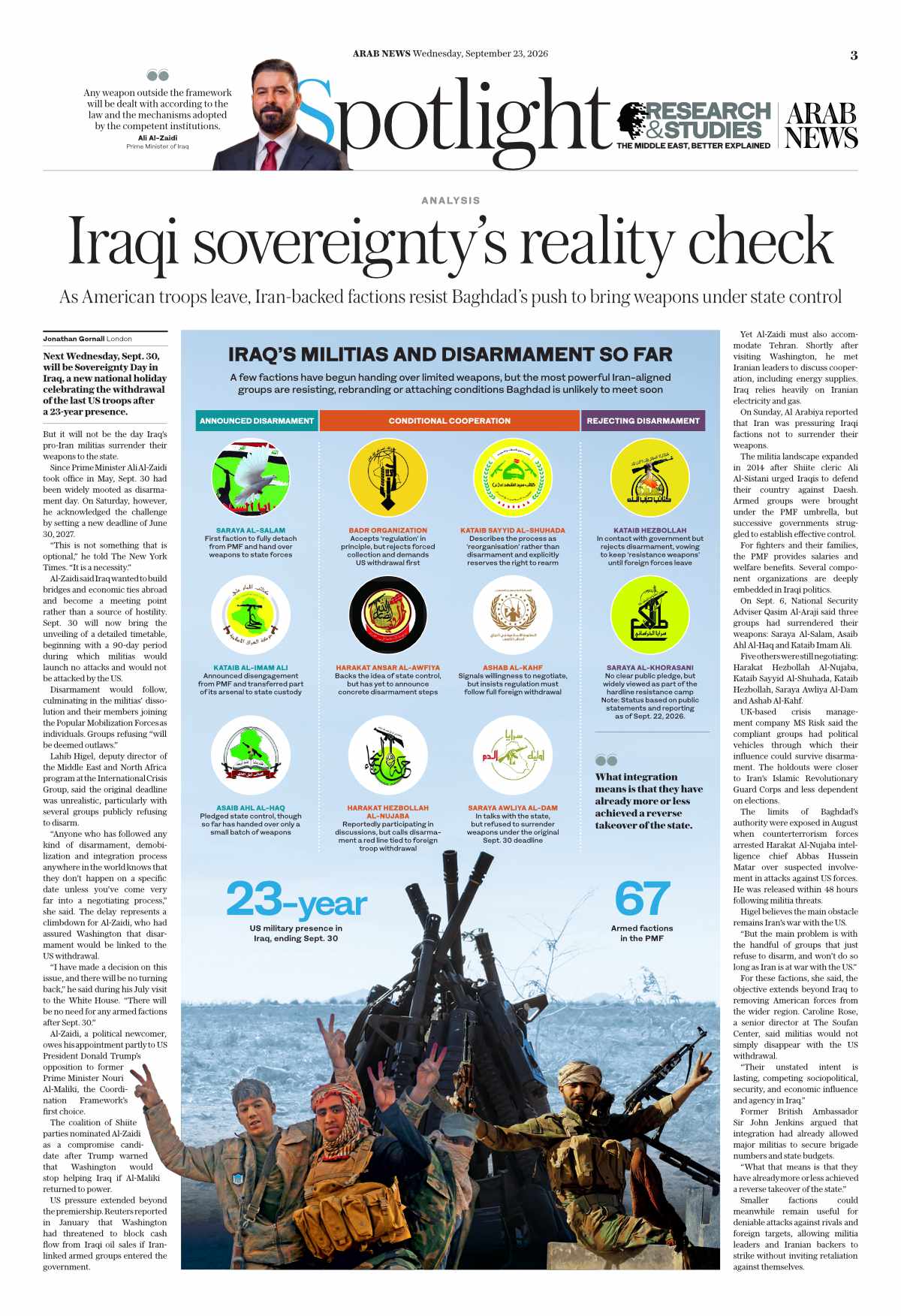
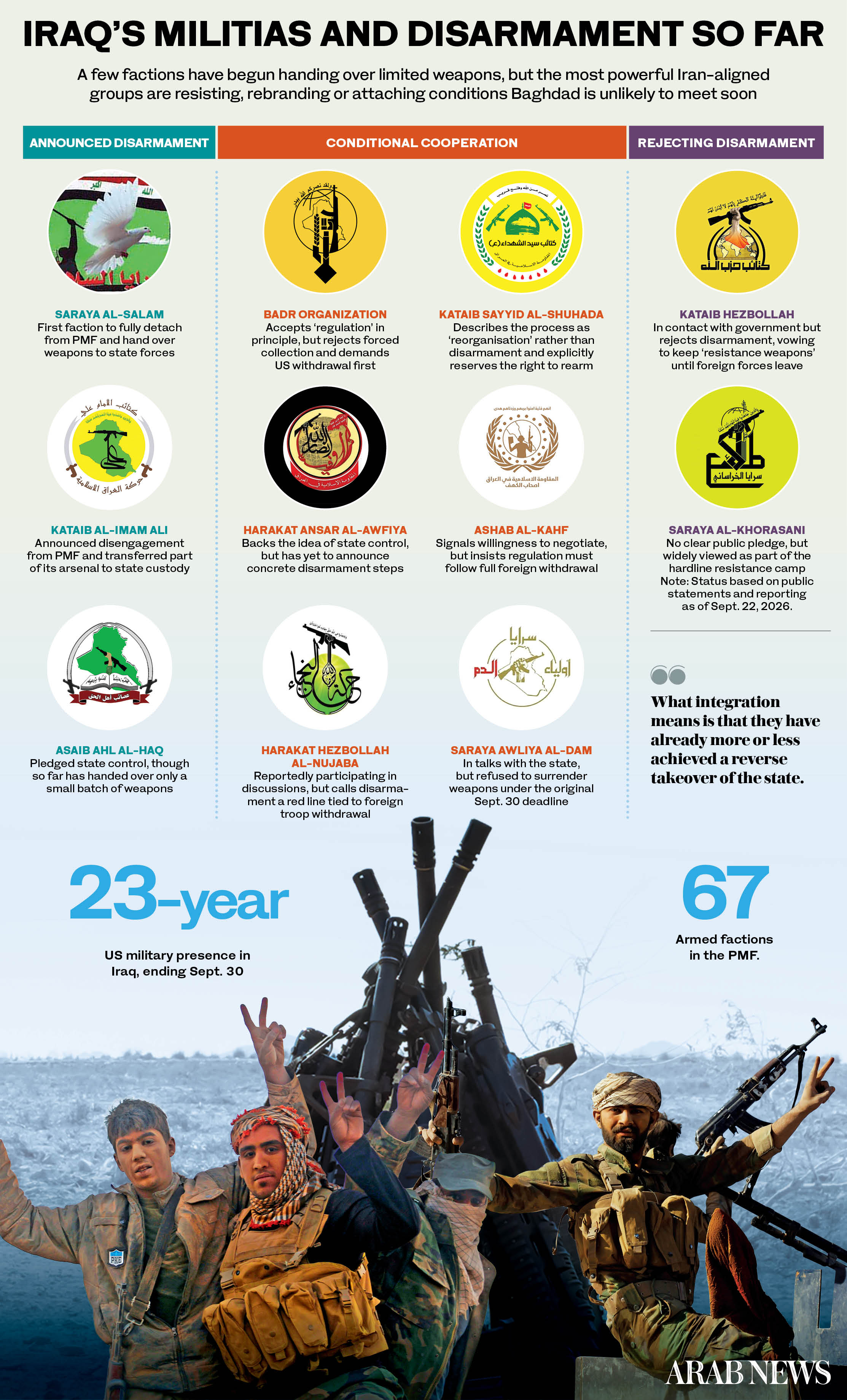
As recently as Sept. 6, Qasim Al-Araji, Iraq’s former national security adviser and now Al-Zaidi’s personal security adviser, told the state-owned TV channel Al Iraqiya that three groups had already given up their weapons: Saraya Al-Salam, Asaib Ahl Al-Haq and Kataib Imam Ali.
Five others, he said, were still negotiating: Harakat Hezbollah Al-Nujaba, Kataib Sayyid Al-Shuhada, Kataib Hezbollah, Saraya Awliya Al-Dam and Ashab Al-Kahf. Others, however, are not.
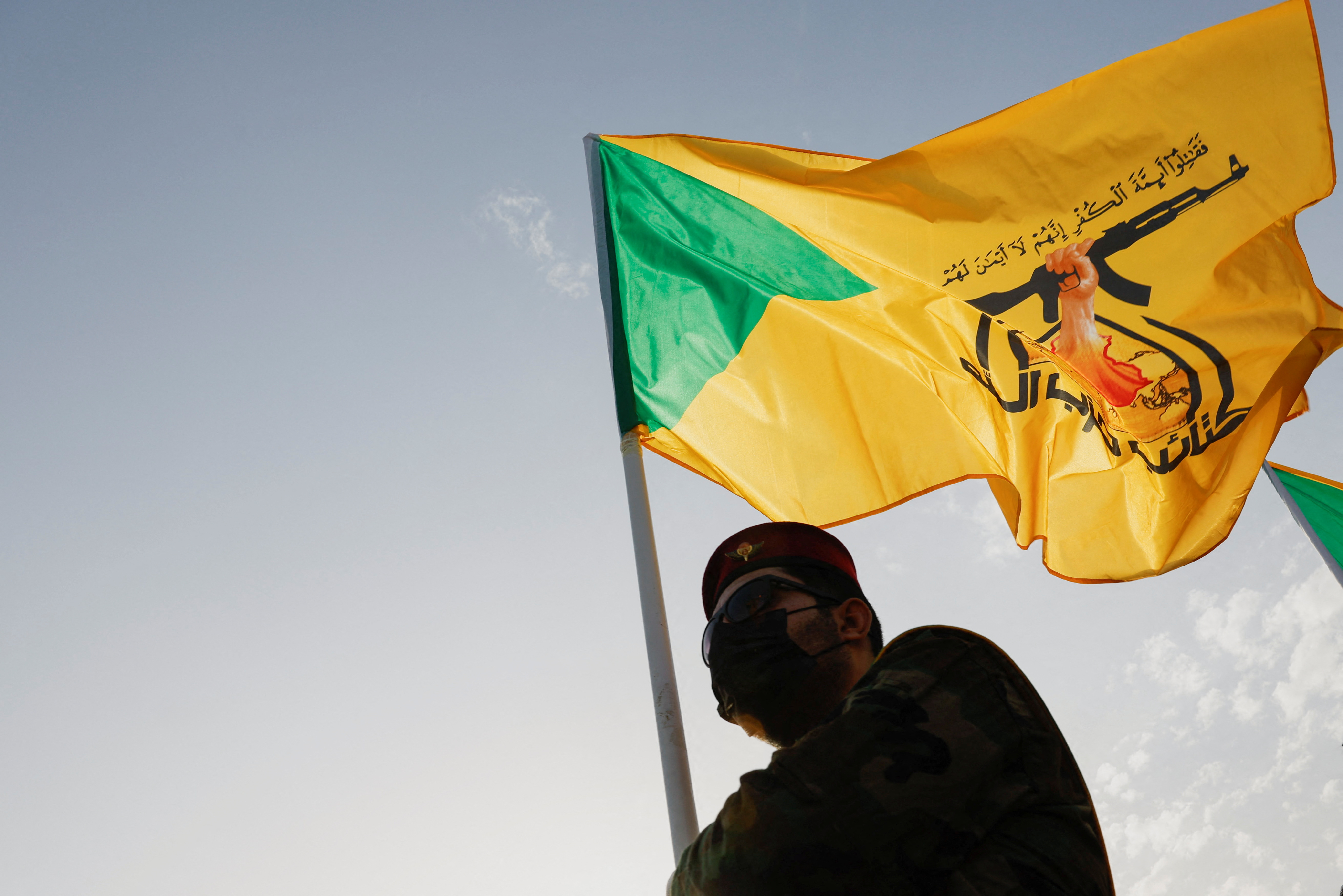
In an analysis published on Sept. 15, the UK-based crisis management company MS Risk concluded that “the division is not random. The compliant three each possess an established political vehicle through which influence survives disarmament,” whereas “the five holdouts are those most closely associated with the Islamic Revolutionary Guard Corps and least dependent on electoral politics.”
As a consequence, it said, “disarmament is therefore likely to record its clearest successes among the factions whose weapons pose the least risk to the state, while the groups responsible for cross-border attacks remain outside the framework.”
The difficulties inherent in treading the line between Washington and Tehran were laid bare on Aug. 17, when government counterterrorism forces arrested Abbas Hussein Matar, the head of intelligence for pro-Iran militia Harakat Al-Nujaba.
Matar, who was suspected of involvement in operations targeting US forces in Iraq, was released within 48 hours, following threats from his militia.
On Aug. 18, a spokesperson for the group told Erbil-based news site The New Region that “we will not surrender our weapons, as they are the instrument that has protected and continues to protect the Iraqi people from aggression.”
The main barrier to progress, Higel believes, is Iran’s ongoing conflict with the US.
“I don’t think that this (disarmament) process will be over during Zaidi’s term,” she said. “It will take longer than that because we’re talking about dozens of groups. Most of them are fairly easy to deal with, in the sense that you can probably strike individual deals with them, as the government has already started doing.
“But the main problem is with the handful of groups that just refuse to disarm and won’t do so as long as Iran is at war with the US.”
Even the withdrawal of US troops from Iraq “doesn’t actually remove the justification for the Iran-backed factions that subscribe to the ‘Axis of Resistance,’ of which there are four or five in Iraq, to retain their arms,” Higel added.
“These groups subscribe to Tehran’s idea that in order to have a stable region that does not constitute a threat to us, we need to rid West Asia of all American presence.”
Caroline Rose, a senior director at The Soufan Center whose work focuses on security and defense in the Middle East and North Africa, agrees with this assessment.
“It is clear that, other than a select few elements of the Hashd Al-Shaabi, the majority oppose the concept of disarmament,” she said.
“While militias have, over the years, made their goal complete US withdrawal from Iraqi territory, they won’t suddenly fold now that US forces are pulling out from the country. Their unstated intent is lasting, competing sociopolitical, security and economic influence and agency in Iraq.
“Elements of the Hashd network also understand that while this new Iraqi administration seeks to look tough on militia networks, particularly to appease the US, they possess both leverage and creative loopholes to bypass disarmament.”
In a sense, according to Sir John Jenkins, a former British ambassador to Saudi Arabia, Iraq and Syria, the PMF has already got its way.
“When people from the Hashd talk about ‘demobilization and disarmament,’ they really mean integration into the Iraqi armed forces,” he told Arab News.
“That’s already happened to a large extent, with most of the big militia groups already having brigade numbers and a dedicated budget authorized by the state. What that means is that they have already more or less achieved a reverse takeover of the state.”
There are, he added, “smaller factions that don’t like this because they don’t benefit as much, but they’ll eventually be smacked around by the big boys until they do what they’re told.”
Worse still, “they’ll become diffusion franchises, useful for deniable ops against rivals, the Saudis, the US, Israel — whoever the militia leaders and their Iranian backers want to strike without being struck themselves.”