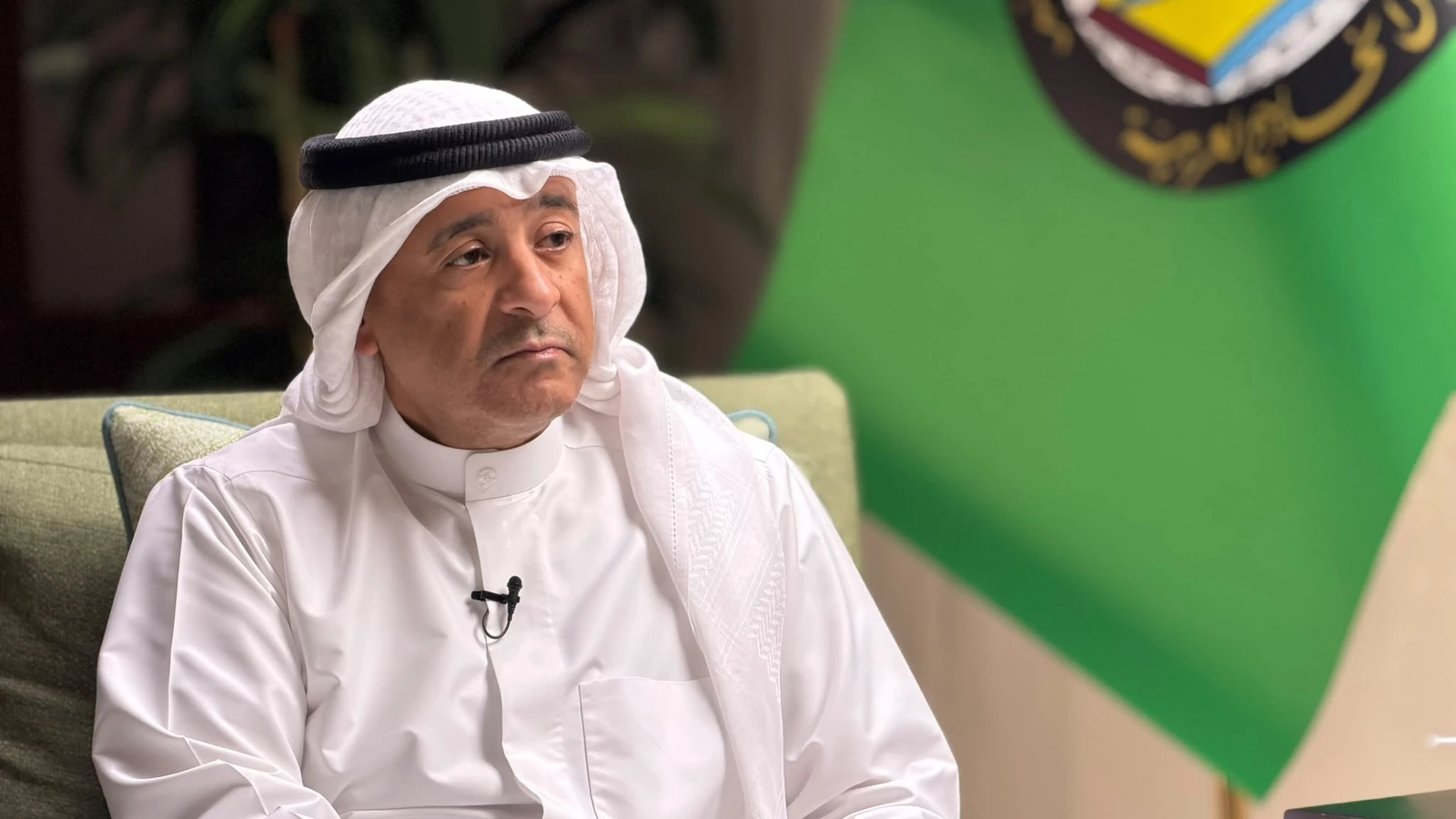
- GCC chief says the six-member bloc is more united than ever in sit-down interview with Arab Views
- Clarifies governance of Peninsula Shield and that its activation depends on a member state’s request
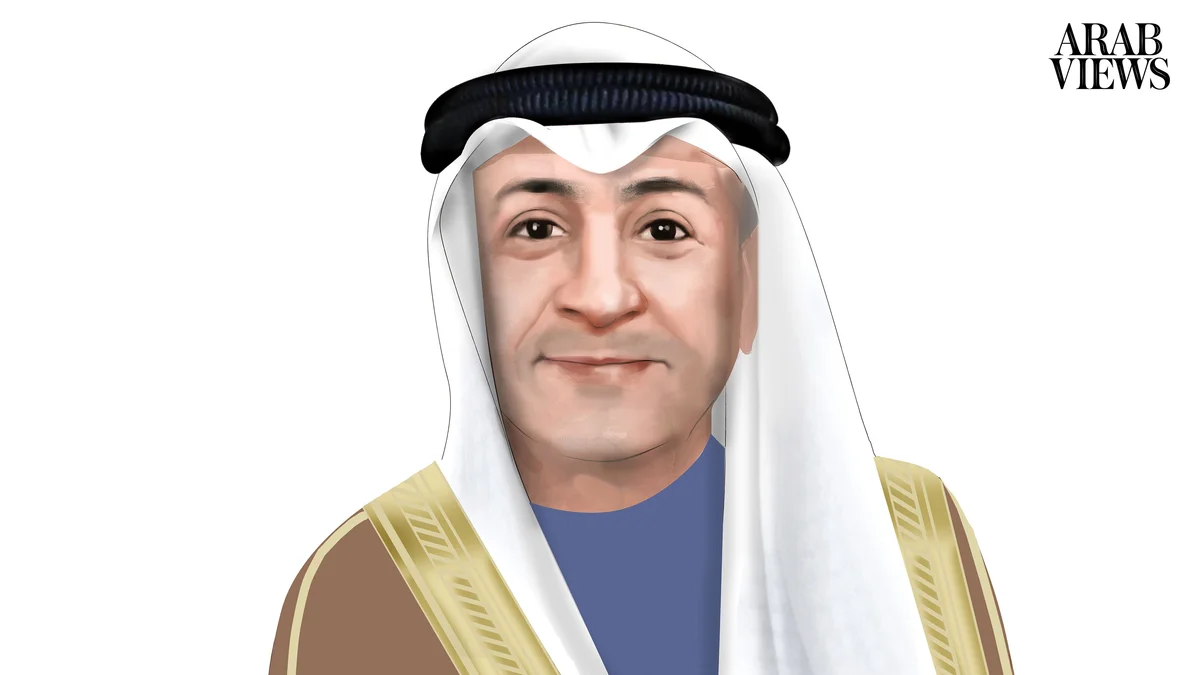
Seven months after the start of Operation Epic Fury and the Iranian attacks that followed, Gulf Cooperation Council Secretary-General Jasem Mohamed Al-Budaiwi has a clear message for those questioning the unity of the six-member bloc: The Gulf is more united than ever.
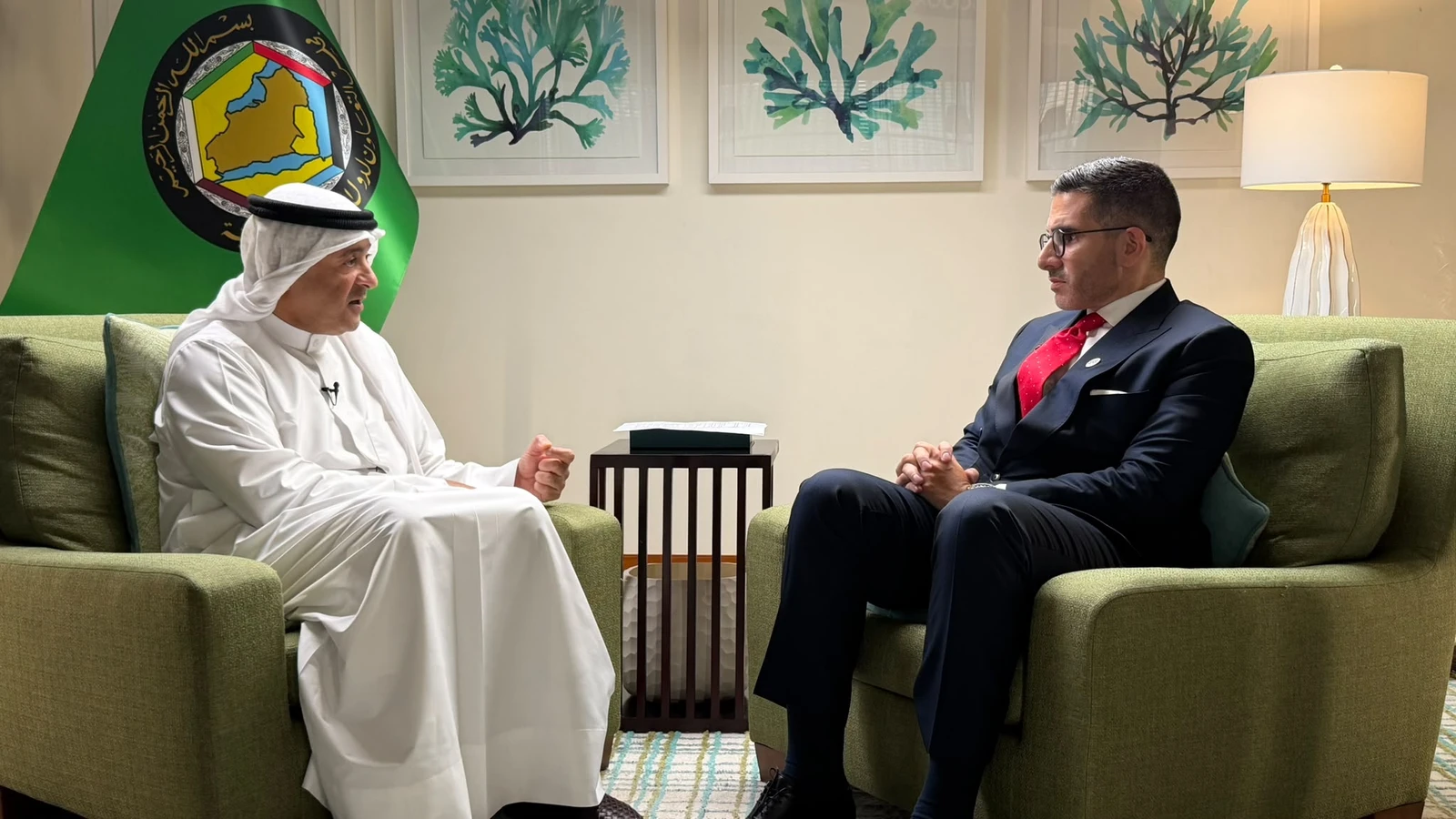
“What we have been going through since Feb. 28 with the barbaric attacks by Iran made us even more unified. We’re even stronger,” Al-Budaiwi said in Manama, Bahrain, on “Arab Views,” a new flagship show hosted by Arab News Editor-in-Chief Faisal J. Abbas.
The attacks, Al-Budaiwi said, had demonstrated the resilience of the Gulf states and shown the international community how they had stood together against thousands of missiles and drones.
“We have seen our friends, our brothers in the region standing by us, the international community standing by us,” he said, pointing to a unanimous UN Security Council resolution that he said had attracted an unprecedented number of sponsors.
“This tells you that the world is with us. The international community is with us. The Gulf Cooperation Council has cooperated among the six members in every single aspect.”
Al-Budaiwi’s assessment comes amid questions over whether the crisis has exposed differences among Gulf capitals about how best to respond to Iran, particularly on military and security policy.
Some of the criticism has come from international media, including a report by Euronews ahead of the GCC summit in Jeddah in April that cited a lack of coordination and the absence of some Gulf leaders as evidence of divisions.
Al-Budaiwi said critics had a right to question the GCC’s performance, but rejected as cynical the suggestion that the bloc had failed to coordinate its response.
“Yes, they have the right to criticize. They have the right to be skeptical. Because they want to see more coordination,” he said. “But to say that there is no coordination or cooperation, that is totally wrong.”
He cited an extraordinary GCC summit, three extraordinary ministerial meetings and hundreds of meetings involving ministers, undersecretaries and council committees as evidence of the bloc’s response.
The April 28 summit in Jeddah had delegated the GCC Secretariat to advance cooperation in five areas — logistics, water connectivity, the electricity grid, strategic storage and the bloc’s long-delayed railway project.
The electricity grid, which Al-Budaiwi said was operating at full capacity, was also being expanded, with Iraq being brought into the network.
The crisis had offered a particularly clear demonstration of Gulf solidarity, he said, because Bahrain, Qatar and Kuwait had relied heavily on the Strait of Hormuz as a maritime passage while the conflict disrupted regional transport.
Saudi Arabia, the UAE and Oman had helped their neighbors by opening ports, facilitating the movement of trucks and providing access to airports and storage facilities.
“The amount of help and assistance they got from the UAE, Saudi Arabia and the Sultanate of Oman is amazing,” Al-Budaiwi said.
“The ports were open for us. They deregulated for us. They accepted all the movements from our trucks. They opened the airports, they opened the storage. This is the greatest cooperation.”
He said coordination extended beyond logistics to media, military affairs, security, food security, electricity, energy and health, with cooperation increasing substantially after Feb. 28.
“There was a great deal of cooperation on the military side,” he said, explaining that each Gulf country had pursued its own national response while coordinating with its neighbors.
Some had sent personnel or ammunition to assist other members, while others had transferred entire missile systems, he said.
Al-Budaiwi acknowledged that countries had their own responsibilities in confronting the Iranian threat, but said that did not preclude collective assistance.
“I am more proud to be from the Gulf now than ever because of what I have seen,” he said. “I am a witness to what has happened and still happening as we speak.”
The question of how the GCC would respond to further attacks on its members remains central to the debate about Gulf security.
Asked why the Peninsula Shield Forces, the bloc’s joint military force, had not been activated as a collective defense mechanism during the Iranian attacks, Al-Budaiwi clarified that the decision rested with military commanders.
“It is a decision taken by the military people. Whenever they need it, they will definitely activate it,” he said. “It is based on military judgment, military need.”
He reiterated that the level of military cooperation among GCC members was already at its highest possible level. The issue also arose in relation to Yemen, where the internationally recognized government, backed by the Coalition to Restore Legitimacy, is seeking to reclaim territory held by the Houthi militia.
The GCC has condemned Houthi actions inside Yemen as well as attacks against Saudi Arabia. Riyadh, meanwhile, has kept open the possibility of diplomacy, provided the Houthis are willing to return to negotiations.
Al-Budaiwi said the rules governing Peninsula Shield were straightforward: A member state requiring assistance must request it.
“The governance of the Peninsula Shield is basic. Any country that needs the Peninsula Shield should call for it. Then it is automatic that the Peninsula Shield is going to be there to help any country that needs it,” he said.
He cited the force’s deployment following Iraq’s invasion of Kuwait and during the unrest in Bahrain in 2011 as previous examples of its activation.
“It’s not based on a decision by the secretary general or anybody else,” he said.
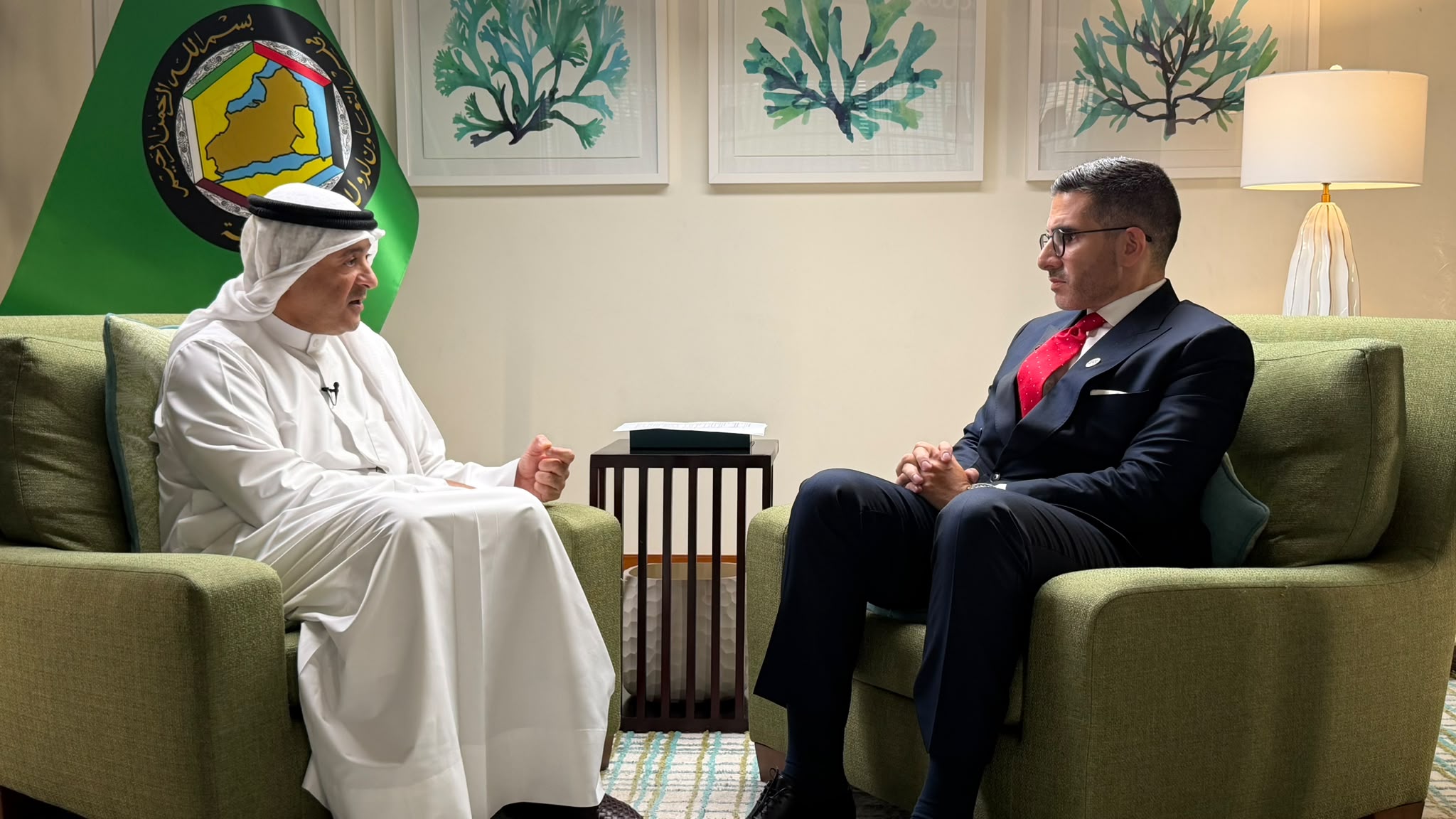
On the prospects for renewed mediation efforts involving the Houthis, Al-Budaiwi said he could not confirm whether any GCC country was currently seeking to facilitate talks.
He stressed, however, that the bloc had invested considerable political effort in helping Yemenis return to negotiations and normal life.
The GCC Secretariat had hosted Yemenis and helped advance a peace process, while Saudi Arabia and Oman had played major roles in bringing the sides back to dialogue.
The two countries and the UN envoy had reached a roadmap for resuming the peace process, he said, but Houthi actions had prevented progress.
“It is, unfortunately, the position of the Houthis that is holding this back, which made us reach this situation that we are seeing now.”
Beyond immediate military coordination, the crisis has raised questions about whether the GCC states will seek legal remedies for the damage caused by Iranian attacks.
Al-Budaiwi said countries targeted by Iran had the right to pursue reparation and compensation through available international legal mechanisms.
He cited Jordan as another country that had been attacked and said the evidence and legal instruments were available to those wishing to pursue claims.
“This is a very basic right for every GCC country or any other countries that were attacked by Iran, such as Jordan, for example,” he said.
“If they want to pursue it, it is their right, their basic right to pursue for reparation and compensation. Definitely we have the right to do so.”
Asked whether the GCC would pursue such action collectively or whether individual countries would proceed separately, he said no decision had been made.
“We have not decided on that. We have not talked about it in that detail,” he said. “But they have every right to do it, whether they want to do it jointly or individually. This is something that the legal aspect will determine.”
Any country that needs the Peninsula Shield should call for it. Then it is automatic that the Peninsula Shield is going to be there to help any country that needs it.
On the Strait of Hormuz crisis, Al-Budaiwi said the GCC’s position was grounded in international law and maritime treaties, rather than any unilateral interpretation of the rules governing passage.
“Whatever is stated by the international law, we go by it,” he said.
He offered a blunt assessment of Iran’s approach to international obligations, arguing that the country’s behavior had repeatedly put it at odds with the international community.
“All the behavior of the Iranian regime does not comply whatsoever with the international community,” he said.
A major announcement on the commencement of the process to waive the Schengen visa requirement for Gulf citizens is expected to be made during the upcoming GCC-EU Summit in Riyadh on Oct. 24.
Al-Budaiwi said that visa-free travel for Saudi, Qatari, Omani, Bahraini and Kuwaiti citizens is “very close.”
Currently, only the UAE has a visa-free travel agreement with the European Union for short stays in the Schengen Area.
“On Oct. 24, we will have the second EU-GCC summit coming, with many deliverables. We are expecting that we will reach many things,” he said.
“I will give you something exclusive. We are very close to reaching the beginning of the process to waive the Schengen visa for GCC citizens, for the five countries, the five remaining countries. So, inshallah, in that summit, you will hear something positive about that.”
However, the summit is unlikely to produce a similar announcement yet on a GCC-EU Free Trade Agreement, similar to the one signed earlier this year between the Gulf bloc and the UK.
“Historically, we’ve entered into negotiations with them (the EU) for many years and we never reached, unfortunately, a conclusion,” he said.
“Now we have to start something new with the EU. However, unfortunately, the EU side insists on adding a few aspects to the FTA that they would propose to us,” said Al-Budaiwi, who added that such aspects included clauses on human rights which the GCC believes should be removed.
Al-Budaiwi said the GCC was also pursuing trade agreements with several other major economies, including China, Turkiye and Indonesia, while preparing to begin negotiations with India in December and Malaysia in January.
He said negotiations with China and Turkiye were very advanced, while the GCC was about 80 to 85 percent of the way toward an agreement with Indonesia.
“These are countries, huge countries with many big populations that need a lot of goods and services, which we can provide,” he said.
The free trade agreement signed between the six Gulf states and the UK, he said, represented a significant step toward diversifying their economies and expanding access to international markets.
He described the agreement as a collective achievement involving the entire GCC bloc and one of the world’s largest economies.
Each member state had ambitions to expand investment, develop artificial intelligence and digital industries, and reduce dependence on traditional sources of revenue, he said.
Each member state had ambitions to expand investment, develop artificial intelligence and digital industries, and reduce dependence on traditional sources of revenue, he said.
The agreement would help by opening markets to goods from both sides, although the timetable for implementation would differ.
“Goods will have immediate access to the UK market,” Al-Budaiwi said, explaining that once all six GCC countries and the UK had ratified the agreement, eligible Gulf goods would enter the British market without tariffs from day one.
British goods, by contrast, would enter Gulf markets in stages, with some tariff reductions taking three years, others five years and some as long as a decade.
I hope in one year’s time, we can sit at one table, talk about things that are positive, things that will benefit the people of the Gulf and the people of Iran.
For Gulf businesses, he said, this would offer an advantage by allowing them to access the UK market immediately once the agreement entered into force.
Despite the conflict, Al-Budaiwi said he remained optimistic that the Gulf states and Iran could eventually establish normal relations.
Asked whether Tehran would be closer to its Gulf neighbors or remain an adversary a year from now, he said geography made coexistence unavoidable and that the GCC had repeatedly expressed its desire for better relations.
“They are our neighbors, we are their neighbors, we are next to each other until the end of all days,” he said.
He said that required mutual respect, adherence to international law, noninterference in other countries’ affairs and a
willingness to exchange positive messages.
Al-Budaiwi recalled a meeting in Oct. 2024 between the six GCC foreign ministers and Iran’s foreign minister, at which the Gulf states had conveyed their desire for cooperation and a more constructive relationship.
He argued that closer economic ties could benefit Iran as well as its neighbors, pointing to the combined economic output of Bahrain, Qatar and Kuwait as an illustration of what smaller Gulf countries had achieved.
The three countries have a combined population of about 9 million and a gross domestic product of $470 billion, he said, compared with Iran’s population of 92 million and GDP of about $360 billion to $370 billion.
The comparison, he suggested, demonstrated the potential gains from greater economic engagement and diversification.
“So yes, I am optimistic. Yes. I hope in one year’s time, we can sit at one table, talk about things that are positive, things that will benefit the people of the Gulf and the people of Iran,” he said.
“The Iranian regime needs to know that this is the true intention of every single country in the GCC.”
Watch full episode here.