- Father is among up to 300,000 missing persons
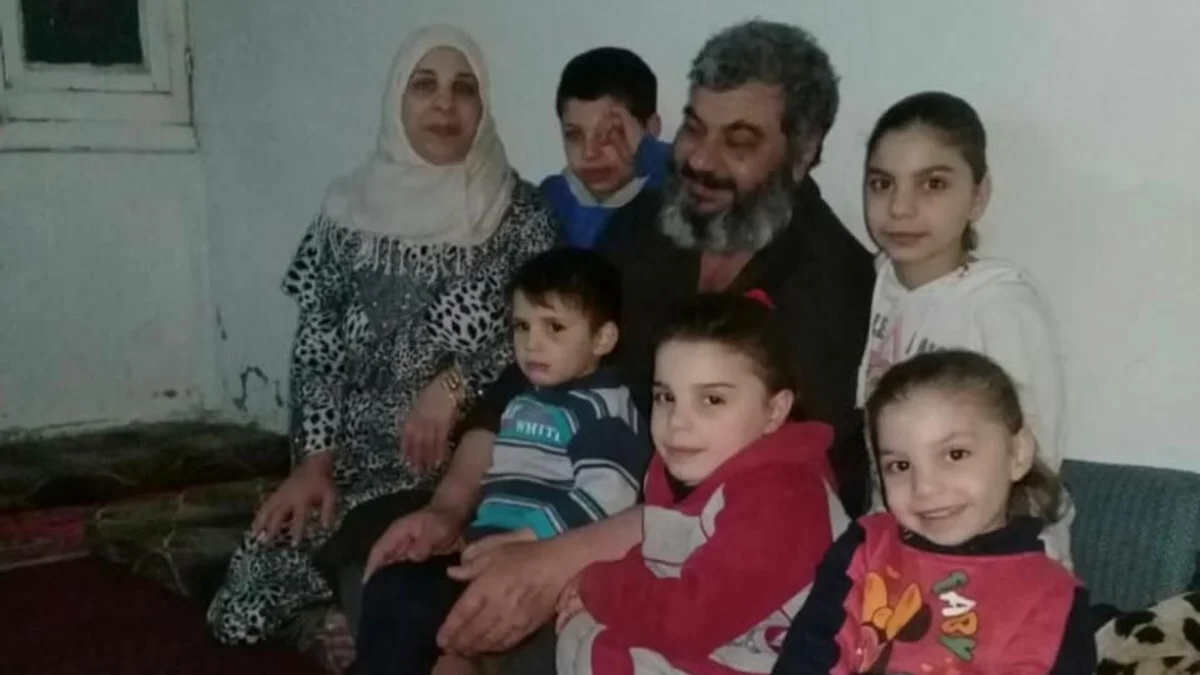
DUBAI: Hassan Aliwi waited nine years to find out what had happened to his family in Raqqa. In September, he finally heard. His sister Manar, her husband Bassam and five children had been killed when their building was destroyed in August 2017.
His father had been in that building with them, and no one has found him.
“Where is my father? Where did he go?” Hassan asked when Arab News spoke to him. “They found my sister, her husband and their children, but not my father.”
The Syrian Arab Republic has officially begun DNA-based identifications for missing persons, providing a breakthrough for families searching for loved ones among the hundreds of thousands missing after decades of Assad family rule, nearly 14 years of war and the rule of Daesh.
A UN body puts the figure at between 130,000 and 300,000, according to Reuters.
While local forensic laboratories are still being built through international partnerships, successful identifications are already occurring. Two cases have been confirmed by Syria’s National Commission for Missing Persons. The Aliwi family’s case was handled separately by Syrian and international nongovernmental organizations.
The family is from Palmyra. They left for Raqqa in 2015, after Daesh took their city, and rented a house big enough for all of them. Hassan stayed for a few months before making his way to Germany. His father stayed behind in Raqqa with Manar, Bassam and the children.
In August 2017, the US-led coalition stepped up its strikes on Daesh in Raqqa. Hassan says the family begged them to leave. They kept saying it was fine, and by the time it was not, they had no way out and no money to pay anyone to get them out.
On the evening of Aug. 25, the news reached him that the building had been hit that morning.
“We didn’t know if they were inside, or if they were dead or alive,” he said.
For years the family lived on rumors. Someone said Daesh had taken them away the night before the strike; someone else said they had moved to another building. Friends in Raqqa went to look, but the rubble was still there and no one knew anything.
“There was a fire burning in our chests,” Hassan said. “Even when we laughed, our laughter was never whole.”
Things only started to move in 2024, when a demining team working in the Al-Jamila neighborhood found human remains under that same building. It called the Syria Justice and Accountability Centre, which had been looking into the family’s disappearance since 2019. Its forensic team came in to recover the remains.
Even then, no one knew whose remains they were. Neighbors remembered only that a family from Palmyra had lived there. So the center posted in a WhatsApp group Palmyra families in Raqqa that used to keep in touch. Someone in the group sent them the number for Hassan’s other sister, Manal, who lives near the city.
When Manal showed them photos, they recognized the clothes they had pulled from the rubble. The ID cards belonging to Manar and Bassam were there too.
That was still not proof. There was no laboratory in Syria that could extract DNA from bones, so the samples were sent to the Forensic Anthropology Foundation of Guatemala. That took about a year.
“We received genetic certificates confirming the identities of the father, the mother and five children,” said Mohammad Al-Abdallah, SJAC’s executive director. “Unfortunately, the grandfather and one of the children are still missing.”
Al-Abdallah says the center’s work on the ground was matched with forensic science.
He said: “We hope this case will be a glimmer of hope for other families to identify their missing, and a lesson for the National Commission for Missing Persons and other organizations.”
The commission is building a DNA lab with the International Committee of the Red Cross, due by May 2027, and a second with the International Commission on Missing Persons, backed by the EU, reported Reuters.
However, with about 100 new missing-person reports submitted every day, expanding the testing facilities remains a critical and urgent priority. The commission has called the first identifications “an important step, but only the beginning of a long path.”
For Hassan, knowing has helped. “After we identified my sister, her husband and their children, the fire in our chests calmed a little,” he said. The family is still waiting for the remains to be handed over so they can be buried.
He has a message for other Syrian families still waiting. “Don’t give up. Go to the organizations, ask about your loved ones, and take a DNA test if you have to.”
He has not given up on his father either.
“God willing, we will hear good news,” he said. “We hope he is alive, even if he comes back to us in a wheelchair.”