- PM Salam visited Nabatiyeh on Friday
- Visit comes amid continued Israeli attacks on the south
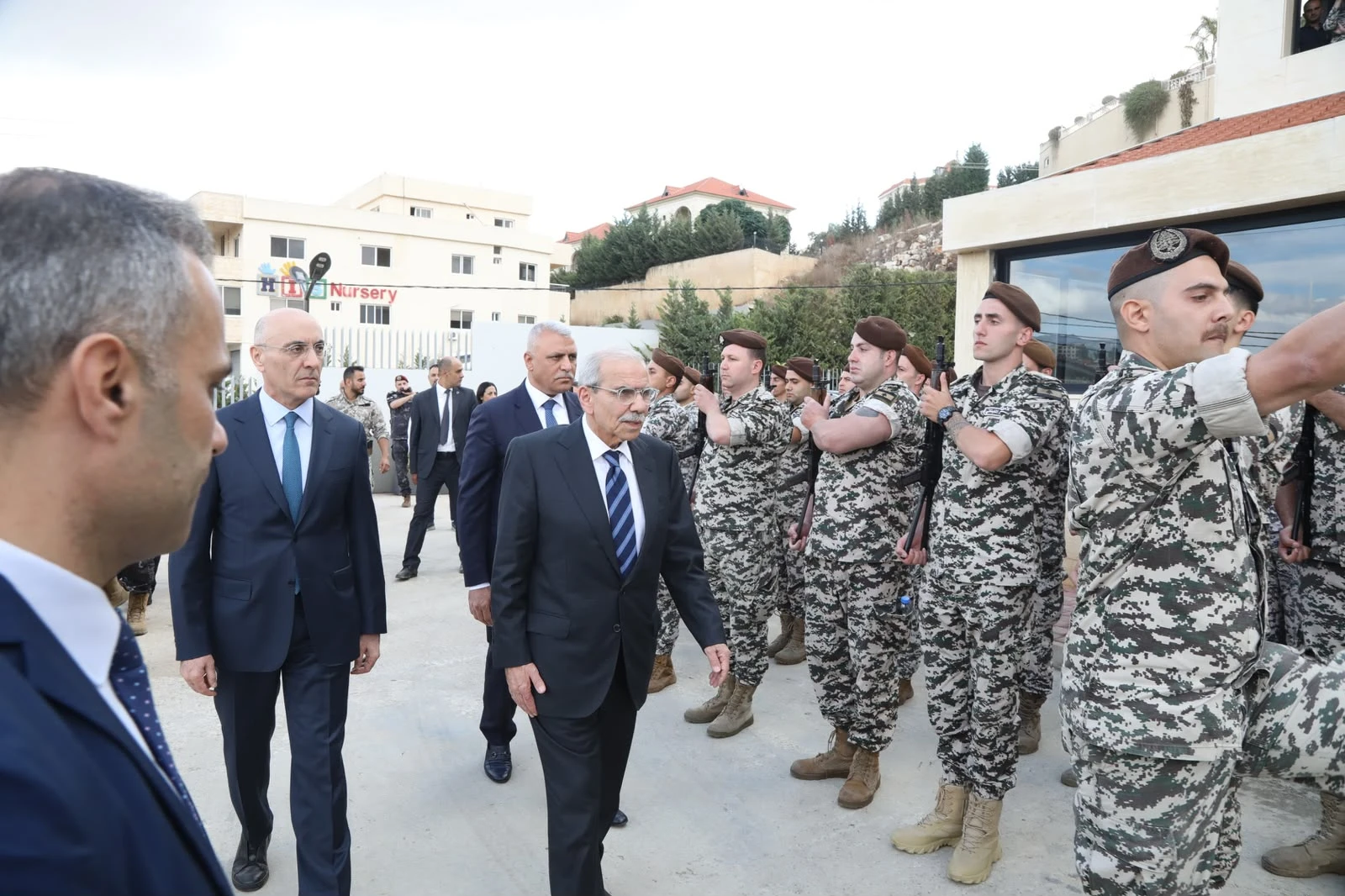
BEIRUT: Lebanese Prime Minister Nawaf Salam framed his Friday visit to Nabatieh — his third since taking office in February 2025 — as part of his effort to affirm that “the state wants to be present on the ground.”
He stressed that “a state that alone holds the decision of war and peace and has one army is the path to avoiding new wars and new pretexts for attacks on Lebanon.”
Salam first visited Nabatieh two days after his government won Parliament’s confidence, then returned on Feb. 26, just days before Hezbollah entered Lebanon into a second war with Israel on March 2 under the banner of supporting Iran.
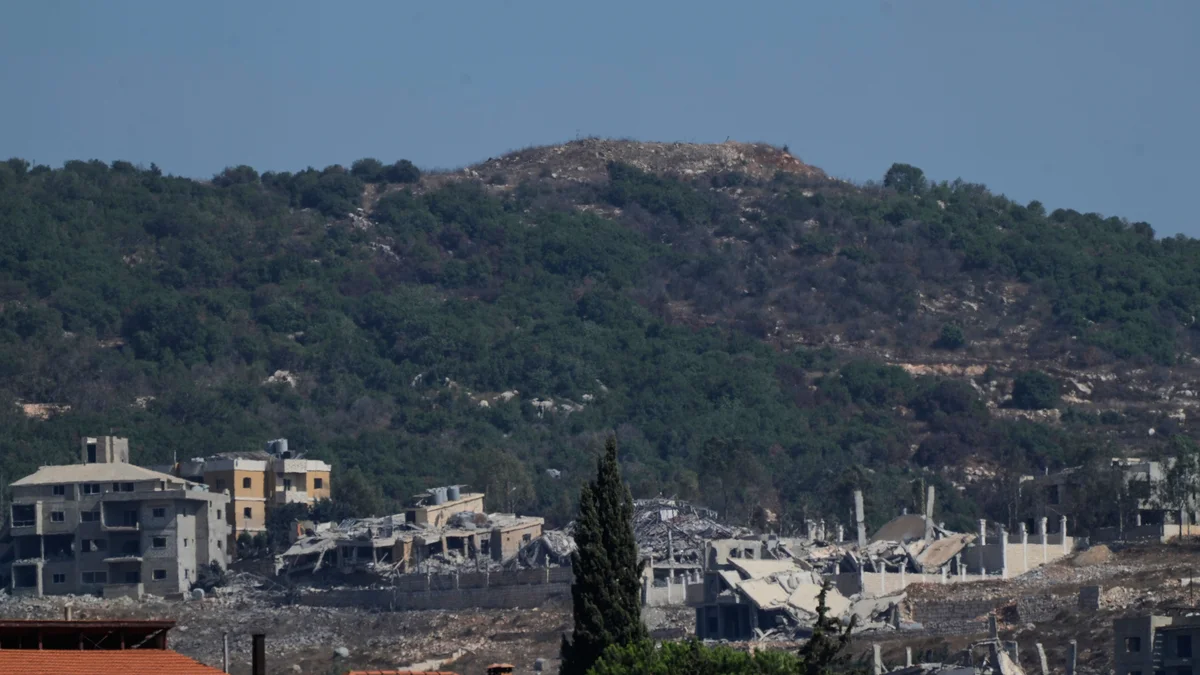
That conflict resulted in an Israeli occupation extending between 6 and 10 km into southern Lebanon, encompassing around 55 Lebanese villages that are now largely emptied of residents and rendered uninhabitable by displacement and systematic destruction.
Israel also maintains fire control over about 11 other villages, some on the outskirts of Nabatieh.
As Israel seeks to entrench its presence south of the Litani River, it announced on April 18 the establishment of a so-called “yellow line,” extending it north of the river at certain points, including Zawtar Al-Sharqiyah, Beaufort Castle, Arnoun, Yahmar, Kfar Tebnit and the Ali Al-Taher heights in Nabatieh.
Lebanon’s government, meanwhile, finds itself caught in an extremely sensitive and dangerous equation.
While Beirut has called on Washington to pressure Israel to withdraw from southern Lebanon and allow residents to return to their villages ahead of reconstruction, Salam heard a single demand repeatedly during meetings in New York and Washington last week: the Lebanese government must first disarm Hezbollah, after which Israel would withdraw and the Lebanese Army would deploy.
During his tour of government institutions in Nabatieh, some of which have been repaired after Israeli attacks, Salam also laid the foundation stone for a Civil Defense center.
In remarks that appeared directed at Hezbollah without naming it, he rejected the idea that Lebanon should wait for a major regional settlement.
“For me, waiting for a major regional settlement is not an option for Lebanon,” Salam said.
“That settlement may come or may not come, or it may take years. And if it does happen, it could come at our expense. Are we supposed to remain suspended, waiting for others to decide our fate? Certainly, no rational person can accept that.”
Mohi Al-Din Shihimi, professor of law and foreign policy at the Paris School of Business and Graduate Studies, told Arab News that Salam’s visit was positive “in form,” but that its substance remained open to debate.
He said restoring the state’s presence was a cumulative process that began with Joseph Aoun assuming the presidency and Salam becoming prime minister.
Their mission, he said, was to implement international resolutions, particularly UN Security Council Resolution 1701 following the November 2024 ceasefire.
“But the war launched under the banner of supporting Iran changed the equation,” Shihimi said.
“The Lebanese state had issued legislative decrees to implement international resolutions, including restricting weapons to the state, but the war created ambiguity, and government decisions became theoretical without implementation on the ground.”
He said foreign governments had broadly agreed to assist Lebanon, but were waiting for a “clear and practical step” by the Lebanese state to begin implementing the decisions it had undertaken.
Asked why the government had yet to implement those decisions, Shihimi said the state remained hesitant.
“It does not want to enter into civil disorder, and it does not want to clash with anyone,” he said.
“Part of it is complicit because it is in its interest for Lebanon to remain in a state of paralysis and instability, because that preserves its areas of influence.”
He said Lebanon’s “deep state” still existed and had yet to fully acknowledge the consequences of Hezbollah’s wars with Israel, the group’s dependence on Iran’s Islamic Revolutionary Guard Corps, or the changes that had taken place in Syria.
Shihimi said Lebanon needed to “break its connection with the deep state” and stop presenting excuses in its meetings with foreign officials.
“There is one armed party in Lebanon, not all of Lebanon,” he said. “The rest of Lebanon broadly agrees on the rule of law and legitimate state security.”
He argued that the government could begin implementing its decisions north of the Litani River all the way to the Syrian border by restricting weapons to the state and dismantling areas outside official authority.
“What is required is to activate the principle of sovereignty in order to increase the international community’s confidence in the Lebanese state,” he said.
If the state failed to act, he warned, “there will be no aid for Lebanon, and the state will not be able to rebuild itself.”
“The most dangerous thing,” he added, “is that neither Israel nor Hezbollah wants the state to recover.”
At the end of his visit, Salam announced the launch of tenders to repair five hospitals damaged by Israeli attacks, including Nabatieh Governmental Hospital.
He also announced plans to supply new rescue and firefighting vehicles and award contracts to rehabilitate electricity stations and water networks.
Residents appealed directly to the prime minister for help.
Some shouted: “We are with you until our last breath.”
One woman from Nabatieh approached Salam holding photographs of relatives killed in Israeli attacks.
“Please stand with us,” she said. “We want to turn a new page, don’t we? We don’t want our young people to die anymore. Enough. Our villages have become scorched earth.”
Nabatieh, which holds particular symbolic importance for residents of southern Lebanon, has in recent weeks also seen a public challenge to the existing political and security order.
More than 400 civil society figures signed an appeal calling for “the deployment of the army and security forces in Nabatieh, its surroundings and at its entrances, and for the state to assume full responsibility for its security.”
The statement also called for the decision of war and peace to be confined to Lebanon’s legitimate institutions and for urgent Arab and international diplomatic action to halt Israeli attacks and prevent the occupation from expanding.
The signatories declared that “Nabatieh is not a barricade for any axis, nor the property of any political group.”
“It is the city of its people, the capital of Jabal Amel and its historic center, and an integral part of the Lebanese state,” they said.
“Saving it is the responsibility of everyone who has influence or decision-making power, and protecting it begins with restoring the state’s role and ending the duality of decision-making that has exhausted the south and weakened its ability to protect itself.”
While Salam was in Nabatieh, a number of displaced residents of Nabatieh Al-Fawqa took advantage of a lull in Israeli military operations and walked toward the outskirts of their town.
The Israeli military has warned residents against entering the area and continues to maintain control over it through firepower.
The residents later turned back.