BEIRUT: Activists accused Daesh Friday of being behind a deadly gas attack in northern Syria this past summer, which the global chemical weapons watchdog said was mustard gas.
Meanwhile, rebels wrested back a flashpoint town in the central province of Hama, reversing the last of gains the army had made in a month-old offensive.
Mustard gas was used in the town of Marea in Aleppo province on Aug. 21, a source from the Organization for the Prohibition for the Prohibition of Chemical Weapons told AFP.
“We have determined the facts, but we have not determined who was responsible,” the source said.
But activists and a monitoring group said it was clear that Daesh was behind the attack.
Rami Abdel Rahman, head of the Syrian Observatory for Human Rights monitoring group, said “Daesh used toxic gases during its attack on Marea in August.”
He said Daesh had likely gotten the gas through Turkey or Iraq.
Journalist Maamun Al-Khatib, who was in Marea at the time, said: “We knew it was Daesh because all the shells were being fired east of Marea, and that area is totally under the control of Daesh.”
Daesh has attacked Marea for months in an effort to cut off a supply route into the country from Turkey.
For activist Nizar Al-Khatib, OPCW’s report “comes too late and isn’t enough, because it doesn’t identify IS as the one responsible for firing the mustard gas.”
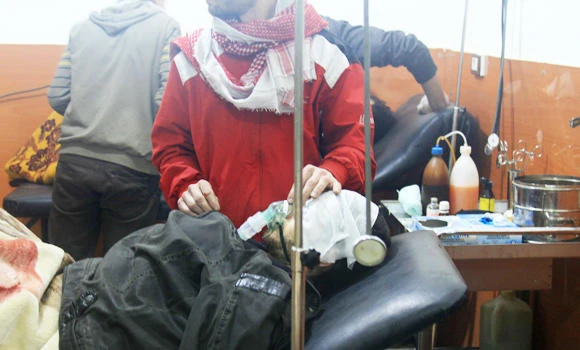
Doctors Without Borders (MSF), which operated a nearby field clinic, treated four members of a single family for “symptoms of exposure to chemical agents.”
The Marea residents told MSF they saw a “yellow gas” when a mortar round hit their house. An MSF spokesman said Friday that the Paris-based group did not have enough evidence to point to Daesh.
Daesh accused of Syria mustard gas attack as rebels push back regime