- Attacks on Saudi cities and Red Sea shipping bring Iran-backed group up against pact linking Kingdom with Pakistan and Turkiye
- Trilateral alliance aims to raise cost of Houthi aggression as regional powers build partnerships amid doubts over US military support
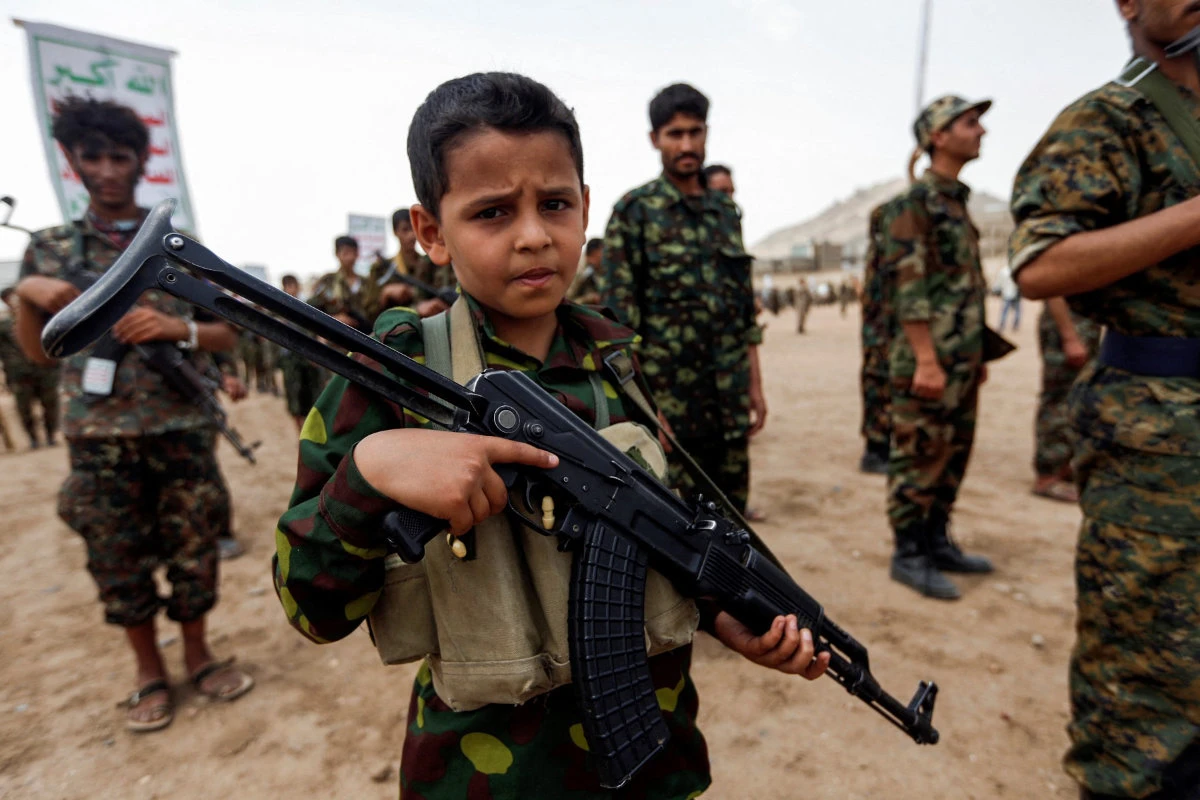
LONDON: The escalation of the conflict in Yemen has coincided with the activation of a tripartite mutual defense pact that promises to focus the might of the region’s three largest militaries on ending the civil war that has raged on Saudi Arabia’s southern border for the past 12 years.
On Sept. 3, the Houthis launched a surprise attack that saw their forces seize a 150-km swath of coastline from the city of Mokha down to Murad and the island of Mayun at the southwestern tip of the country, giving them effective control over the Bab Al-Mandab strait.
In a television address on Monday, Oct. 4, Yemeni President Rashad Al-Alimi announced Operation Dawn of Yemen — a major campaign not only to recapture the lost territory but also to ensure the country was finally “liberated from the grip of the terrorist militia.”
Within two days, Yemeni officials reported that coalition forces had recaptured key areas around the Bab Al-Mandab Strait, retaking the strategically important towns of Dhubab, Bab and Hadeid.
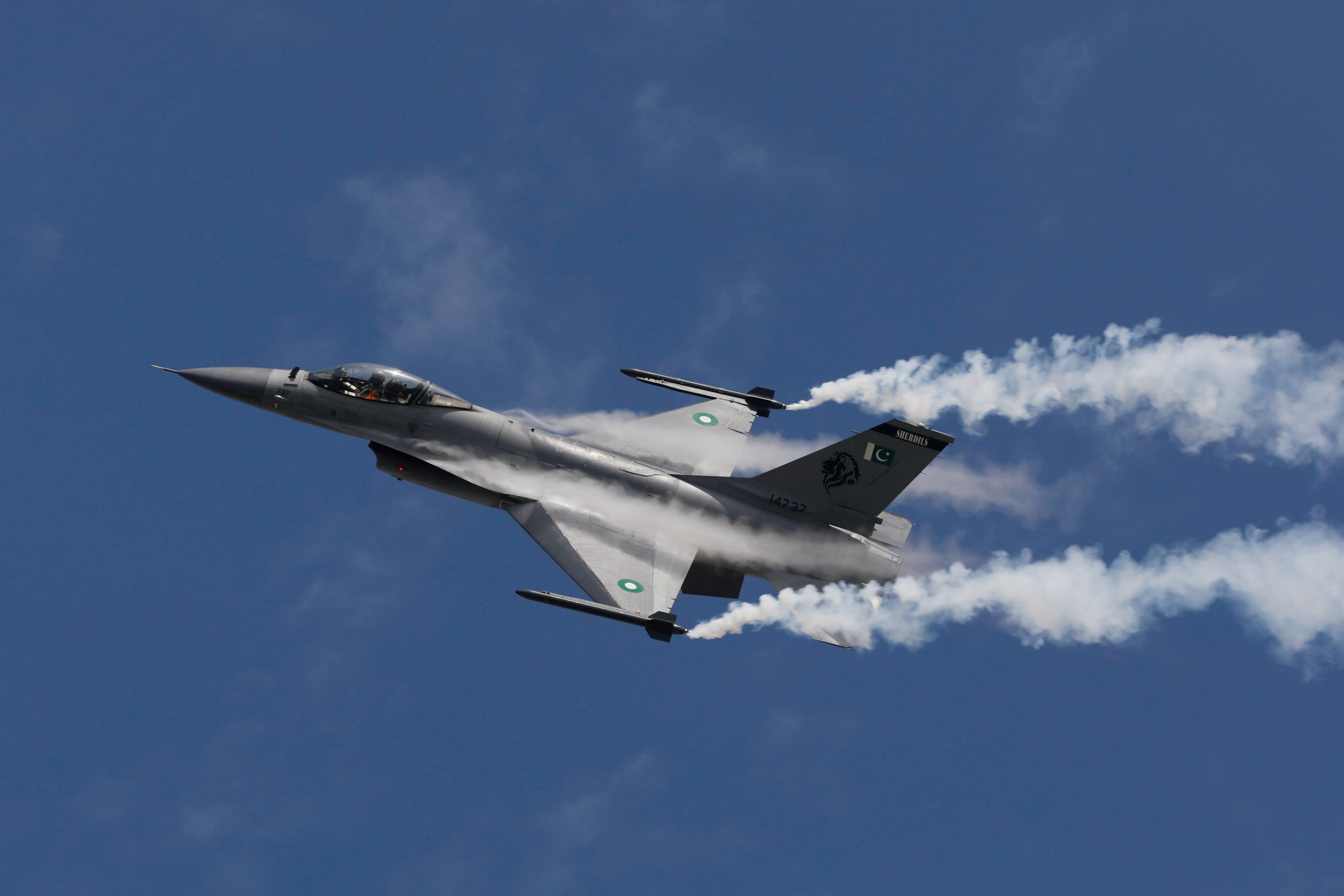
On Tuesday, Oct. 6, 100 coalition fighter jets hit multiple targets along the coast and at key inland sites, including Houthi mountain positions in western Taiz.
Dislodging the Iran-backed militia represents a formidable challenge.
“What is happening now is different to our previous wars with the Houthis,” Tafiq Al-Haboun, a commander with the pro-government National Security Forces, said in an interview with AP on Wednesday, even as his troops were making progress.
“This war is much more advanced,” said Al-Haboun.
“They have superior weapons, like drones and long-range ballistic missiles. All of these weapons are only just now being used. We haven’t seen this before.”
Nevertheless, the tide already appears to be turning.
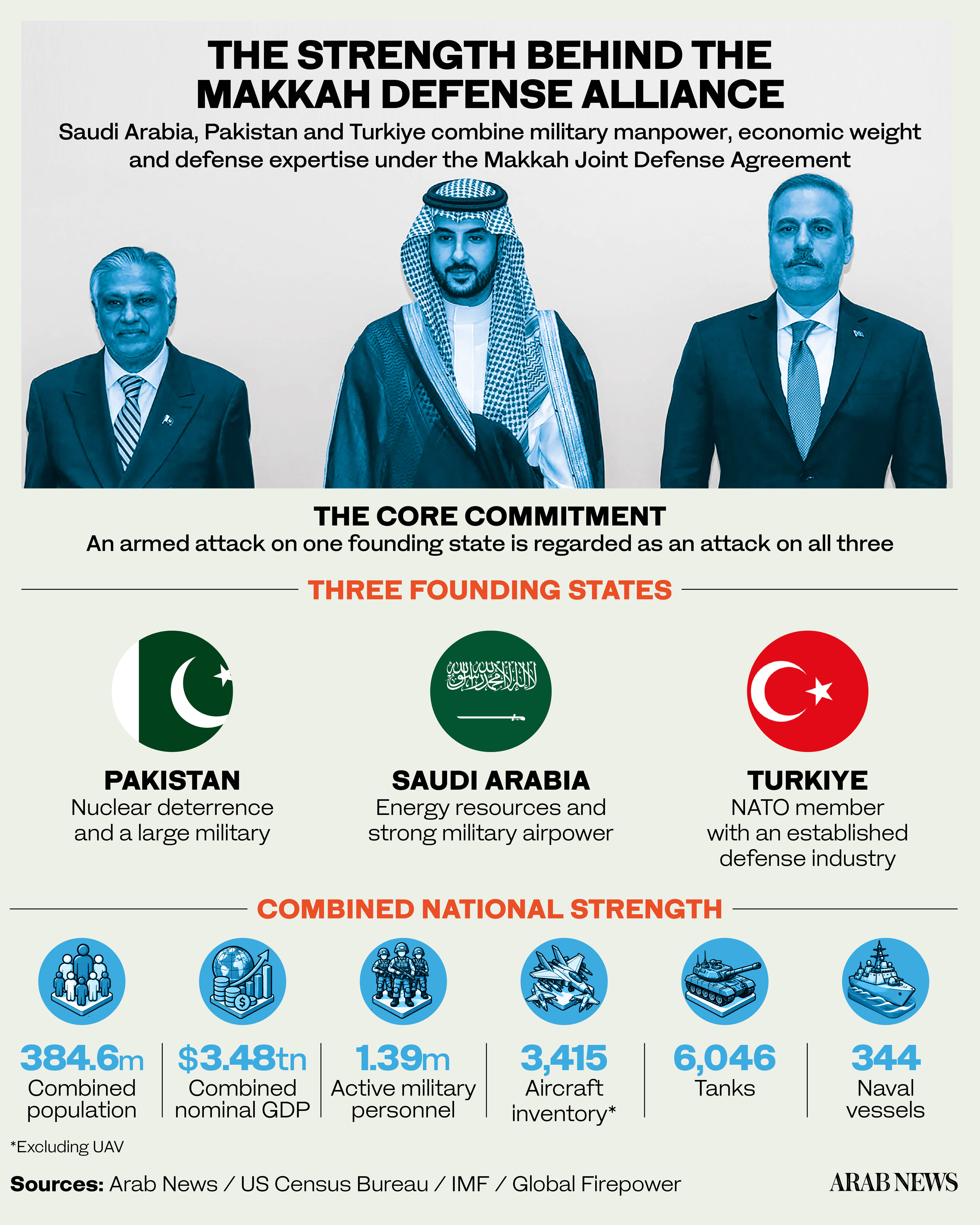
On Aug. 7, the Makkah Joint Defense Agreement, signed by Saudi Crown Prince Mohammed bin Salman, Turkish President Recep Tayyip Erdogan and Pakistani Prime Minister Muhammad Shehbaz Sharif, stipulated that any armed attack against one of the three countries “will be regarded as an attack against all three.”
There is no doubt that Saudi Arabia has come under attack. On Wednesday, Oct. 7, three people were killed in two attacks on airports in the Kingdom.
In a statement, the country’s civil aviation authorities said one person was killed and eight were wounded at King Khalid International Airport in Riyadh. Two more were killed and 28 wounded at Abha airport near the border with Yemen in the southwest of the country.
On Thursday, a kindergarten and a medical clinic complex in Riyadh were damaged by falling debris from a Houthi ballistic missile that was intercepted and destroyed over the Saudi capital, Saudi Civil Defense said.
Now the full force of the agreement, modeled on NATO’s Article 5 collective-defense clause, is coming to bear.
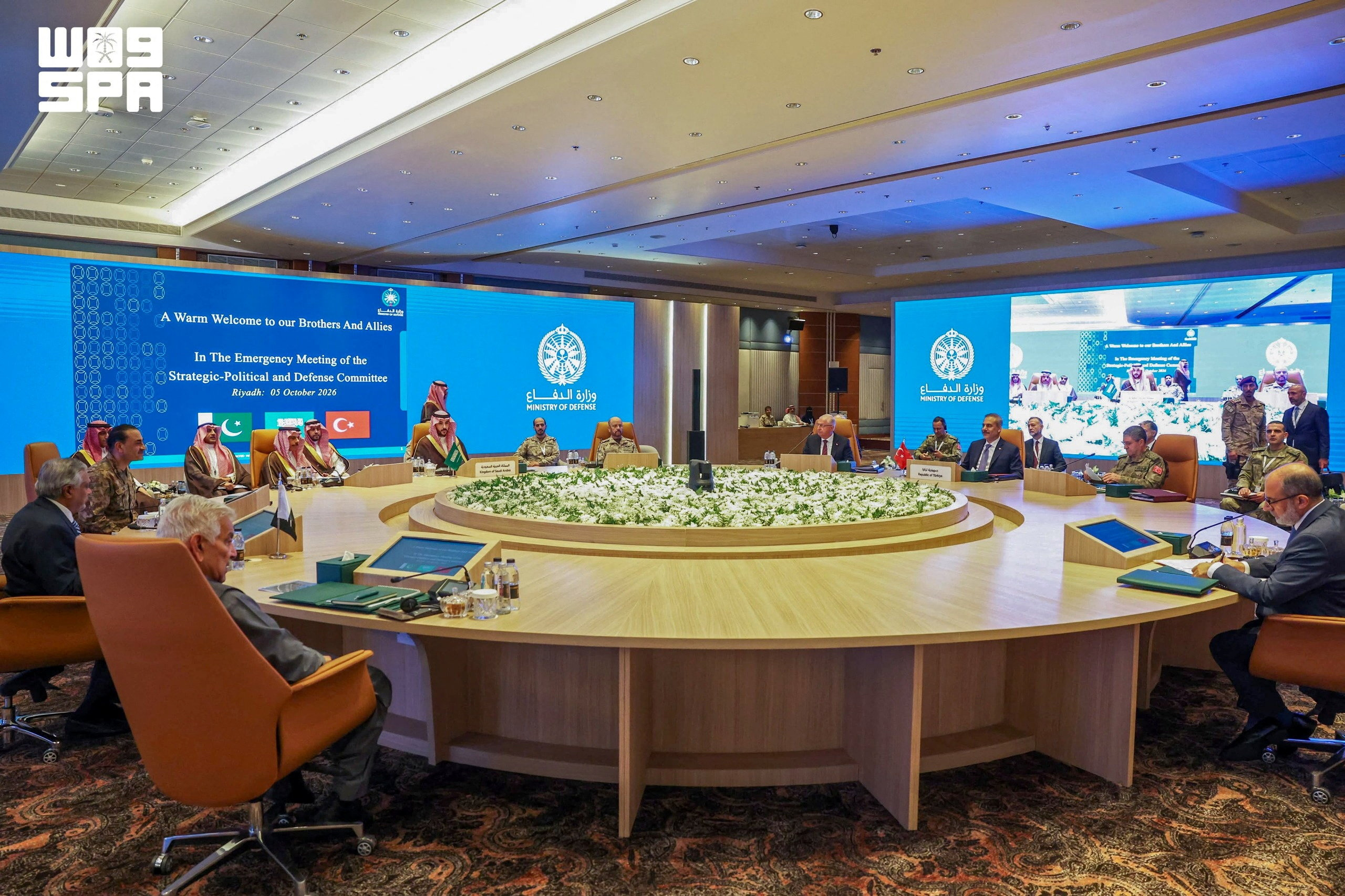
On Aug. 31, a Political-Defense Strategy Committee was formed in Istanbul, and at an emergency meeting of the committee in Riyadh on Monday, the agreement was triggered for the first time.
At the meeting, Pakistan’s retired Lt. Gen. Nauman Mahmood was appointed as the first secretary-general of the alliance.
All three parties “condemned in the strongest terms the attempted targeting of Makkah and Madinah, as well as the continuing attacks targeting cities and civilian and economic facilities in the Kingdom.”
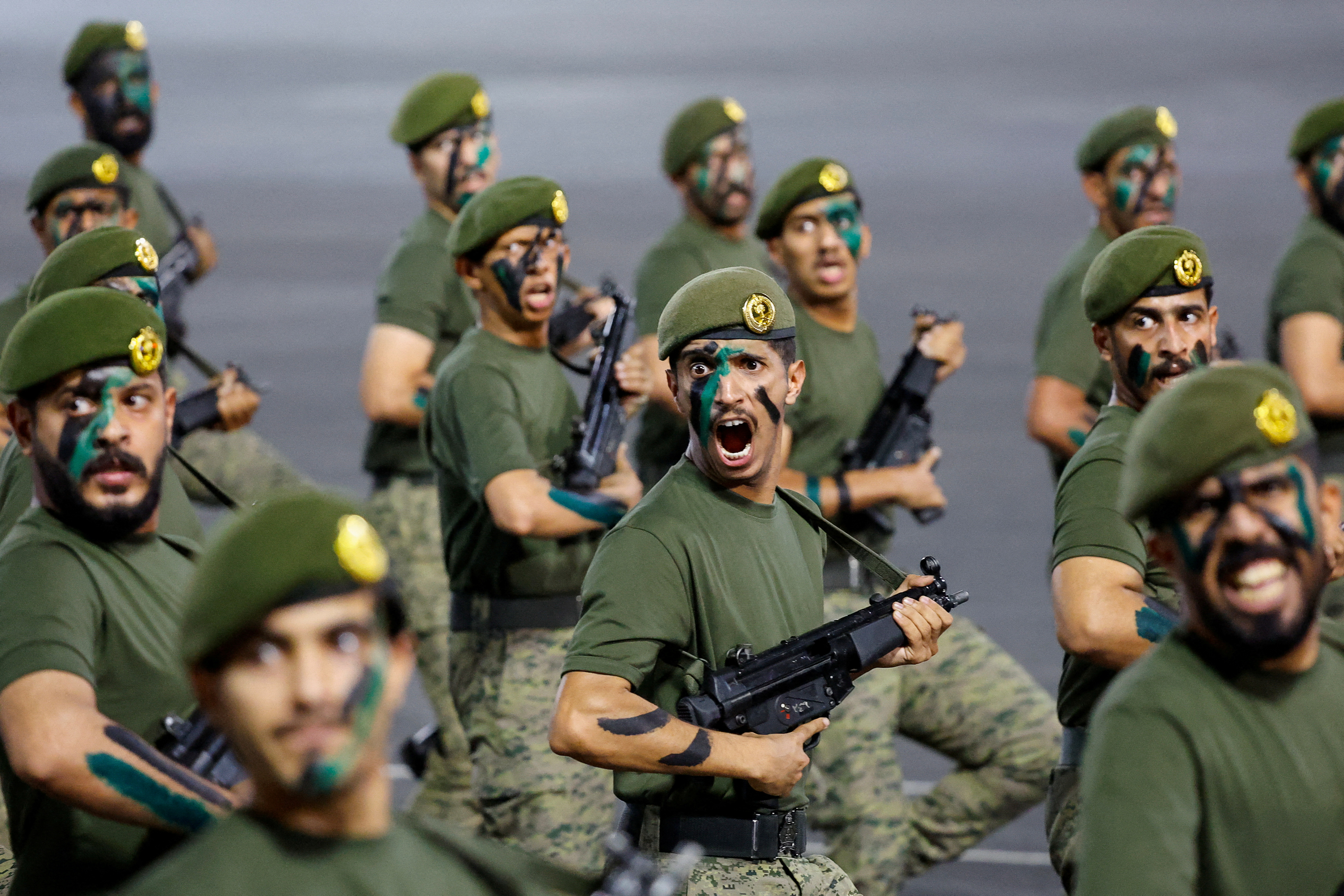
Pakistan and Turkiye “commended the vigilance and readiness of the Saudi Armed Forces, as well as the professionalism and high level of competence they have demonstrated in countering the threats and attacks facing the Kingdom and in safeguarding its security and territorial integrity.”
On Tuesday, a spokesman for Pakistan’s information ministry said “the operational details of the actualization of the collective deterrence are a matter of operational confidentiality.”
However, under the terms of an agreement signed in Sept. 2025, Pakistan and the Kingdom already had a bilateral defense pact in place that saw a squadron of Pakistani jets, an air defense system and 8,000 troops deployed to the Kingdom in April.
In fact, Pakistan has had troops and other military personnel in Saudi Arabia for many years, as a senior Pakistani military spokesman confirmed on Thursday.
“Pakistani troops have been there for decades, in multiple capabilities,” Lt. Gen. Ahmed Sharif Chaudhry told CNN. There was, he added, “a sustained diplomatic, political, military and people-to-people relationship between Pakistan, Saudi Arabia and Turkiye.”
On Thursday, Turkish Foreign Minister Hakan Fidan said Ankara is assessing how it can help Saudi Arabia counter Houthi attacks, but described the pact as defensive rather than offensive in nature.
Officials working on what kind of contributions could be made were looking particularly at air defenses.
But whatever each of Saudi Arabia’s partners brings to the table, in the words of Nawaf Obaid, a senior fellow at the Department of War Studies at King’s College London, the military logic of the new pact is “compelling.”
Pakistan, he wrote in an analysis published on Monday, possesses “the Muslim world’s most powerful army and its only nuclear arsenal ... Turkiye its second-most powerful army (and) substantial naval power (and) the Royal Saudi Air Force has become the Muslim world’s most powerful air force.”
With the military might of Pakistan and Turkiye now entering the fray, the region could well be witnessing the final stages of a Yemeni catastrophe that began with the ousting of the internationally recognized government from Sanaa in 2014.
Global attention returned to Yemen in Nov. 2023 when the Houthis began attacking shipping in the Red Sea.
Initially, the militia said it was only targeting Israeli vessels, in response to Israel’s war in Gaza, but events quickly escalated into indiscriminate attacks on shipping from multiple countries.
Until now, the Houthis have proved resilient, even in the face of concentrated US firepower.
In March 2025, in response to months of Houthi attacks on shipping, US forces launched Operation Rough Rider — a major air campaign that struck 800 targets in its first six weeks.
These included what US Central Command described as “multiple command-and-control facilities, air defense systems, advanced weapons manufacturing facilities and advanced weapons storage locations.”
On March 31, 2025, President Donald Trump said: “The Iran-backed Houthi terrorists have been decimated … Their capabilities that threaten shipping and the region are being rapidly destroyed.”
On May 6, 2025, President Trump announced a ceasefire agreement under which the Houthis agreed to stop attacking “American military fleets and interests” but reserved the right to continue attacking Israel and its interests until the Israelis withdrew from Gaza.
The agreement failed to persuade international shipping companies that it was safe to transit the Bab Al-Mandab Strait.
In June 2025, Lloyds List said Red Sea traffic was still 60 percent below normal levels, and it has continued to be depressed ever since, with many shipping companies preferring to send vessels around Africa’s Cape of Good Hope.
Following the Gaza ceasefire in October 2025, Houthi attacks on shipping all but stopped, but the reprieve was brief.
On Feb. 28, the US and Israel attacked Iran, triggering the current conflict. That same day, the Houthis announced they were resuming attacks on Red Sea shipping.
On July 20, the Houthis announced they were imposing a blockade against Saudi Arabia and two days later two Saudi-flagged oil tankers were struck and damaged by drones and missiles.
Analysts say that developments since then show that a new regional collective defense architecture is emerging, with Saudi Arabia in the lead, that is increasingly less reliant on US military support.
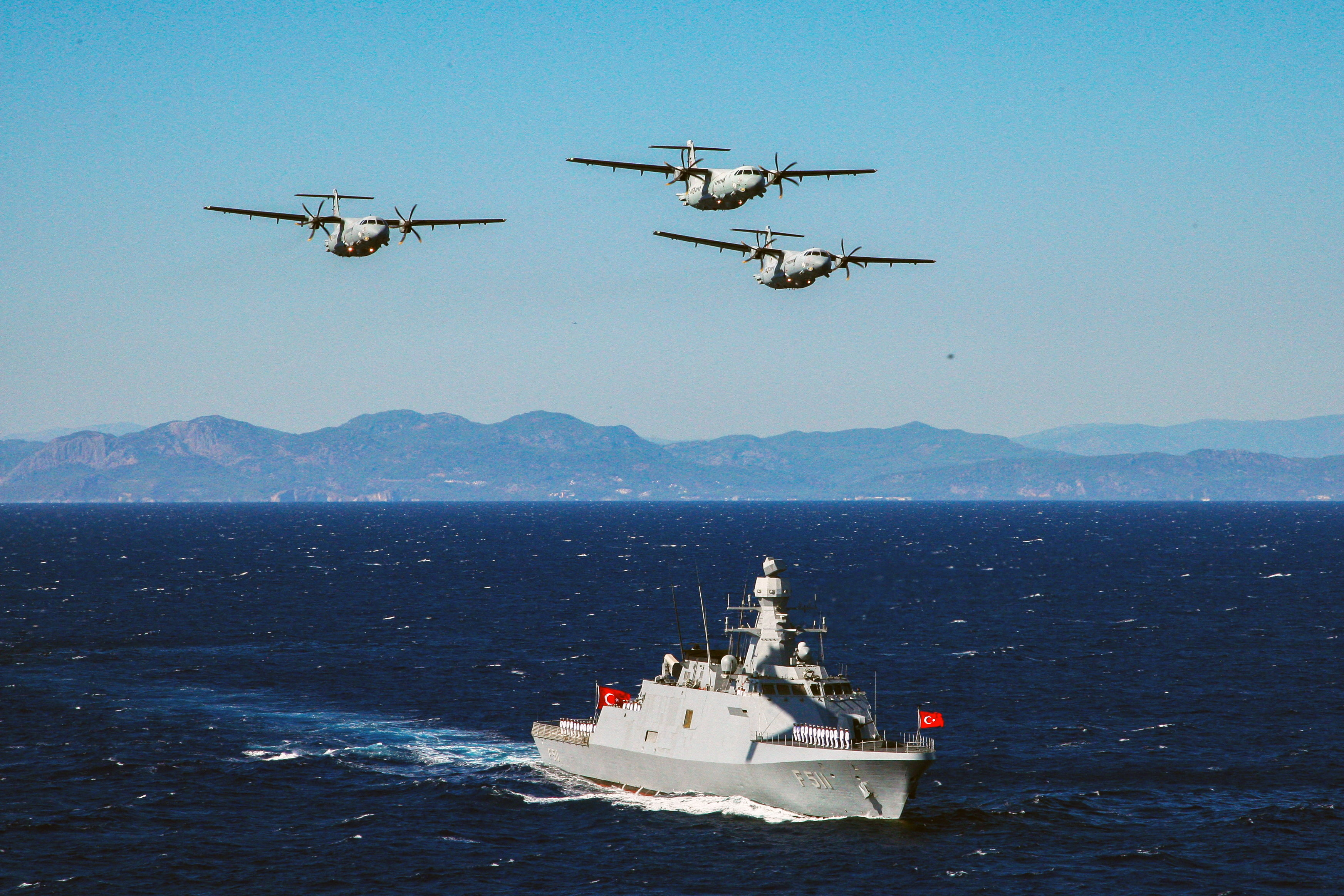
Pakistan and Turkiye were founder members of a multinational regional naval force announced by Saudi Arabia in July, just one week after the Iran-backed Houthis announced they planned to impose the blockade on the Bab Al-Mandab Strait.
Back in December 2023, the US had launched Operation Prosperity Guardian, a multinational naval mission, which was joined in February 2024 by warships from the EU’s Operation Aspides.
But these initiatives had achieved only limited success, with attacks by the Houthis continuing.
Neither the US nor European navies were invited to join the new Multinational Maritime Defense Alliance, which brings together the naval expertise and assets of 14 countries.
For Steven Cook, a senior fellow for Middle East and Africa Studies at the Council on Foreign Relations, the creation of such alliances represents a seismic shift in the regional order.
The creation of the Makkah Joint Defense Agreement, he wrote in an analysis for the CFR on Aug. 13, “is a major change, and it is hard to overstate its significance.”