- Local efforts, including reading campaigns, community programs, seek to sustain learning beyond classroom
LONDON: Israeli violence and restrictions on access to schools are eroding more than Palestinian children’s education in parts of the West Bank. They are weakening families’ faith in the value of schooling itself, according to Ahmad Hneiti, field projects manager at the Tamer Institute for Community Education.
When children cannot safely reach their classrooms or spend lessons fearing an attack, learning suffers, Hneiti told Arab News. As their skills decline, some parents begin to question whether sending them to school makes a difference.
“For many, that raises the question: why should I send my children to school? What is the point of education?” he said.
Those doubts reflect years of disruption, from pandemic closures and teachers’ strikes to Israeli restrictions and violence that have made reaching school increasingly precarious.
This academic year, which began in September, has brought further upheaval.
The Education Cluster, a humanitarian coordination group co-led by Save the Children and UNICEF, documented 174 education-related incidents affecting 140 schools and 24,500 students across the West Bank, including East Jerusalem, between Sept. 1 and Oct. 20.
The number of students affected rose 121 percent from about 11,100 during the same period a year earlier, Save the Children said in an Oct. 26 statement. It attributed the disruption to Israeli settler attacks and military restrictions.
Students lost more than 875 hours of schooling during the first 50 days of the academic year, compared with about 174 hours during the same period in 2025, the organization said.
In Hebron alone, an Israeli military lockdown forced all schools to close, disrupting education for about 251,000 students, Save the Children said.
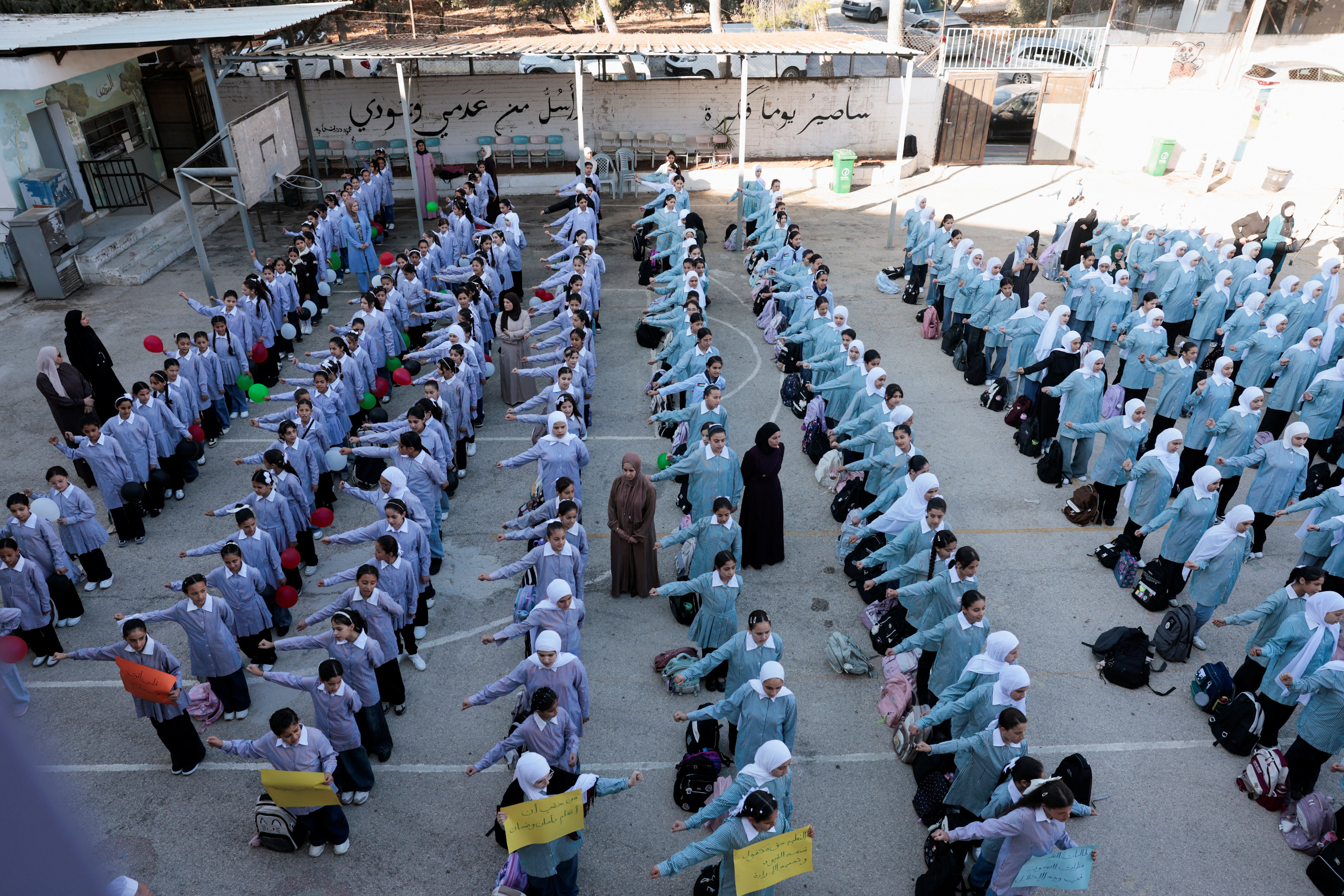
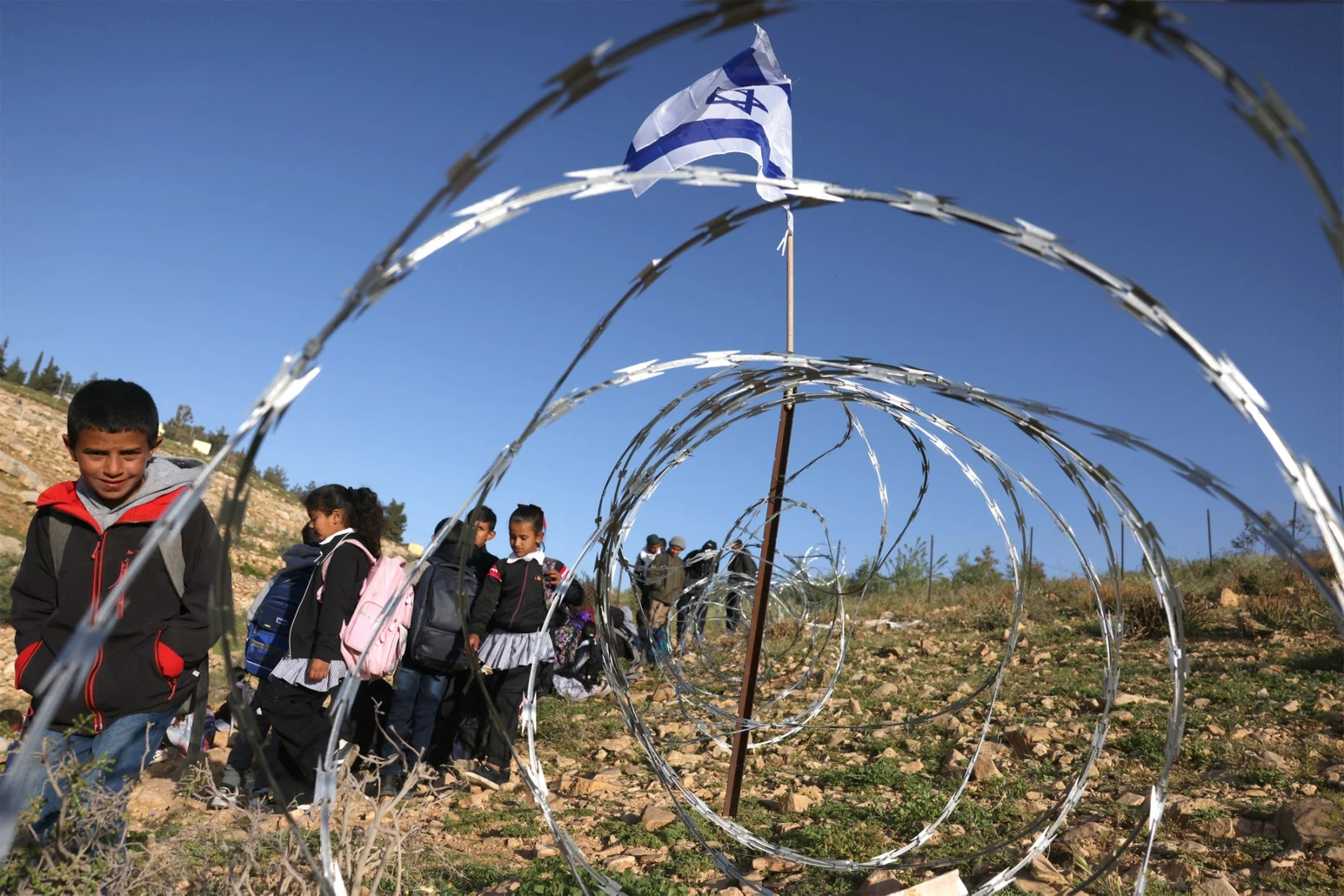
Behind those figures lie sharply unequal experiences. Children in cities may still reach classrooms, even on reduced schedules, while those in some rural and Bedouin communities face long journeys, limited transportation and the threat of settler attacks, Hneiti said.
“On more than one occasion, children have been assaulted inside schools,” he said. “Settlers, and even the army, have entered schools, and children and teaching staff have been assaulted.
“At times, this (has) led parents to withdraw their children from school, especially girls.”
Recent incidents illustrate those fears. On Oct. 19, staff at Jalud Co-educational Elementary School, south of Nablus, evacuated students after settlers tried to break into the building, the Palestinian news agency WAFA reported, citing the village council’s head.
In Masafer Yatta, south of Hebron, settlers blocked a vehicle collecting students from Al-Fakheit School for more than two hours on Oct. 12. The next day, settlers attacked two school vehicles with stones and sticks, damaging one while children were inside, the UN Office for the Coordination of Humanitarian Affairs reported.
The attacks come amid broader pressure on Palestinian communities. In a June report, Amnesty International accused the Israeli government of carrying out “ethnic cleansing” in the West Bank.
It said settler violence, condoned and facilitated by the government, was driving Palestinian Bedouin and herding communities from their homes and cutting them off from their pastures.
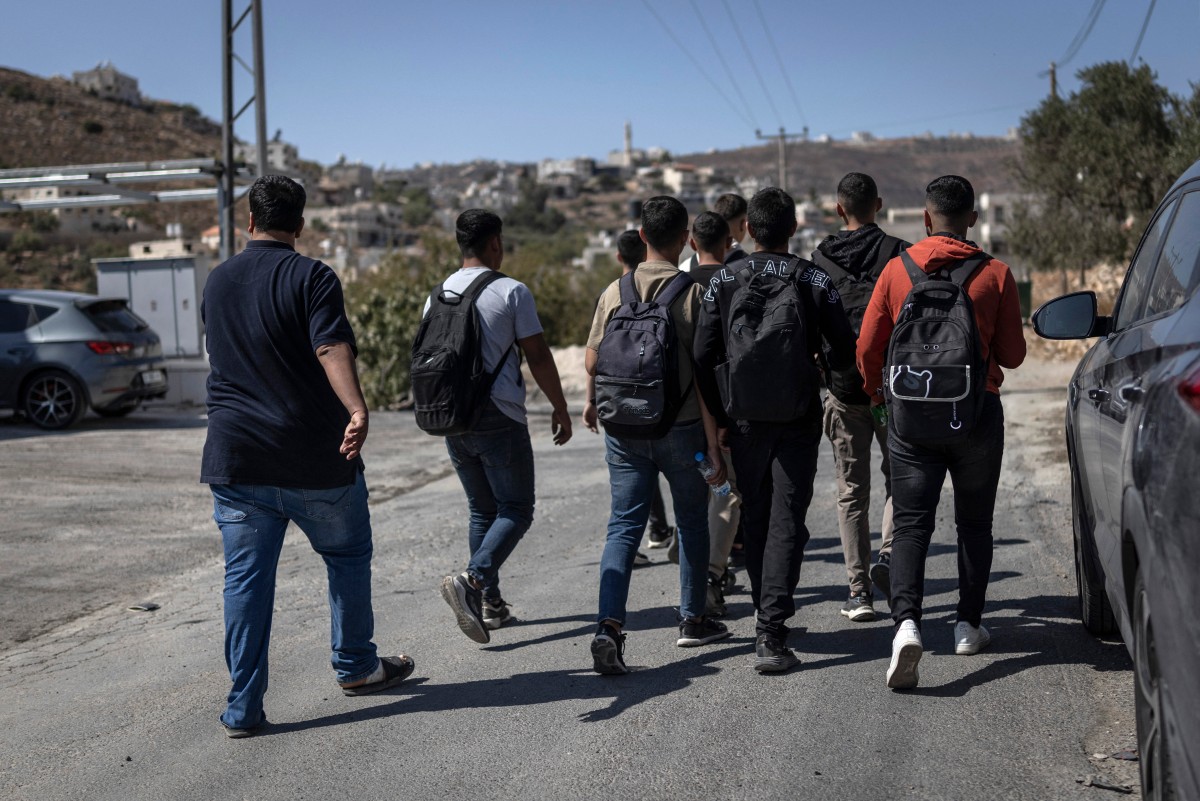
For children who reach class, passing through the school gate does not necessarily bring relief.
“Children and teachers are constantly preoccupied with the possibility of being attacked,” Hneiti said, describing concerns parents had shared with him.
Instead of concentrating on their lessons, he said, children remain focused on their safety.
Even where classrooms remain accessible, financial pressures have curtailed teaching time across the Palestinian territory.
The Palestinian Authority, which funds most public schools in the West Bank, has struggled to pay public sector salaries as Israel withholds portions of the tax revenues it collects on the authority’s behalf, according to the Institute for Palestine Studies.
Partial salary payments and teachers’ strikes have further disrupted schedules. Some schools in cities and larger villages operate three days a week, concentrating lessons on basic skills, the institute said.
As children fall behind, the struggle to keep up can become another reason to disengage.
“Weaker reading, writing and numeracy skills deepen doubts among students and parents about whether schooling is making a difference,” Hneiti said.
Those doubts extend beyond the classroom to what education can offer after graduation.
“Young people see adults who have completed their education but remain in difficult economic circumstances or work in jobs that do not require their qualifications,” he said.
“That weakens another incentive to stay in school: the expectation that education will bring greater security and opportunity.”
When schooling delivers neither the skills families expect nor a credible path to a better livelihood, its standing in the community suffers, he warned, adding: “Society is being drained of an enormous amount of human potential and capability.”
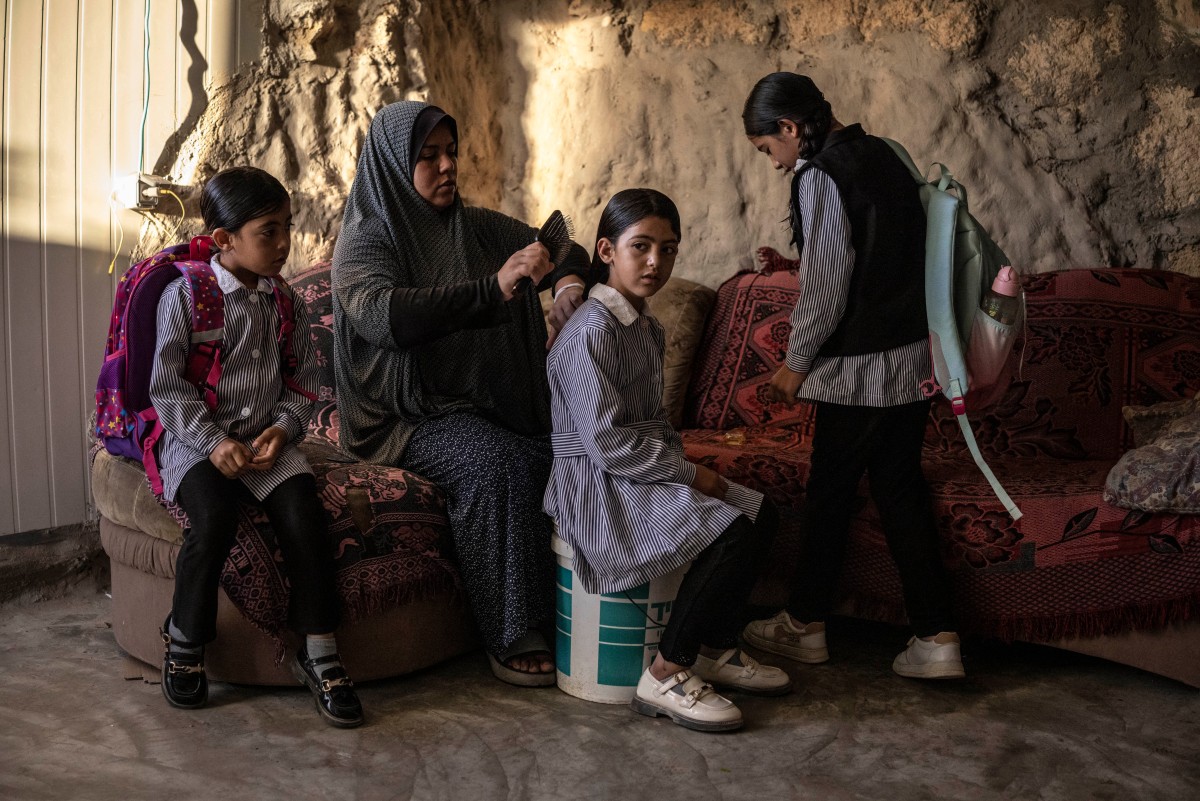
For the Tamer Institute, responding to that loss begins with the idea that learning need not stop when formal schooling is interrupted.
Drawing on Palestinian experiences of school and university closures, including during the First Intifada, the institute seeks to sustain education beyond established institutions.
“Rather, the question is how the whole of society can become a learning environment,” Hneiti said.
Some programs build reading and writing skills through remedial education in community centers. Where those spaces are unavailable, the institute also works inside schools. Parents participate in their children’s learning rather than simply taking responsibility for getting them to lessons.
Other activities combine psychosocial support with opportunities to develop life skills and take on age-appropriate responsibilities.
The aim, Hneiti said, is to help children see themselves as contributors rather than passive recipients of assistance. “It is not enough simply to give them those abilities; they also need encouragement to assume social responsibilities appropriate to their age.”
Reading campaigns carry that work into villages, cities and refugee camps. One, called Dad, Read to Me, encourages fathers to take a more active role in their children’s cultural development.
“Reading together can strengthen family relationships and help children feel more secure,” Hneiti said.
Such efforts give communities a role in sustaining learning when formal schooling falters, broadening children’s experience of education beyond attendance, textbooks and examinations.
For children whose movements are restricted, books can also offer a different kind of freedom.
“Our children are also living under a physical siege,” Hneiti said. “Their horizons are restricted by that siege, and it also affects their intellectual lives.
“Reading, therefore, becomes a space, a kind of passport, for resisting that siege.”