GENEVA: Over 300 civilians have been killed since last month in an offensive against Daesh in western Mosul, the UN said Tuesday, adding the toll could exceed 400 if fresh killings are verified.
“According to information verified by the UN Human Rights Office and the UN Assistance Mission in Iraq, at least 307 people were killed... between Feb. 17 and March 22,” the UN rights office said in a statement.
The UN also has “reports” of another 95 people killed in four western Mosul neighborhoods between March 23 and 26, it said.
The rights office said it was not in a position to provide a breakdown of the deaths caused by Daesh violence and airstrikes by the international coalition.
Baghdad and the US defense department are investigating reports that coalition airstrikes have killed dozens if not hundreds of people in recent days.
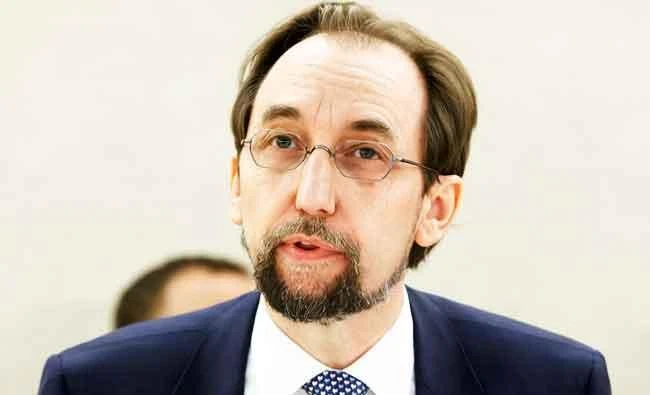
UN rights chief Zeid Ra’ad Al-Hussein said he welcomed the probes and that his office did not directly blame the coalition for any specific deaths.
But he called for “an urgent review of tactics to ensure that the impact on civilians is reduced to an absolute minimum.”
With Daesh reportedly using civilians as human shields in buildings around western Mosul, Al-Hussein’s spokesman Rupert Colville noted that it was “clearly not easy” to ensure that non-combatants were spared.
“What we are saying is that in these circumstances you have got to be exceptionally careful,” Colville told reporters in Geneva.
Referring to the March 17 bombing of a house in the Al-Jadida neighborhood that killed a large number of civilians, Colville said Daesh had packed the building with at least 140 people who were used as shields.
Witnesses said Daesh had also “booby-trapped the house” with improvised explosive devices, according to the UN.
There was also evidence that Daesh was forcing families to remain in at least 15 frontline western Mosul homes, using the sites to launch attacks on government forces. Al-Hussein called the use of human shields “an act of monstrous depravity.”
US Army chief of staff Gen. Mark Milley, after meeting Iraqi Prime Minister Haider Al-Abadi and Iraq’s defense minister late on Monday, said there had been airstrikes in the vicinity that day and on previous days but it was not clear they had caused the casualties.
“It is very possible that Daesh blew up that building to blame it on the coalition in order to cause a delay in the offensive on Mosul and cause a delay in the use of coalition airstrikes,” Milley said.
“It is possible that a coalition airstrike did it. We don’t know yet. There are investigators on the ground.”
Amnesty International said the spike in civilian casualties in Mosul suggests the US-backed coalition is not taking adequate precautions to prevent civilian deaths.
Evidence gathered on the ground in Mosul “points to an alarming pattern of US-backed coalition airstrikes which have destroyed whole houses with entire families inside,” the Amnesty report stated.
It said any failure to take precautions to prevent civilian casualties would be “in flagrant violation of the international humanitarian law.”
The report quoted survivors and eyewitnesses of airstrikes that have killed civilians as saying that “they did not try to flee as the battle got underway because they received repeated instructions from the Iraqi authorities to remain in their homes.”
“According to information verified by the UN Human Rights Office and the UN Assistance Mission in Iraq, at least 307 people were killed... between Feb. 17 and March 22,” the UN rights office said in a statement.
The UN also has “reports” of another 95 people killed in four western Mosul neighborhoods between March 23 and 26, it said.
The rights office said it was not in a position to provide a breakdown of the deaths caused by Daesh violence and airstrikes by the international coalition.
Baghdad and the US defense department are investigating reports that coalition airstrikes have killed dozens if not hundreds of people in recent days.
UN rights chief Zeid Ra’ad Al-Hussein said he welcomed the probes and that his office did not directly blame the coalition for any specific deaths.
But he called for “an urgent review of tactics to ensure that the impact on civilians is reduced to an absolute minimum.”
With Daesh reportedly using civilians as human shields in buildings around western Mosul, Al-Hussein’s spokesman Rupert Colville noted that it was “clearly not easy” to ensure that non-combatants were spared.
“What we are saying is that in these circumstances you have got to be exceptionally careful,” Colville told reporters in Geneva.
Referring to the March 17 bombing of a house in the Al-Jadida neighborhood that killed a large number of civilians, Colville said Daesh had packed the building with at least 140 people who were used as shields.
Witnesses said Daesh had also “booby-trapped the house” with improvised explosive devices, according to the UN.
There was also evidence that Daesh was forcing families to remain in at least 15 frontline western Mosul homes, using the sites to launch attacks on government forces. Al-Hussein called the use of human shields “an act of monstrous depravity.”
US Army chief of staff Gen. Mark Milley, after meeting Iraqi Prime Minister Haider Al-Abadi and Iraq’s defense minister late on Monday, said there had been airstrikes in the vicinity that day and on previous days but it was not clear they had caused the casualties.
“It is very possible that Daesh blew up that building to blame it on the coalition in order to cause a delay in the offensive on Mosul and cause a delay in the use of coalition airstrikes,” Milley said.
“It is possible that a coalition airstrike did it. We don’t know yet. There are investigators on the ground.”
Amnesty International said the spike in civilian casualties in Mosul suggests the US-backed coalition is not taking adequate precautions to prevent civilian deaths.
Evidence gathered on the ground in Mosul “points to an alarming pattern of US-backed coalition airstrikes which have destroyed whole houses with entire families inside,” the Amnesty report stated.
It said any failure to take precautions to prevent civilian casualties would be “in flagrant violation of the international humanitarian law.”
The report quoted survivors and eyewitnesses of airstrikes that have killed civilians as saying that “they did not try to flee as the battle got underway because they received repeated instructions from the Iraqi authorities to remain in their homes.”