GAZA: Rival Palestinian factions Fatah and Hamas agreed on Wednesday to delay final transfer of power of the Gaza Strip from Hamas to the Western-backed Palestinian government by 10 days to Dec. 10 to allow time to “complete arrangements,” officials said.
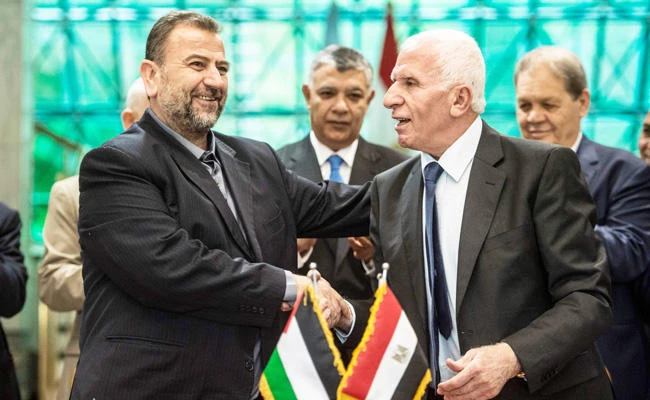
The factions signed a reconciliation deal brokered by Egypt last month after Hamas agreed to hand over administrative control of Gaza, including the key Rafah border crossing, a decade after seizing the enclave in a civil war.
The deal bridges a bitter gulf between the Western-backed mainstream Fatah party of Palestinian President Mahmoud Abbas and Hamas.
The agreement states that Hamas, which has disbanded its administration, would complete the handover by Dec. 1 but disputes over the transfer process have emerged in recent days and Cairo has sent a senior security delegation to the territory to try to resolve the deadlock.
In a brief joint statement, Fatah and Hamas said they had asked Egypt to delay the timetable from Dec. 1 so that they could “complete the arrangements to successfully conclude reconciliation steps to which the Palestinian people aspire.”
Completion will also strengthen Palestinian President Mahmoud Abbas’s standing at any potential resumption of the stalled peacemaking process with Israel, analysts say.
It was initially unclear whether the deadline extension would prevent the 40,000-50,000 Hamas-hired employees being paid their November salaries on time.
Hamas has demanded that Abbas lift sanctions he has imposed on Gaza such as slashing salaries of Palestinian Authority-hired public servants and limiting electricity imported from Israel for Gaza.
The Palestinian Authority has demanded that it must have full control of Gaza in order to be able to discharge its administrative powers there and failure to pay the salaries could endanger further reconciliation steps.
Earlier on Wednesday, tension between the two factions rose when Hamas refused to allow Palestinian Authority employees to return to their jobs at three ministries as instructed by the government.
A range of complex issues remain to be resolved, including security control of the Gaza Strip and the fate of two separate civil administrations.
Previous attempts at reconciliation between Palestinian President Mahmud Abbas’s Fatah movement, based in the occupied West Bank, and his rivals from Hamas have previously failed.
The two factions have not publicly presented a plan for how they will resolve remaining issues before the new Dec. 10 deadline under the Egyptian-brokered accord.
Ghassan Khatib, a former Palestinian Authority minister, said he doubted a true handover could occur by the target date, though partial progress may allow the factions to keep the accord alive.
“This decision (to delay) was taken under pressure from the Egyptian delegation,” he said.
“The Egyptian delegation wants success, so they suggested 10 days and promised to continue their presence there and to put pressure on the two sides. I personally doubt that they can solve all those issues quickly.”
Wednesday’s late-night announcement followed a day of turbulence related to the reconciliation deal signed in Cairo on Oct. 12.
Fatah’s top negotiator, Azzam Al-Ahmad, told AFP on Wednesday that Hamas was “not committed to the agreement it signed in Cairo.”
“Until this moment, the problems and obstacles from Hamas are still there and are increasing.”
In response, senior Hamas official Bassem Naim accused Fatah of “maneuvers” to avoid going through with the deal.
Hamas also accuses Abbas of violating the spirit of the agreement by so far refusing to lift punitive measures, including a cut in electricity payments for Gaza.
Also on Wednesday, PA employees were prevented by union delegates close to Hamas from returning to work at a number of ministries in the Gaza Strip.
Fatah and Hamas traded accusations over the incident.
As tensions built, Abbas ordered an immediate stop to public statements on reconciliation “for the sake of the Palestinian national interest and our relationship with our Egyptian brothers,” official news agency WAFA said.
Hamas has controlled the Gaza Strip since seizing it in a near civil war with Fatah in 2007, leaving the Palestinians with two separate administrations.
A first deadline under the accord was met, with Hamas handing control of Gaza’s borders to the PA on Nov. 1, but far more difficult issues remain.
After the 2007 power shift, the PA continued to pay around 60,000 staff in Gaza, despite the vast majority not working.
Hamas has hired around 50,000 civil servants to replace them over the past decade, and the fate of those staff is a key sticking point, with unions insisting on a settlement.
The reconciliation agreement stipulates they have until February to find a solution for the Gaza employees, which could include merging the two civil services.
The future of the police force in Gaza as well as Hamas’s powerful armed wing is another key dispute between the parties, with Hamas refusing to disarm.
Abbas insists the PA have security control of the enclave of 2 million people.
Nickolay Mladenov, UN special coordinator for the Middle East peace process, encouraged the factions to press ahead.
“The agreement that was reached in Cairo is a very important agreement,” he told journalists.
“It provides a good framework through which to bring the West Bank and Gaza back under a single legitimate Palestinian Authority.”
The factions signed a reconciliation deal brokered by Egypt last month after Hamas agreed to hand over administrative control of Gaza, including the key Rafah border crossing, a decade after seizing the enclave in a civil war.
The deal bridges a bitter gulf between the Western-backed mainstream Fatah party of Palestinian President Mahmoud Abbas and Hamas.
The agreement states that Hamas, which has disbanded its administration, would complete the handover by Dec. 1 but disputes over the transfer process have emerged in recent days and Cairo has sent a senior security delegation to the territory to try to resolve the deadlock.
In a brief joint statement, Fatah and Hamas said they had asked Egypt to delay the timetable from Dec. 1 so that they could “complete the arrangements to successfully conclude reconciliation steps to which the Palestinian people aspire.”
Completion will also strengthen Palestinian President Mahmoud Abbas’s standing at any potential resumption of the stalled peacemaking process with Israel, analysts say.
It was initially unclear whether the deadline extension would prevent the 40,000-50,000 Hamas-hired employees being paid their November salaries on time.
Hamas has demanded that Abbas lift sanctions he has imposed on Gaza such as slashing salaries of Palestinian Authority-hired public servants and limiting electricity imported from Israel for Gaza.
The Palestinian Authority has demanded that it must have full control of Gaza in order to be able to discharge its administrative powers there and failure to pay the salaries could endanger further reconciliation steps.
Earlier on Wednesday, tension between the two factions rose when Hamas refused to allow Palestinian Authority employees to return to their jobs at three ministries as instructed by the government.
A range of complex issues remain to be resolved, including security control of the Gaza Strip and the fate of two separate civil administrations.
Previous attempts at reconciliation between Palestinian President Mahmud Abbas’s Fatah movement, based in the occupied West Bank, and his rivals from Hamas have previously failed.
The two factions have not publicly presented a plan for how they will resolve remaining issues before the new Dec. 10 deadline under the Egyptian-brokered accord.
Ghassan Khatib, a former Palestinian Authority minister, said he doubted a true handover could occur by the target date, though partial progress may allow the factions to keep the accord alive.
“This decision (to delay) was taken under pressure from the Egyptian delegation,” he said.
“The Egyptian delegation wants success, so they suggested 10 days and promised to continue their presence there and to put pressure on the two sides. I personally doubt that they can solve all those issues quickly.”
Wednesday’s late-night announcement followed a day of turbulence related to the reconciliation deal signed in Cairo on Oct. 12.
Fatah’s top negotiator, Azzam Al-Ahmad, told AFP on Wednesday that Hamas was “not committed to the agreement it signed in Cairo.”
“Until this moment, the problems and obstacles from Hamas are still there and are increasing.”
In response, senior Hamas official Bassem Naim accused Fatah of “maneuvers” to avoid going through with the deal.
Hamas also accuses Abbas of violating the spirit of the agreement by so far refusing to lift punitive measures, including a cut in electricity payments for Gaza.
Also on Wednesday, PA employees were prevented by union delegates close to Hamas from returning to work at a number of ministries in the Gaza Strip.
Fatah and Hamas traded accusations over the incident.
As tensions built, Abbas ordered an immediate stop to public statements on reconciliation “for the sake of the Palestinian national interest and our relationship with our Egyptian brothers,” official news agency WAFA said.
Hamas has controlled the Gaza Strip since seizing it in a near civil war with Fatah in 2007, leaving the Palestinians with two separate administrations.
A first deadline under the accord was met, with Hamas handing control of Gaza’s borders to the PA on Nov. 1, but far more difficult issues remain.
After the 2007 power shift, the PA continued to pay around 60,000 staff in Gaza, despite the vast majority not working.
Hamas has hired around 50,000 civil servants to replace them over the past decade, and the fate of those staff is a key sticking point, with unions insisting on a settlement.
The reconciliation agreement stipulates they have until February to find a solution for the Gaza employees, which could include merging the two civil services.
The future of the police force in Gaza as well as Hamas’s powerful armed wing is another key dispute between the parties, with Hamas refusing to disarm.
Abbas insists the PA have security control of the enclave of 2 million people.
Nickolay Mladenov, UN special coordinator for the Middle East peace process, encouraged the factions to press ahead.
“The agreement that was reached in Cairo is a very important agreement,” he told journalists.
“It provides a good framework through which to bring the West Bank and Gaza back under a single legitimate Palestinian Authority.”