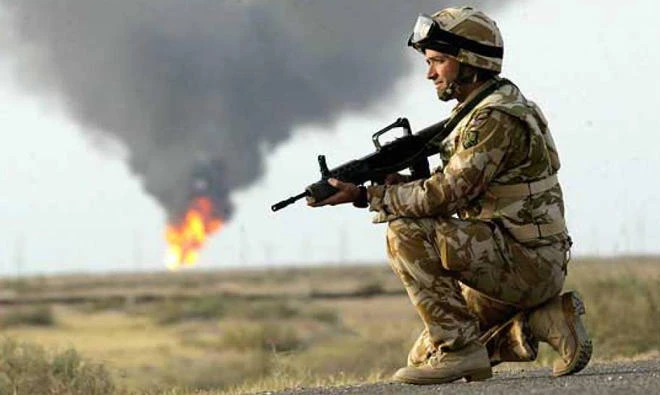
THE HAGUE/BAGHDAD: The International Criminal Court’s (ICC) chief prosecutor Fatou Bensouda has said there is a “reasonable basis” to believe that some British soldiers committed war crimes after the US-led invasion of Iraq.
The disclosure came in a 74-page report on preliminary inquiries as the ICC’s member states gather in New York for its annual nine-day meeting to discuss matters relating to the tribunal.
“Following a thorough factual and legal assessment of the information available... there is reasonable basis to believe that members of the UK armed forces committed war crimes, within the jurisdiction of the Court, against persons in their custody,” Bensouda said.
The Hague-based prosecutor in 2014 reopened an initial probe into war crimes allegations relating to prisoner abuse after rights groups and lawyers alleged that at least 1,071 Iraqi detainees were tortured and ill-treated between March 2003 to December 2008.
The same group also alleged that British personnel committed 52 unlawful killings of people in their custody over the same period.
However, a group of lawyers who formed part of the those making the allegations were later found guilty on misconduct charges resulting from a public inquiry. The lawyers’ lead counsellor was struck off.
Bensouda’s office however said individual statements received from those lawyers “could be considered credible enough if substantiated with supporting material” such as detention records, medical certificates and photographs.
Her office is now considering “complementarity and gravity” before evaluating further steps.
Set up in 2002, the Hague-based ICC is an independent court of last resort, only to intervene and prosecute those committing the world’s worst crimes if a member country is unwilling or unable to do so themselves.
“The prosecutor must be satisfied as to admissibility on both aspects before proceeding,” the report said.
Bensouda will then decide whether to ask ICC judges permission to launch a full-blown investigation.
The court’s previous chief prosecutor Luis Moreno-Ocampo in 2006 said he would not open a full probe in Iraq because he did not have enough evidence.
Earlier this year, Britain dismissed hundreds of allegations of misconduct by its soldiers in Afghanistan and Iraq.
Terror suspects’ rights ‘violated’
Iraqi federal and Kurdish regional judiciaries are violating the rights of Daesh suspects with flawed trials, arbitrary detentions under harsh conditions, and broad prosecutions, Human Rights Watch (HRW) said on Tuesday.
As the group’s self-proclaimed caliphate crumbles following defeats in Iraq and Syria, thousands suspected of joining it have been captured, detained, and put on trial.
At least 200 have been sentenced, HRW said, and at least 92 executed.
Iraq’s government faces the task of exacting justice on Daesh members while preventing revenge attacks on people associated with the group which could only undermine efforts to create long-term stability.
The New York-based rights group said that an 80-page report it released early on Tuesday “finds serious legal shortcomings that undermine efforts to bring (Daesh) fighters, members, and affiliates to justice.”
A spokesman for Iraq’s Supreme Judicial Council, which supervises the federal judiciary, declined to comment on the contents of the report ahead of its release.
The disclosure came in a 74-page report on preliminary inquiries as the ICC’s member states gather in New York for its annual nine-day meeting to discuss matters relating to the tribunal.
“Following a thorough factual and legal assessment of the information available... there is reasonable basis to believe that members of the UK armed forces committed war crimes, within the jurisdiction of the Court, against persons in their custody,” Bensouda said.
The Hague-based prosecutor in 2014 reopened an initial probe into war crimes allegations relating to prisoner abuse after rights groups and lawyers alleged that at least 1,071 Iraqi detainees were tortured and ill-treated between March 2003 to December 2008.
The same group also alleged that British personnel committed 52 unlawful killings of people in their custody over the same period.
However, a group of lawyers who formed part of the those making the allegations were later found guilty on misconduct charges resulting from a public inquiry. The lawyers’ lead counsellor was struck off.
Bensouda’s office however said individual statements received from those lawyers “could be considered credible enough if substantiated with supporting material” such as detention records, medical certificates and photographs.
Her office is now considering “complementarity and gravity” before evaluating further steps.
Set up in 2002, the Hague-based ICC is an independent court of last resort, only to intervene and prosecute those committing the world’s worst crimes if a member country is unwilling or unable to do so themselves.
“The prosecutor must be satisfied as to admissibility on both aspects before proceeding,” the report said.
Bensouda will then decide whether to ask ICC judges permission to launch a full-blown investigation.
The court’s previous chief prosecutor Luis Moreno-Ocampo in 2006 said he would not open a full probe in Iraq because he did not have enough evidence.
Earlier this year, Britain dismissed hundreds of allegations of misconduct by its soldiers in Afghanistan and Iraq.
Terror suspects’ rights ‘violated’
Iraqi federal and Kurdish regional judiciaries are violating the rights of Daesh suspects with flawed trials, arbitrary detentions under harsh conditions, and broad prosecutions, Human Rights Watch (HRW) said on Tuesday.
As the group’s self-proclaimed caliphate crumbles following defeats in Iraq and Syria, thousands suspected of joining it have been captured, detained, and put on trial.
At least 200 have been sentenced, HRW said, and at least 92 executed.
Iraq’s government faces the task of exacting justice on Daesh members while preventing revenge attacks on people associated with the group which could only undermine efforts to create long-term stability.
The New York-based rights group said that an 80-page report it released early on Tuesday “finds serious legal shortcomings that undermine efforts to bring (Daesh) fighters, members, and affiliates to justice.”
A spokesman for Iraq’s Supreme Judicial Council, which supervises the federal judiciary, declined to comment on the contents of the report ahead of its release.