- Daesh cells and explosive remnants remain threats as Syria rebuilds after Assad's ouster
- The incidents highlight the security and recovery challenges facing Syria's new authorities
DAMASCUS: Syrian authorities said on Saturday they had foiled a suspected Daesh plot to attack a police patrol near Damascus, while a soldier was killed and another seriously wounded during mine-clearance operations in eastern Syria, highlighting the security challenges facing the country in the post-Assad era.
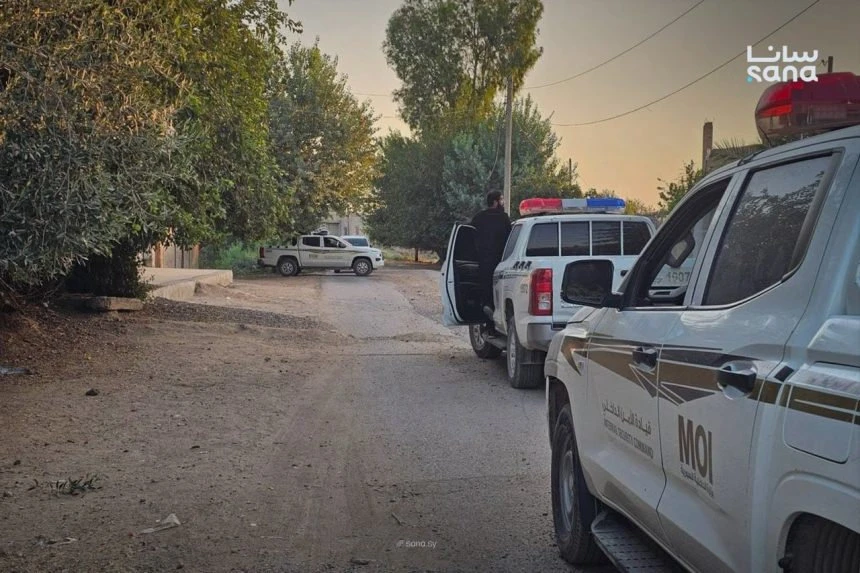
The General Intelligence Department, working with Internal Security Forces, arrested two suspects allegedly affiliated with the extremist group and seized an explosive device prepared for detonation, the Syrian state news agency SANA reported.
In a statement issued Friday, the Internal Security Forces identified the suspects by their initials, M.K. and A.H., and said investigations were continuing to establish the plot's circumstances, scope and links.
The operation followed the dismantling of another cell linked to Daesh, also known as ISIS, in the Al-Houla area of Homs countryside on Oct. 10. Authorities said that operation foiled plots targeting places of worship and Internal Security Forces patrols, SANA reported.
The latest arrests underscore the continuing threat posed by Daesh remnants as Syria's new authorities seek to consolidate security following the ouster of President Bashar Assad in December 2024.
Despite the group's loss of territorial control in Syria, its cells remain a security concern, particularly as the transitional government works to strengthen state institutions and bring the country's security apparatus under centralized control.
In a separate incident on Saturday, a Syrian Arab Army soldier was killed and another seriously wounded while clearing mines and explosive remnants in the Tanf area of eastern Homs countryside.
The Defense Ministry's Media and Communications Directorate told SANA that the soldiers belonged to the army's Military Engineering Directorate and were dismantling mines and unexploded ordnance left by the ousted regime.
The incident highlights another enduring legacy of Syria's years of conflict: explosive hazards that continue to threaten military personnel and civilians and complicate efforts to restore safe access to affected areas.
On July 28, another army soldier was killed and a fellow soldier wounded when a mine left by the former regime exploded as they carried out their duties near Kabina village in the northern Latakia countryside, according to SANA.
The two incidents illustrate the range of security and recovery challenges confronting the administration of President Ahmed Al-Sharaa, a former rebel leader whose government is working to rebuild state institutions after more than a decade of war.
The transitional authorities have pursued counterterrorism operations and efforts to reorganize the security services and armed forces, while seeking broader international cooperation to address problems inherited from the Assad era.
Foreign Minister Asaad Al-Shaibani has also emphasized the government's efforts to restore Syria's regional and international standing as the country enters a broader phase of reconstruction. Damascus has been working with international partners on outstanding issues inherited from the former government, including the legacy of its chemical weapons program.
The country's transition, however, continues to face persistent security threats, unexploded ordnance, damaged infrastructure and the task of establishing effective state institutions across a country devastated by years of conflict.
For Syrians, the latest incidents serve as a reminder that the end of Assad's rule has not ended the dangers left by the war or eliminated the threat posed by extremist networks.