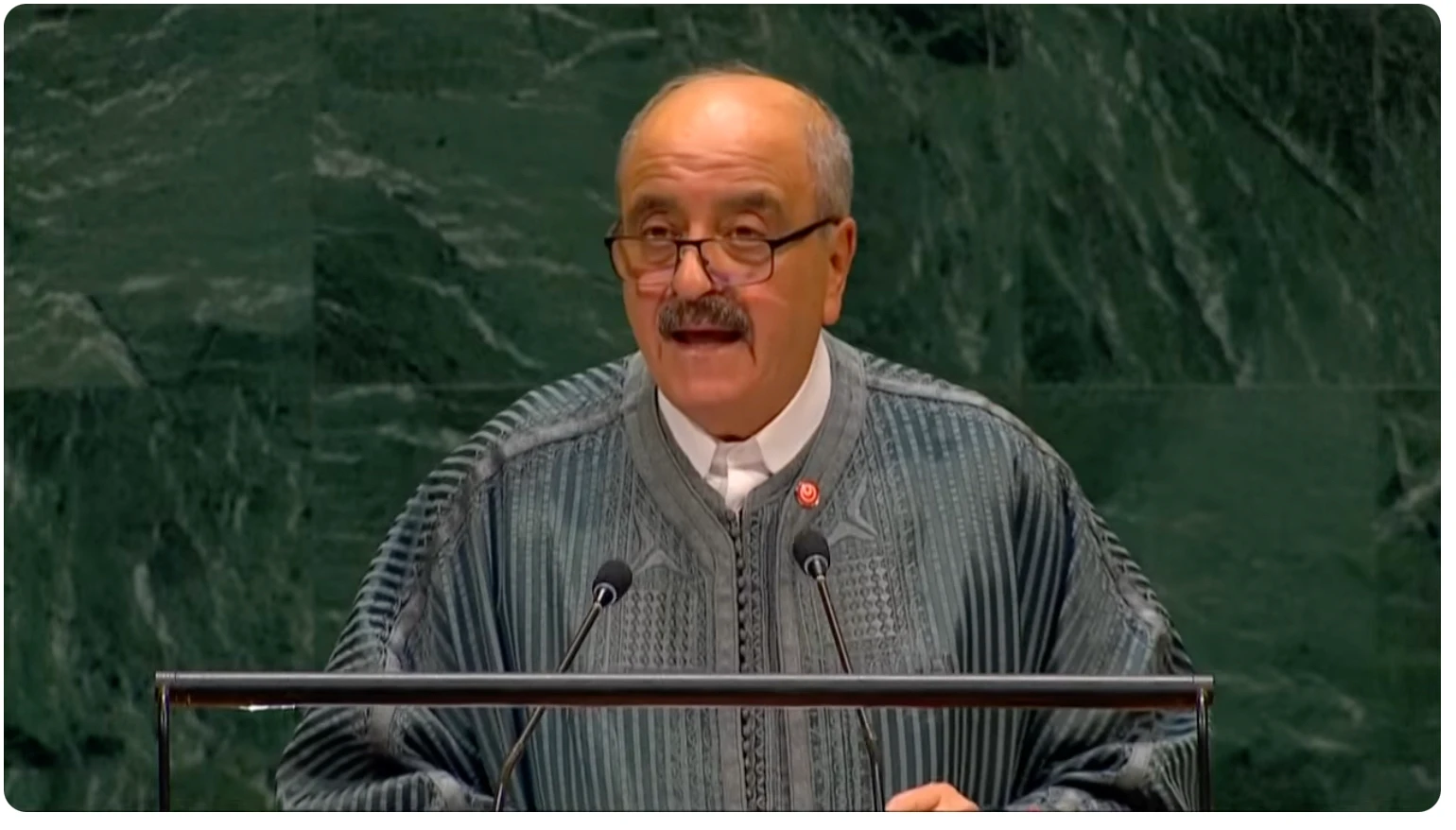
- Tunisian Foreign Minister Mohamed Ali Nafti called for an end to violence in Gaza and the West Bank and urged stronger international action to address conflicts across the region
- Nafti said Tunisia supports strengthening UN peacekeeping operations, protecting civilians and empowering women and young people to help build sustainable peace
UNITED NATIONS, NEW YORK: The UN has a responsibility to confront violence and conflict around the world, including in the Middle East and North Africa, Tunisia’s foreign minister told the UN General Assembly on Saturday.
Mohamed Ali Nafti, Tunisia’s minister for foreign affairs, migration and Tunisians abroad, specifically called for an end to Israel’s violence and what he described as genocide against Palestinians in Gaza and the West Bank.
“The United Nations remains, for Tunisia, the home of international legitimacy, the house that carries the hopes and aspirations of future generations for a more just and equitable international order, and a unique forum for finding practical solutions to achieve the balance of peace, security, and comprehensive and sustainable development in accordance with the UN 2030 agenda,” Nafti said.
He also called for an end to violence in Lebanon, the Syrian Arab Republic, Sudan, Libya and Yemen, and criticized Israel over its role in a number of regional conflicts. He said pursuing peace was the responsibility of every UN member state.
“Drawing on our longstanding and active participation in UN peacekeeping operations, Tunisia believes that advancing these operations requires investment in human and institutional capacities and a greater protection of civilians as a collective responsibility and humanitarian imperative.”
He called for “building upon the outcomes of the international conference hosted by Tunisia” in July 2025 in cooperation with the UN Department of Peace Operations.
The conference defined “the role of armed forces and the protection of civilians,” he said.
Nafti said Tunisia would continue contributing to the development of the peacekeeping system in ways that enhance its effectiveness and credibility.
“Tunisia firmly believes that peace operations cannot be limited to crisis management and conflict containment. Rather, they must contribute to creating conditions conducive to sustainable peace through supporting state institutions, the rule of law, the empowerment of local communities, and enhancing development,” Nafti told the nearly half-empty UN General Assembly Hall.
He also urged the UN and its member states to recognize the importance of women and young people in advancing peace and expanding societies and their economies.
“Tunisia emphasizes its commitment to strengthening the role of women in public life and in decision-making positions, and to continuing efforts to combat all forms of violence and discrimination against women, recognizing that women’s empowerment is a key driver of development and stability,” Nafti said.
“Likewise, Tunisia places youth at the heart of its national priorities and works to empower them politically, economically, and socially while encouraging their initiatives and their participation in public affairs and decision-making.”
Nafti said Tunisia and its President Kais Saied would remain committed to defending human rights, safeguarding democracy and protecting the freedoms of all Tunisians, reaffirming the country’s commitment to “economic, climate-related, social, scientific, cultural and educational rights, foremost among them the fundamental right to development.”